The Week in Tech: Five Stories Reshaping What's Next
While OpenAI and Google pour hundreds of billions into ever-larger language models, a San Francisco startup called Logical Intelligence is betting on a different architecture entirely. The insight is straightforward: no single AI type does everything well. Their proposal layers them—LLMs handle conversation with humans, energy-based models tackle reasoning, and world models let robots understand and act in 3D space. It's a reminder that the race toward advanced AI isn't a single track, and the loudest players aren't always charting the most interesting course.
Google's latest tool, Project Genie, lets you sketch an interactive world from a photo or text prompt. The system generates a still image first, then builds a dynamic environment from it—what Google calls "world sketching." It's the kind of capability that sounds like science fiction until you try it, and it hints at how AI might eventually help us design, test, and explore spaces before we build them.
When medicine meets reprogramming
Life Biosciences is launching the first human trials of a rejuvenation technique that's attracted hundreds of millions in funding from Silicon Valley heavyweights like Altos Labs and Retro Biosciences. The method, called reprogramming, attempts to reset cells to a healthier state by adjusting the epigenetic switches that determine which genes are active. The first target is eye disease—a focused, measurable problem that could prove whether the approach works in humans, not just in labs.
We're a new kind of news feed.
Regular news is designed to drain you. We're a non-profit built to restore you. Every story we publish is scored for impact, progress, and hope.
Start Your News DetoxMeanwhile, Waymo's robotaxis are quietly becoming more affordable. The average ride now costs $19.69, down 3.6% since March. That's still a 12.7% premium over Uber and 27.4% more than Lyft, but the gap is closing fast. Last April, Waymo rides cost 30-40% more. As the fleet scales, price pressure is doing what it usually does: making new technology accessible to more people. (There was also a minor incident where a Waymo detected a child near a school, braked hard, and reduced speed from 17mph to 6mph before contact—a reminder that autonomous systems are being tested in the messiest part of reality, not controlled environments.)
An ex-OpenAI researcher is raising up to $1 billion to develop a fundamentally different kind of AI. The thesis: current techniques are unlikely to produce breakthroughs in biology and medicine without also producing embarrassing failures. It's a bet that the field needs renovation, not just acceleration—and that there's enough capital behind that belief to find out.
Lastly, 2.2 billion people still lack reliable internet access, mostly because they live far from infrastructure. This year could change that. Tests of stratospheric airships, uncrewed aircraft, and other high-altitude platforms are moving from concept to deployment. The economics are finally working. If even one of these approaches scales, the connectivity map of the world shifts.
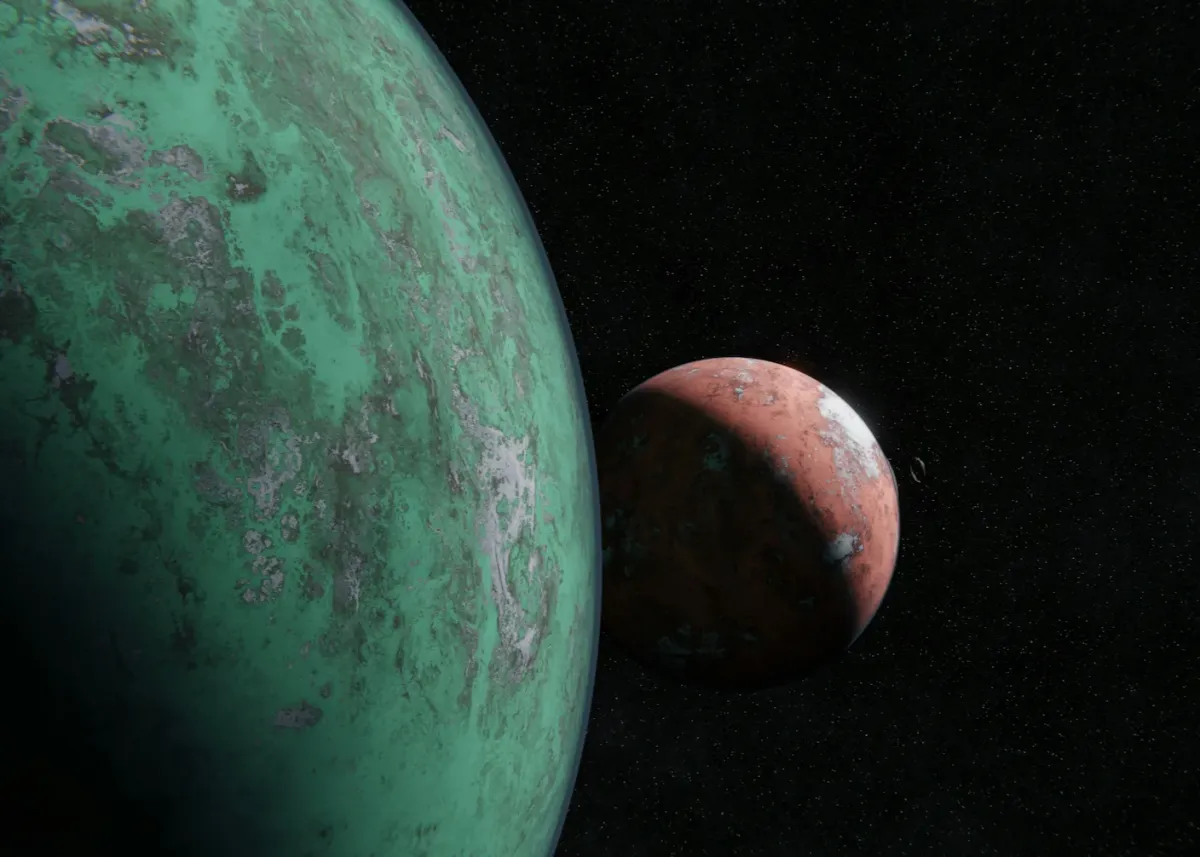
And astronomers have now mapped 6,000 exoplanets with enough precision to compare their sizes, masses, and orbital patterns. That data feeds into the Drake Equation—humanity's attempt to estimate how common life-bearing planets actually are. We're not closer to answering whether we're alone, but we're asking the question with real numbers now instead of pure speculation.