The gap between what happens in clinical trials and what actually happens in people's lives just got a lot clearer — and it matters for anyone considering weight loss treatment.
A new study found that patients who had bariatric surgery lost an average of 58 pounds over two years. Those prescribed GLP-1 medications like semaglutide (Ozempic) or tirzepatide lost about 12 pounds on average — less than a quarter of the surgical results.

Why the Real-World Numbers Matter
The headline numbers alone don't tell the full story. Clinical trials show GLP-1 medications producing 15% to 21% weight loss. But in actual practice, when real people with real lives are taking these drugs, the results drop sharply. Even patients who stayed on the medication for a full year lost only about 7% of their body weight.
We're a new kind of news feed.
Regular news is designed to drain you. We're a non-profit built to restore you. Every story we publish is scored for impact, progress, and hope.
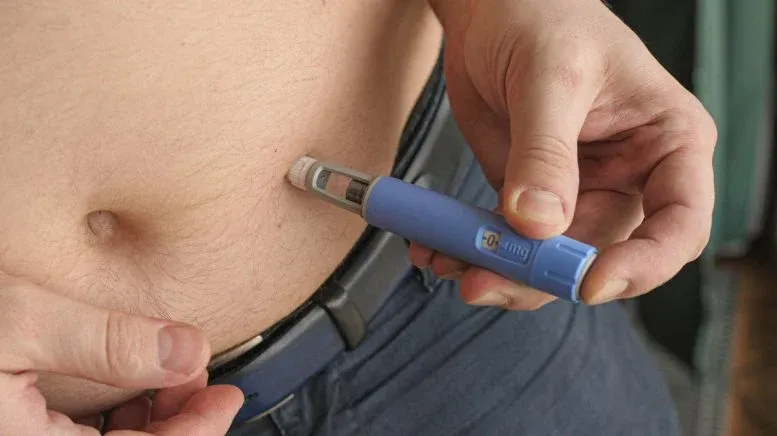
Start Your News DetoxThe reason is straightforward: about 70% of patients stop taking GLP-1 medications within a year. Some experience side effects that become intolerable. Others can't sustain the cost. Some simply find it harder to stick with daily injections than the trial setting suggests.
"Clinical trials show weight loss between 15% to 21% for GLP-1s, but this study suggests that weight loss in the real world is considerably lower, even for patients who have active prescriptions for an entire year," said lead researcher Avery Brown, MD.
Bariatric surgery — whether sleeve gastrectomy or gastric bypass — works differently. Once the procedure is done, the anatomical change is permanent. There's no daily decision to stick with it, no refill to pick up, no side effects to manage long-term in the same way. That durability shows up in the numbers.
This doesn't mean surgery is right for everyone. It's invasive, carries surgical risks, and requires permanent dietary changes. But for people who've tried GLP-1 medications and either couldn't tolerate them or saw results fade after stopping, the data suggests bariatric surgery deserves serious consideration.
Ann M. Rogers, MD, president of the American Society for Metabolic and Bariatric Surgery, frames it as a choice rather than a hierarchy: "Those who get insufficient weight loss with GLP-1s or have challenges complying with treatment due to side effects or costs, should consider bariatric surgery as an option or even in combination."
The next phase of research will focus on identifying which patients are better suited for each approach, and whether the out-of-pocket cost barrier — which clearly affects medication adherence — could be addressed to improve real-world GLP-1 outcomes.