Long before anonymity became a cultural statement, some of literature's most powerful voices published under entirely different names. Not out of shame, but out of necessity.
In the 1800s, a female author faced a simple arithmetic problem: her gender minus credibility equaled rejection. Publishers hesitated. Critics dismissed her before reading the first page. Readers assumed she'd written something sentimental and thin. A man's name on the spine changed the equation.
So the sharpest minds in literature did what they had to do. They picked up a pen, wrote under an alias, and got to work.
We're a new kind of news feed.
Regular news is designed to drain you. We're a non-profit built to restore you. Every story we publish is scored for impact, progress, and hope.
Start Your News DetoxThe Strategy That Worked
Mary Ann Evans understood the game perfectly. Writing as George Eliot, she published novels that tackled morality, psychology, and the texture of human society—work that would have been patronized under her real name. Middlemarch didn't just succeed; it became one of the most respected novels ever written. The pseudonym worked exactly as intended: critics engaged with her ideas instead of her gender.
Elizabeth Gaskell tried the same approach early on, publishing Mary Barton and North and South under the name Cotton Mather Mills. She eventually revealed herself, but those initial months under a false name had already opened doors that would have stayed locked.
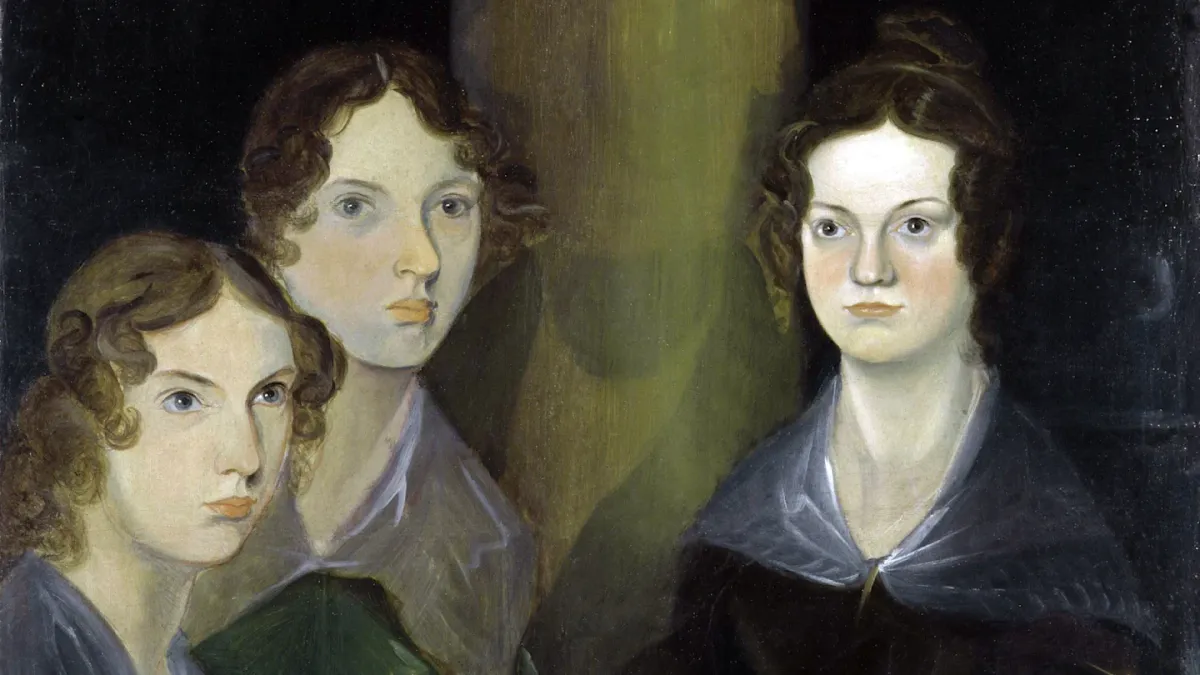
Across the Irish Sea, three sisters made a bolder choice. Charlotte, Emily, and Ann Brontë didn't pick random male names—they chose matching ones. Currer, Ellis, and Acton Bell published their poetry and novels as a unified front, betting that readers would judge the work on merit rather than gender. They were right. Jane Eyre, Wuthering Heights, and Agnes Grey circulated widely and were already respected by the time their true identities became public.
Freedom in a False Name
For some writers, the pseudonym offered something deeper than respectability. It offered freedom.
Louisa May Alcott, who created the gentle world of Little Women, had another side. Under the name A.M. Bernard, she wrote thrillers—passionate, dangerous stories filled with secrets and edge. The pseudonym let her explore the full range of her imagination without confusing readers who expected the author of Little Women to stay in that lane.
In France, George Sand (born Amandine Lucie Aurore Dupin) went further. She didn't just change her name; she lived differently—socializing beyond convention, writing boldly, dressing as she chose. Her pen name was both shield and statement, a way to claim space for the unconventional life she insisted on living.
What Their Names Really Meant
These weren't disguises. They were tools. Each pseudonym was a calculated move to bypass the gatekeepers who confused gender with capability. The names let these authors be heard—not as women writing, but as writers.
What's worth noting now is that we remember them by their real names. We read Jane Eyre knowing it came from Charlotte Brontë. We study Middlemarch and credit Mary Ann Evans. The pseudonyms did their job and then faded. The work, and the women behind it, endured.