Walk through Trafalgar Cemetery in Gibraltar and you're walking through centuries of loss—most of it unmarked by the famous battle its name recalls.
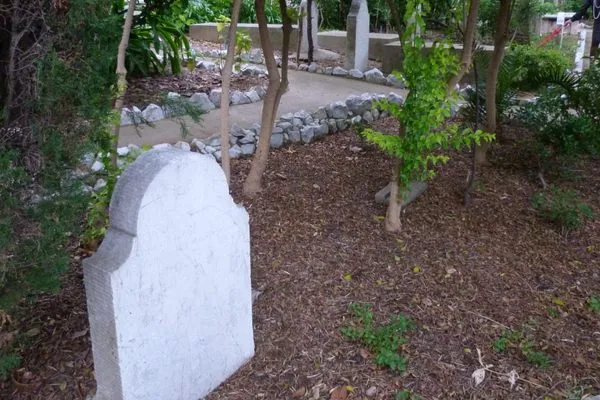
The cemetery sits in what was once a Spanish defensive ditch, before it became consecrated ground in 1798. Today it's a quiet place: white-painted rocks border the grounds, palm trees and flowering shrubs soften the edges, and the black railings and city wall create an almost protective enclosure. The tombstones are beautifully restored, maintained by the Gibraltar Heritage Trust with the kind of care that suggests someone still remembers who lies beneath.
But here's the thing about a cemetery named after Trafalgar—most people didn't die in that famous 1805 battle. Only two did. Lieutenant William Foster, 20, of the Royal Marines on HMS Mars, and Lieutenant Thomas Norman, 36, of HMS Colossus are buried here in graves 121 and 101. The rest of the Trafalgar dead were either committed to the sea near the battle site or scattered across other Gibraltar cemeteries. The cemetery's real dead were different: they died in the Yellow Fever epidemics that swept through Gibraltar in 1804, 1813, and 1814. They were sailors and soldiers who fell in the countless smaller engagements of the French Revolutionary and Napoleonic Wars—the battles no one writes songs about.
We're a new kind of news feed.
Regular news is designed to drain you. We're a non-profit built to restore you. Every story we publish is scored for impact, progress, and hope.
Start Your News DetoxThe cemetery expanded over time. In 1932, tombstones from the larger St Jago Cemetery were moved here. More arrived from Alameda Gardens in the years that followed, as if Gibraltar was gradually consolidating its memory in one place.
A day set aside for remembrance
Every October, on Trafalgar Day (the Sunday nearest October 21st), the cemetery hosts a ceremony. It's a small ritual, but it's consistent—a community choosing to mark the moment, to say these lives mattered, even the ones who didn't fall in the famous battle. That kind of remembrance, the unglamorous work of keeping a cemetery maintained and a day observed, is how a place holds onto its history when the headlines have moved on.