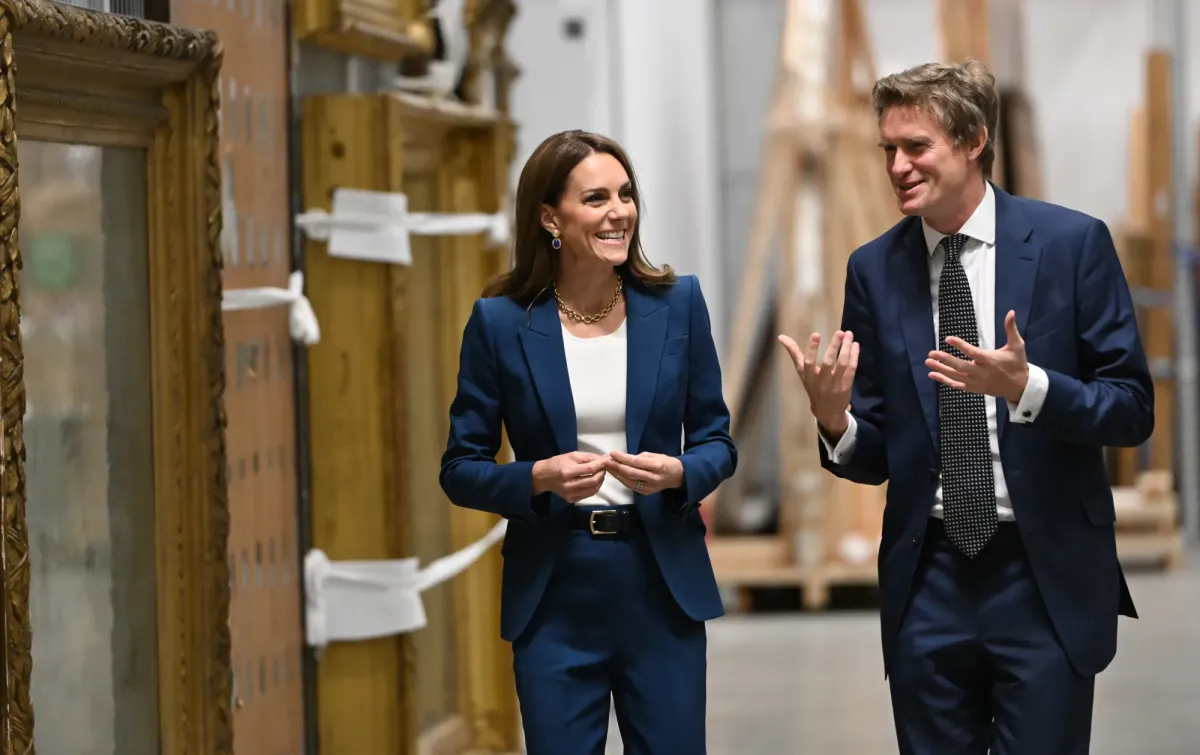
Tristram Hunt, who has led London's Victoria & Albert Museum since 2017, has been knighted in King Charles' 2026 New Year Honors list. The recognition comes for his "services to museums" — a formal citation that masks what amounts to a significant reshaping of one of Britain's most influential cultural institutions.
Hunt arrived at the V&A as a historian, not a museum veteran. Before taking the director role, he was a senior lecturer at Queen Mary University of London, where he specialized in Victorian urban history. That academic grounding seems to have shaped his approach: rather than simply maintaining the museum's reputation, he's spent nearly a decade pushing it outward — launching ambitious exhibitions, expanding its international footprint, and working to bring new audiences through its doors.
The most visible marker of that ambition is V&A East, the museum's expansion project that represents one of the largest cultural investments in recent British history. It's the kind of institutional bet that either defines a director's legacy or becomes a cautionary tale. Hunt's knighthood suggests the gamble is paying off.
We're a new kind of news feed.
Regular news is designed to drain you. We're a non-profit built to restore you. Every story we publish is scored for impact, progress, and hope.
Start Your News DetoxRecognition Across British Cultural Leadership
Hunt isn't alone in being honored this year. The 2026 New Year Honors list reflects a broader recognition of museum and heritage leadership. Ekow Eshun, former director of London's Institute of Contemporary Arts, received an OBE. Art historian Marcia Pointon and Jo Quinton-Tulloch, director of the National Science and Media Museum in Bradford, also made the list. Janet Blake, a cultural heritage expert, was similarly recognized, as was Susan Bowers of the Pilgrim Trust and Hilary McGrady, director-general of the National Trust.
The clustering of these honors — multiple museum directors, heritage specialists, and cultural figures all recognized in a single list — suggests something worth noting: the UK's establishment is acknowledging that museums and cultural institutions matter, not just as repositories of the past but as active shapers of contemporary life. That's a meaningful signal, especially in an era when public funding for the arts remains precarious.
For Hunt, the knighthood formalizes what his decade at the V&A has already demonstrated: that museum leadership, when done with ambition and intellectual rigor, can shift how millions of people engage with culture.