

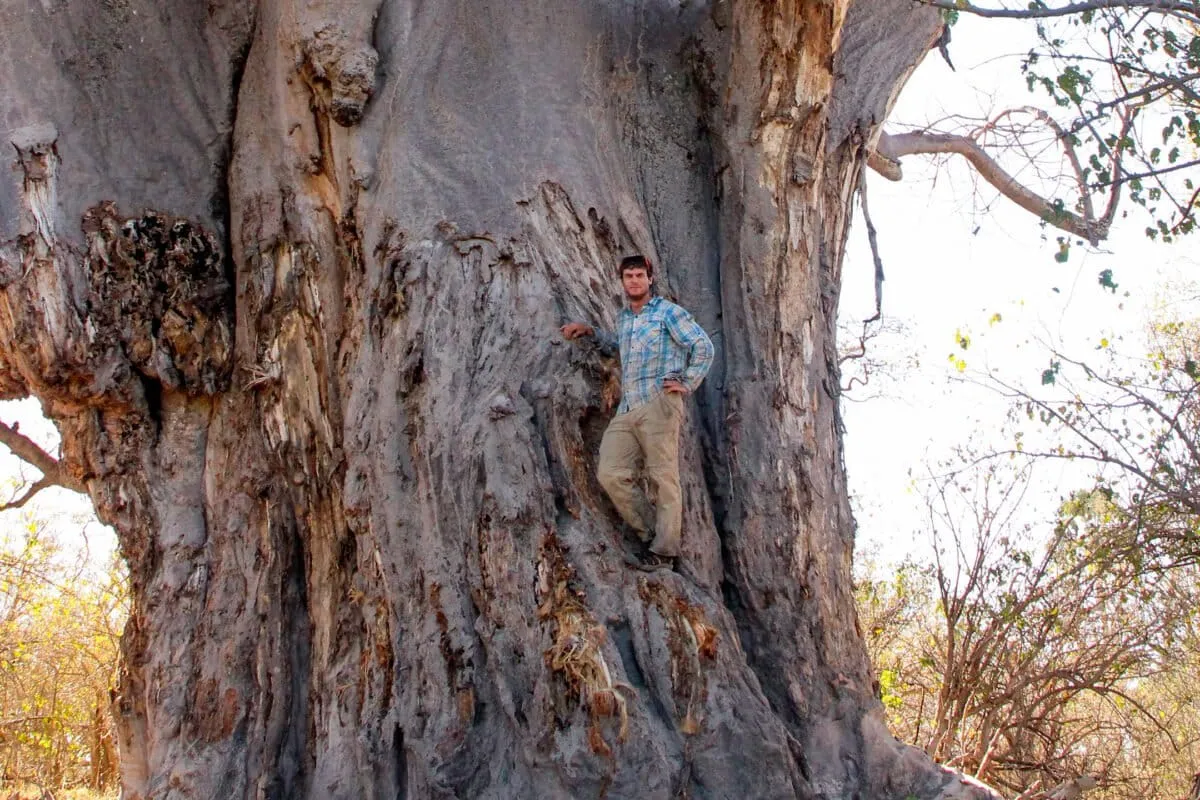
Gregg Treinish spent years crossing mountain ranges and sleeping under stars, and somewhere between expeditions, he felt the weight of a question: what was any of it for?
"I was spending years in the wilderness, doing long expeditions, and I began to feel selfish for being out there without making a difference," he recalls. "I wanted to stay in the outdoors, but I also wanted my time to matter and to contribute to something bigger than myself."
That tension—between the pull of wild places and the need for purpose—led him to start Adventure Scientists more than a decade ago. The idea was deceptively simple: what if the people already out there hiking, climbing, diving, and paddling could become the eyes and hands of science?
We're a new kind of news feed.
Regular news is designed to drain you. We're a non-profit built to restore you. Every story we publish is scored for impact, progress, and hope.
Start Your News DetoxFrom guilt to data collection
Today, Adventure Scientists operates as a bridge between outdoor enthusiasts and the researchers who need them. The organization partners with universities, government agencies, and businesses to collect samples and observations from places that are otherwise difficult to study. Volunteers measure water quality in remote rivers, document forest health, track changes in biodiversity, and gather climate data from high-altitude regions. The work fills gaps that traditional research budgets and logistics simply can't reach.
What makes this work is not some revolutionary technology or expert coordination—it's the simple fact that thousands of people already spend their time in these places. A climber summiting a peak in the Rockies can collect air samples. A paddler navigating a river in Southeast Asia can document fish populations. A hiker crossing a forest can photograph plant species and soil conditions. These observations, when aggregated and analyzed, influence policy decisions, shape corporate environmental practices, and deepen scientific understanding of how ecosystems are changing.
The data collected has already mattered. Observations from Adventure Scientists volunteers have informed conservation strategies, helped agencies understand climate impacts in remote regions, and provided evidence that corporate and government bodies use when setting environmental standards.
Treinish is careful not to claim credit for this. "I have no special skills as a scientist or as an adventurer," he says. "That's exactly why I believed this idea could work—because I'm just a regular person who loves being outdoors." That humility might be the project's real genius. It removes the barrier between science and the people living their lives in nature. You don't need a PhD to contribute. You just need to be there, paying attention.
The organization continues to grow, recruiting more volunteers and expanding partnerships. What began as a way to reconcile personal guilt has become a model for how citizen science can work at scale—turning the simple act of being outside into something that matters.





