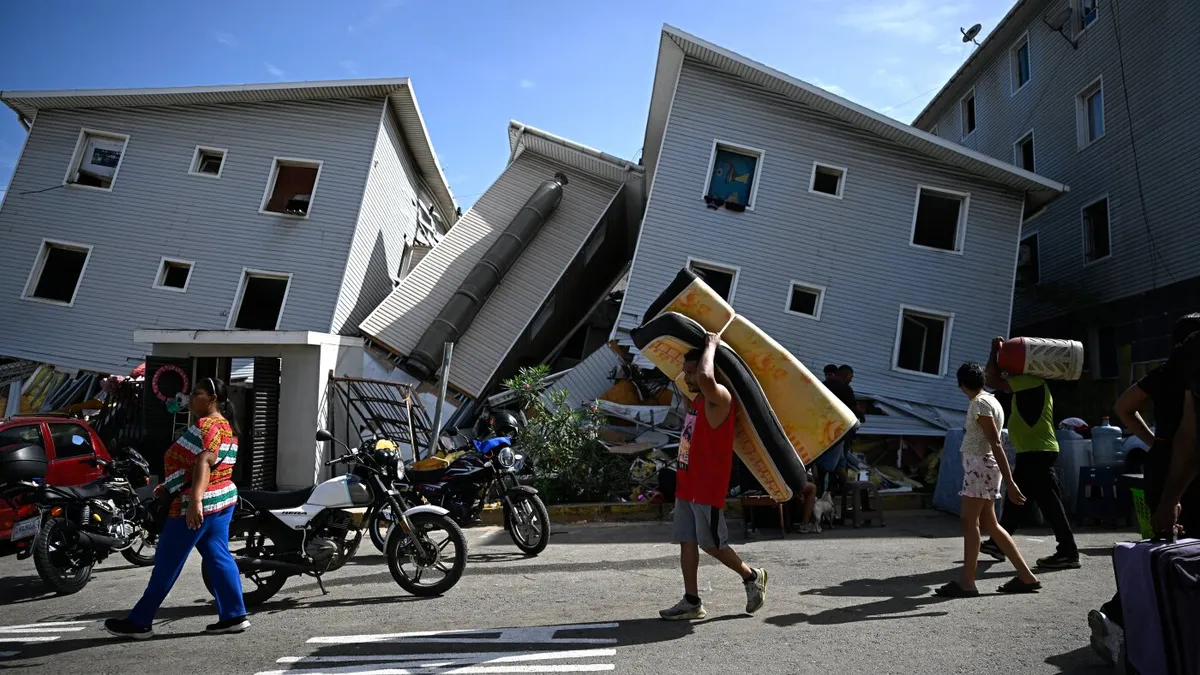
Venezuela just got hit with a double whammy: two earthquakes, the biggest to rock the nation in over a century. The fallout? At least 164 lives lost and buildings near the capital crumbling into dust. Naturally, the world is watching.
And the U.S. is stepping up in a big, fast, and — dare we say — effective way. Secretary of State Marco Rubio promised a "whole-of-government response," which, after a few quieter years on the disaster relief front, is quite a statement.
A Major Shift in Strategy
Remember when USAID was dismantled? This new pledge feels like a direct response to that. The U.S. is now funneling a cool $150 million to faith-based aid groups like Samaritan's Purse and Catholic Relief Services, plus backing two UN powerhouses: the World Food Programme and the Office for the Coordination of Humanitarian Affairs.
We're a new kind of news feed.
Regular news is designed to drain you. We're a non-profit built to restore you. Every story we publish is scored for impact, progress, and hope.
Start Your News DetoxThey're not just throwing money at the problem, either. A Disaster Assistant Response Team is en route, alongside two search and rescue teams — one from Virginia with 80 people and six dogs, another from California with 70 people and six dogs. Because sometimes, you just need a good dog to find someone.
The Pentagon is even getting involved, airlifting U.S. government staff and supplies into a country with damaged airport infrastructure. Which, if you think about it, is both impressive and slightly terrifying.
This isn't the disaster response you might remember from, say, the 2025 Myanmar earthquake. That one killed 3,500 people, and the U.S. sent a comparatively paltry $9 million and three people. China, meanwhile, rolled in with $137 million. Jeremy Konyndyk, president of Refugees International, called that past response "very visible and very embarrassing." Apparently, some lessons were learned.
Since then, the State Department has quietly rehired some of USAID's old humanitarian response crew and reinstated contracts with groups that actually do disaster assistance. You know, like search and rescue teams. Because it turns out, having people who know what they're doing is pretty crucial.
The Long Road Ahead
On the ground, Cesar Jimenez from Project Hope describes the damage as "very, very severe." He saw roughly 200 people crammed into one tiny facility, some lying on the ground, after two healthcare facilities near the epicenter collapsed. Venezuelans are doing their best, he says, but they were utterly unprepared.
Konyndyk stresses that this moment is a real test. Can the U.S. not only deploy teams quickly but also commit to the long-term recovery efforts? We're talking emergency medical teams to stabilize health systems and investments to restore water and basic infrastructure. It's not just about the initial rescue; it's about the entire marathon.
He also points out the value of preparedness. After the Nepal quake in 2015 and the Turkey/Syria disaster in 2023, USAID advised on safe building codes and response kits. Because the most lifesaving work often happens before the ground starts shaking. Let's hope Venezuela gets that proactive support, too. Because nobody wants to learn this lesson twice.