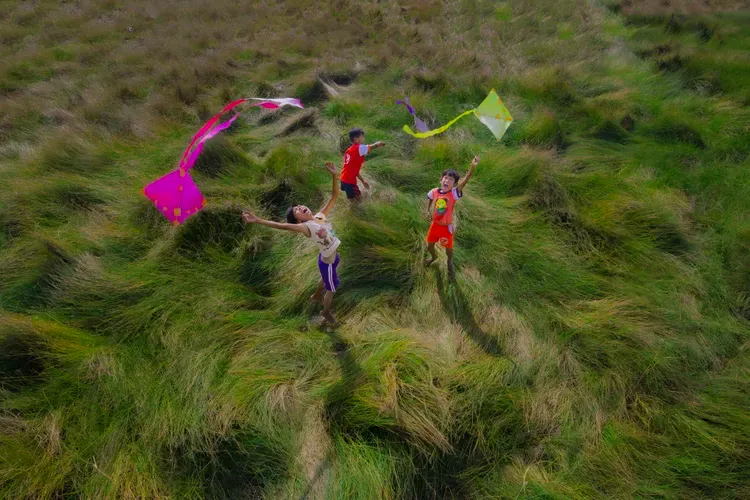
There's a moment when a kite catches the wind just right—when the string goes taut and suddenly you're not just holding paper and bamboo anymore, you're connected to something in the sky. That moment happens hundreds of times a year, in hundreds of places, and it turns out it's one of the most durable forms of joy humans have figured out.
Kite flying has been around for thousands of years. No one's entirely sure where it started, but the evidence suggests children have been chasing these aerial toys across fields and beaches for as long as we've had string and the patience to untangle it from trees. What's striking is that this hasn't changed much. A child in Bangladesh learning from an older sibling looks almost identical to a child in Myanmar doing the same thing, separated by geography but connected by the same simple mechanics: wind, string, and the desire to make something fly.
Today, kite flying has evolved into something more elaborate. Teams perform synchronized aerial choreography with quad-line stunt kites, executing maneuvers that look impossible from the ground. Kitesurfers launch themselves across the water at places like Tarifa, Spain, where the winds at the Straits of Gibraltar are reliable enough to make it a destination. But even as the sport has gotten more technical, the core appeal hasn't shifted: it's people gathering outdoors, coordinating with the weather, and finding joy in something that requires nothing but attention and a decent breeze.
We're a new kind of news feed.
Regular news is designed to drain you. We're a non-profit built to restore you. Every story we publish is scored for impact, progress, and hope.
Start Your News Detox
The festivals happen year-round, in snow and sand, over water and through forests. A string of kites drifts near Beijing's National Stadium. Children run through fields on the Mekong Delta, their kites reflected in flooded paddies. Families gather on the National Mall in Washington, D.C., their flag-inspired kites catching the afternoon light. The settings change, the languages change, the kites themselves might be wildly different in design—but the activity remains recognizable and accessible across cultures and continents.
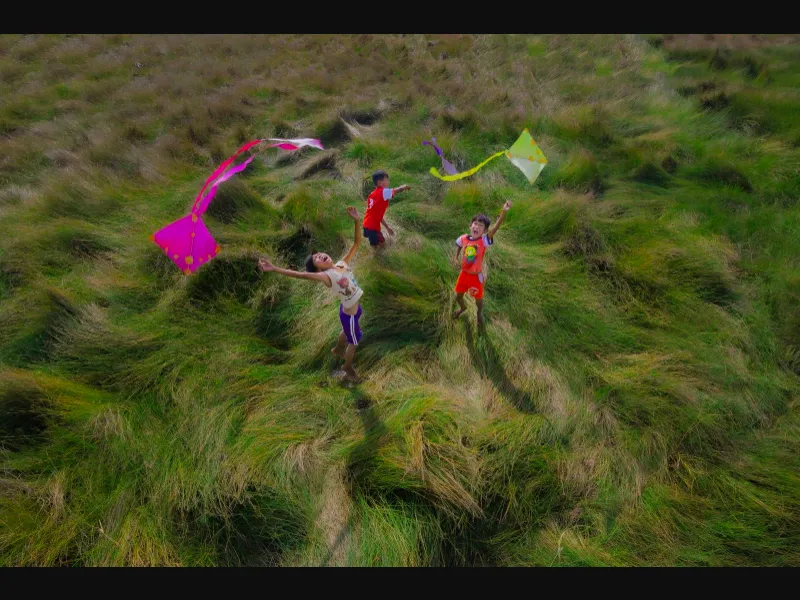
What makes this matter now, in particular, is that kite flying is one of the few outdoor activities that's genuinely screen-free and genuinely social. It requires you to be present in your body, aware of the wind, coordinated with the people around you. It's not optimized for engagement metrics or designed to keep you scrolling. It's just an old habit that works, that brings people together across age groups and neighborhoods, that makes gray cityscapes feel a little less gray when color and movement appear overhead.
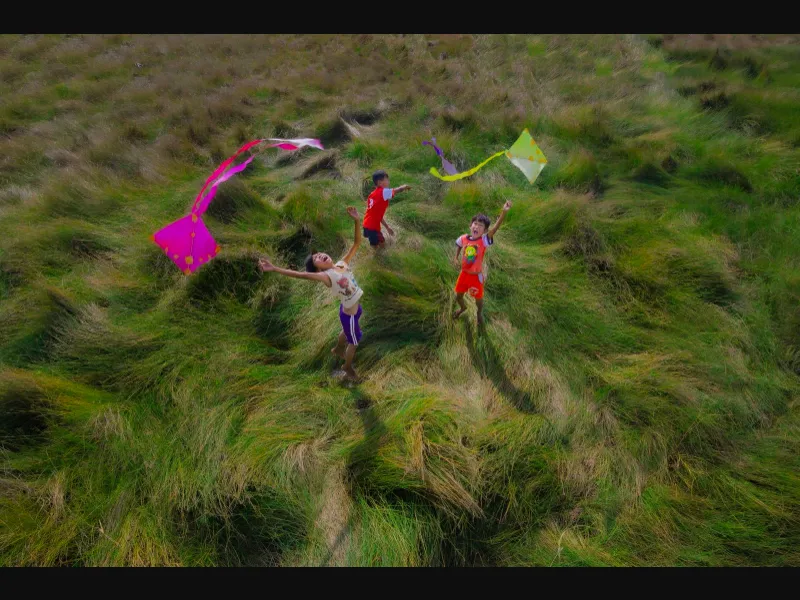
The tradition persists because it's genuinely simple and genuinely fun. As kite festivals continue to pop up in cities worldwide—from Miami to Singapore to Minnesota—they're doing something quiet but important: they're reminding us that some of the best moments still come from looking up.