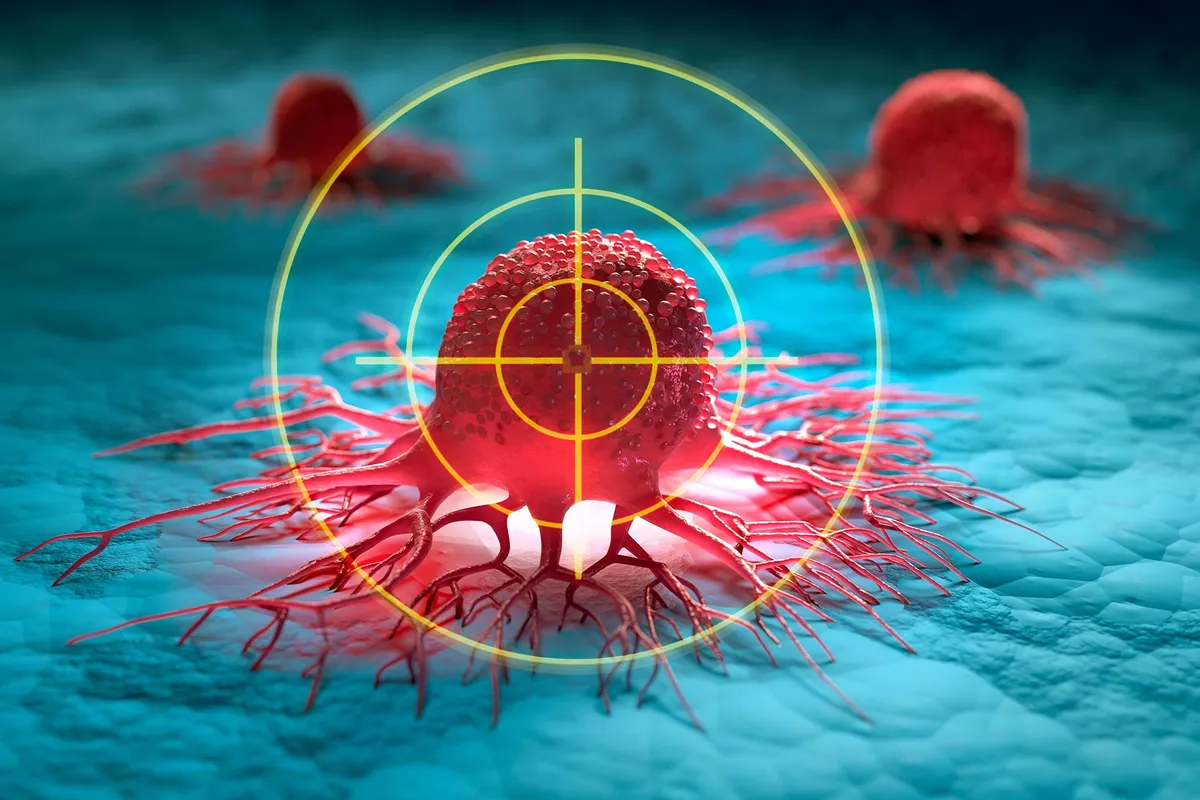
Glioblastoma has a particular cruelty: it's invisible to the immune system. The tumor sits in the brain, quiet and cold, surrounded by so few immune cells that the body's natural defenses simply don't recognize it as a threat. For 20 years, doctors have watched this play out the same way—surgery, radiation, chemotherapy, and still patients rarely survive more than a couple of years.
Now researchers at Mass General Brigham and Dana-Farber Cancer Institute have shown that a single injection of an engineered virus can change that equation. In a clinical trial published in Cell, the virus didn't just kill cancer cells. It rewrote the tumor's immune landscape, flooding it with T cells primed to attack.
How a Virus Becomes a Teacher
The approach sounds counterintuitive: fight cancer with a virus. But this isn't a natural virus. Scientists took herpes simplex virus and engineered it so it can only replicate inside glioblastoma cells, leaving healthy brain tissue untouched. Once injected into a tumor, the virus multiplies, destroys the infected cell, and spreads to neighbors—a cascade of direct damage.
We're a new kind of news feed.
Regular news is designed to drain you. We're a non-profit built to restore you. Every story we publish is scored for impact, progress, and hope.
Start Your News DetoxBut the real power lies in what happens next. As the virus tears through cancer cells, it triggers an alarm that summons the immune system. T cells—the immune system's assassins—start infiltrating the tumor in numbers that hadn't been there before. They don't just arrive and leave. The research showed they stay, establishing a long-term presence inside the tumor itself.
In the 41-patient trial, survival improved compared with historical outcomes for recurrent glioblastoma. The benefit was especially strong in patients who already had antibodies to the virus—their immune systems recognized the invader and responded more aggressively. When researchers examined tumor samples, they found a clear pattern: patients whose T cells were positioned closest to dying cancer cells lived longer.
This matters because it confirms a suspicion that's been nagging at cancer researchers for years. Immunotherapy has revolutionized treatment for melanoma and lung cancer by unleashing the immune system. But glioblastoma remained stubbornly resistant. The reason wasn't that the immune system couldn't kill the cancer—it was that the immune system couldn't reach it. The tumor was locked in a kind of immunological isolation.
What the virus does is break that isolation. It acts as a bridge, using its own infection to pull immune cells into a space they'd been excluded from. Once there, those T cells learn to recognize and attack the cancer itself.
"Our findings could have important implications for a cancer whose standard of care hasn't changed for 20 years," noted E. Antonio Chiocca, the researcher who developed the virus. That's not hyperbole. Glioblastoma treatment has been essentially stalled since the mid-2000s. A new mechanism of action—especially one that works through a single injection—represents a genuine shift.
The next step is larger trials to confirm the benefit holds and to understand which patients benefit most. But the principle has been proven: you can use a virus to teach the immune system where to look and what to attack. That's a tool that could extend well beyond brain cancer.