Emilia Machel made the same decision twice before—in 2000 and 2013—when rivers swelled and her hometown flooded. So when the Limpopo River began rising again in January, the 30-year-old tomato seller knew exactly where to go. She packed what she could carry, grabbed her three children, and headed to Chiaquelane, a settlement for displaced people she'd first sheltered in as a four-year-old.
"We watched on television that there would be flooding," Machel said. "It is a safer area."
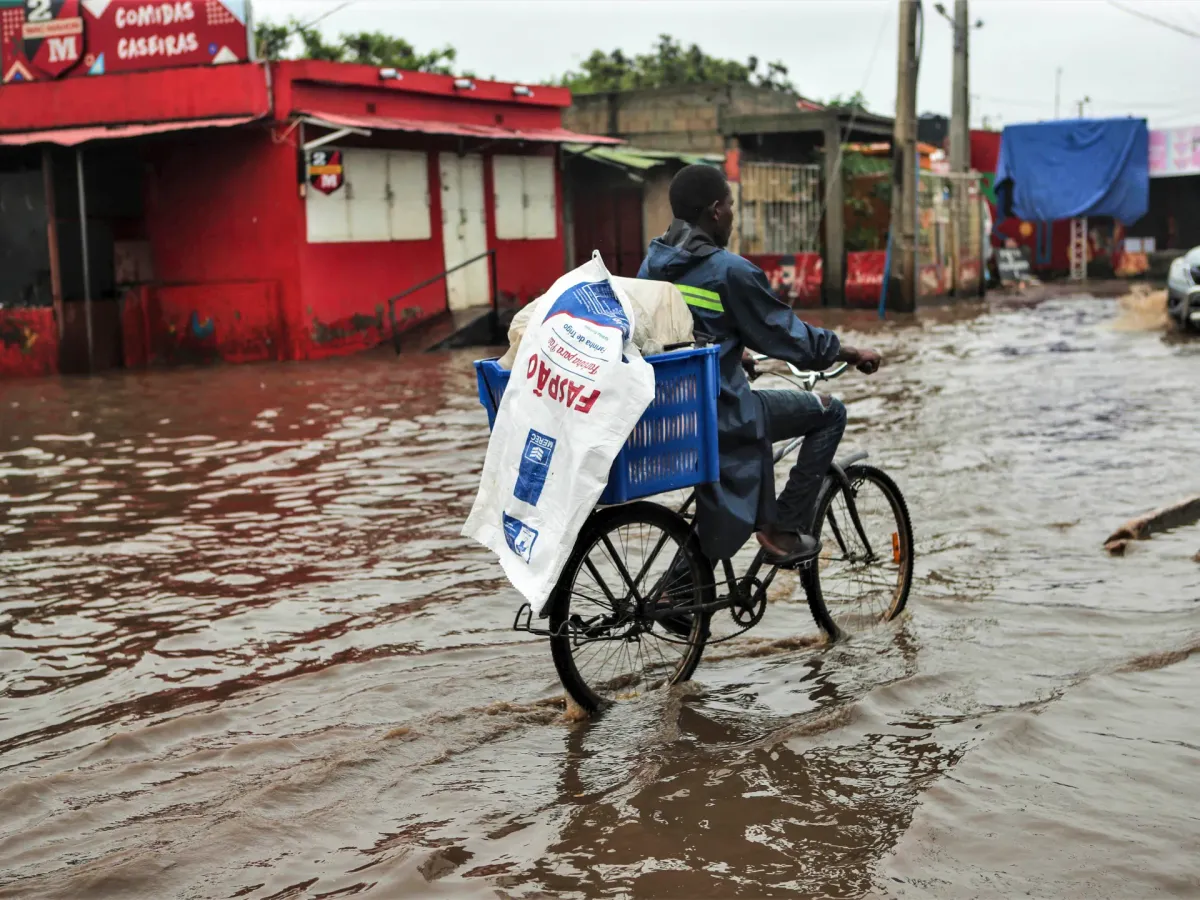
This time, the floods were worse than she remembered. Heavy rains from late December through mid-January swelled rivers across southern and central Mozambique, killing more than 150 people and affecting an estimated 800,000. The water stretched so far that humanitarian workers described it like "flying over the ocean"—vast expanses where homes sat isolated on shrinking islands. Hundreds of millions of dollars in infrastructure vanished. Farms that feed the region were buried. In Maputo, the country's most populated city, thousands of households abandoned their homes for emergency accommodation centres.
We're a new kind of news feed.
Regular news is designed to drain you. We're a non-profit built to restore you. Every story we publish is scored for impact, progress, and hope.
Start Your News Detox![An aerial view shows the flooded neighbourhood between the Maputo and Gaza regions, Maputo, Mozambique, January 20, 2026 [Luisa Nhantumbo/EPA]](https://www.aljazeera.com/wp-content/uploads/2026/02/epa_698334944e26-1770206356.jpg?w=770&resize=770%2C513&quality=80)
The weight of starting over
At Chiaquelane, conditions are sparse. Machel sleeps on a mat. The centre serves porridge in the morning and rice with beans in the afternoon—rarely a third meal. Her restaurant owner neighbor, Paula Fonseca, watches her business building stay submerged under water. The Gaza Province, normally an agricultural heartland, lost hundreds of hectares of farmland and storage barns.
Yet something quieter than the disaster headlines has emerged. "What we have seen is that people are helping each other, even those with little are helping others," Fonseca observed.
Machel's resolve carries the same weight. "It is very sad what is happening," she said, "but we have to rebuild to go back to our home."
![Children wade through floodwaters in a neighbourhood in Maputo, Mozambique, on Friday, January 16, 2026. [Carlos Uqueio/AP]](https://www.aljazeera.com/wp-content/uploads/2026/02/ap_6983343bf0717-1770206268.jpg?w=770&resize=770%2C510&quality=80)
Mozambique sits at the frontline of climate vulnerability—a country where extreme weather is becoming the pattern, not the exception. At COP30 in Brazil, the government requested more than $30 billion for climate adaptation initiatives through 2030, a plea rooted in years of watching communities rebuild after each successive disaster. The floods of 2026 are among the worst in decades, but they won't be the last without fundamental support for adaptation infrastructure.
For now, Machel waits at the centre with her children, planning the work ahead. The water is receding. The rebuilding hasn't started yet.