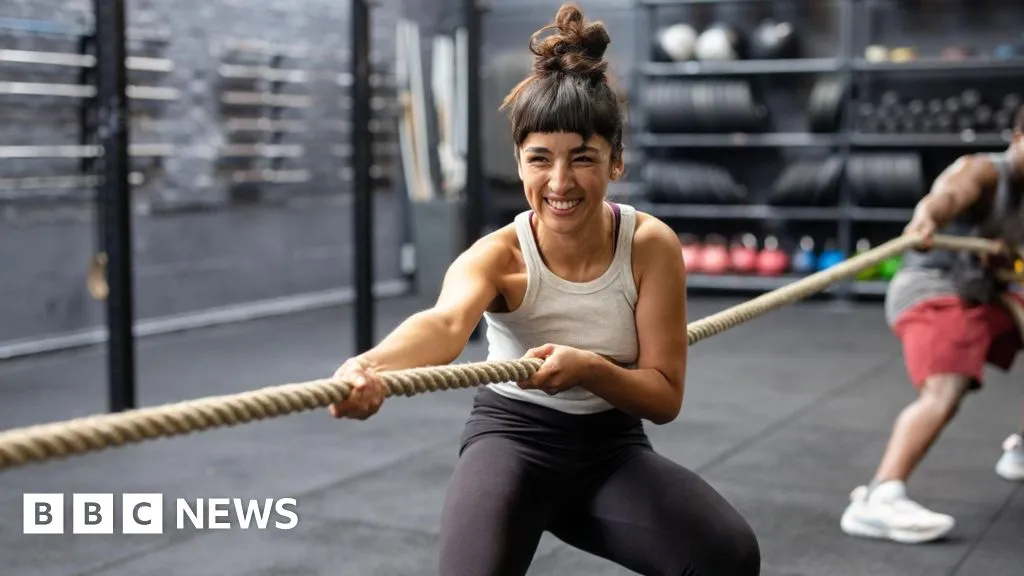
A 30-year study of 110,000 Americans found something that might feel obvious once you hear it: people who did the widest variety of exercise were 19% less likely to die during the study period than those who stuck to one activity. But the effect was stronger than any single sport alone—stronger than walking, tennis, rowing, or jogging by themselves.
The researchers, led by Dr Yang Hu from Harvard School of Public Health, weren't saying you need to do more exercise overall. The total volume still matters. What changed the math was what you do with that time.

Maddie Albon, 29, a marketing manager in London, lives this. She does triathlons, but also tennis, spin classes, yoga, pilates, and weight training. "Each different exercise offers something different," she says. "You need variety to be good at one sport—to be good at running you need to be weight training." For her, the mix isn't just about the body. The mental shift matters too. On days when she can't face intensity, a yoga session to unwind reshapes her whole mood.
We're a new kind of news feed.
Regular news is designed to drain you. We're a non-profit built to restore you. Every story we publish is scored for impact, progress, and hope.
Start Your News DetoxWhy variety works
The data showed people doing the broadest mix of activities had death risk 13–41% lower across cancer, heart disease, lung illness, and other causes. The reason isn't mysterious: different exercises build different things. Aerobic work strengthens your heart and lungs. Resistance training builds muscle and bone density. Flexibility work keeps you moving without pain. Combined, they're more protective than any single approach.
Dr Hu noted that "combining activities that have complementary health benefits can be very helpful." The NHS guidance reflects this—they recommend strengthening work at least twice a week, plus either 150 minutes of moderate activity or 75 minutes of vigorous work spread across 4–5 days. The research also found an optimum: around six hours of moderate exercise or three hours of vigorous work per week. After that, the protective effect plateaued.
What makes this findings stick is that it doesn't demand more from you. It asks for different. If you're already exercising, swapping one activity for another—or adding a second—might be the smallest change with the biggest return. The body, it turns out, rewards curiosity.