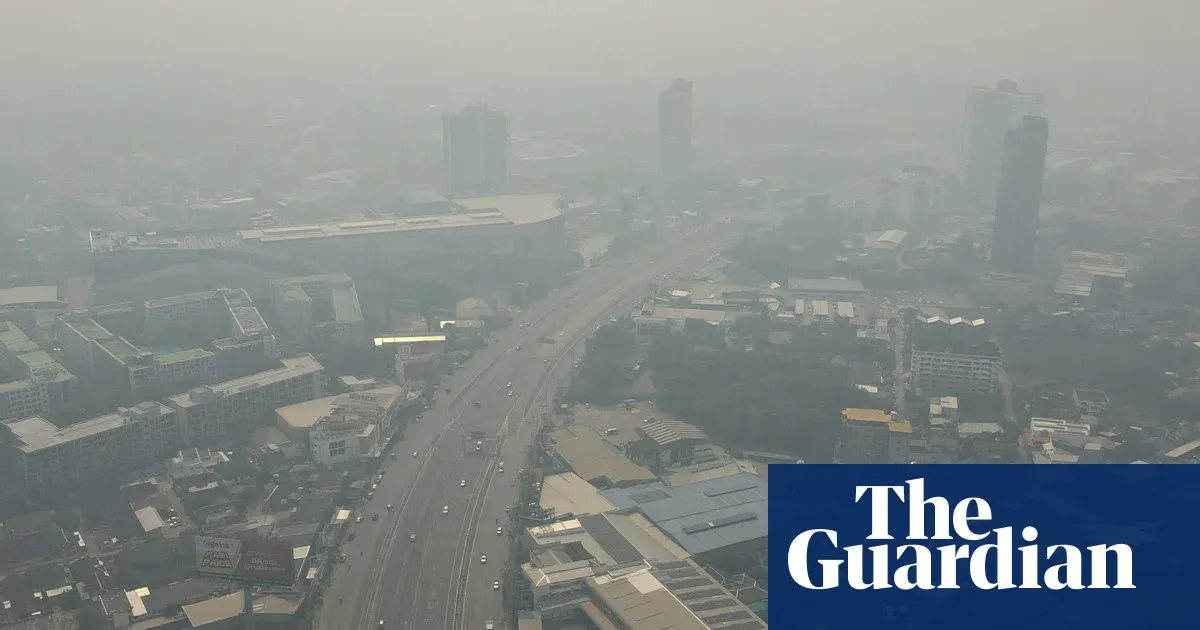
Turns out, simply cleaning up the air isn't the only way to save lives from pollution. A new study reveals that making people less vulnerable to the dirty stuff saved a whopping 1.7 million lives in 2019 alone. Because apparently, a healthier population is a harder one to kill.
While particle pollution did improve in 139 countries—Europe and North America leading the charge, because of course they are—the real hero here might be the less obvious one.
The Unseen Battle Against Air Pollution
Back in 1990, outdoor particle pollution was responsible for 3.8 million early deaths. By 2019, that number had climbed to 5.1 million. And if we keep going at this rate, we could be looking at over 10 million deaths annually by 2050. Let that satisfyingly terrifying number sink in.
We're a new kind of news feed.
Regular news is designed to drain you. We're a non-profit built to restore you. Every story we publish is scored for impact, progress, and hope.
Start Your News DetoxDr. Chris Malley, who led this groundbreaking research from the University of York, points out that air pollution is the world's second-biggest risk factor for an early exit. And he's here to tell us that just cutting down on smog is only half the fight. The other half? Making sure people are in better shape to withstand it.
So, what does making people "less vulnerable" actually entail? Think less poverty, better healthcare access, and generally not having to worry about where your next meal is coming from. Malley's research shows that global poverty rates were nearly cut in half from 1990 to 2019, and about 15% of the world gained access to essential health services. These aren't direct pollution fixes, but they're certainly helping.
Malley initially thought that if you cleaned up the air, you'd get similar health benefits everywhere. Nope. He found that cleaner air works much better when people aren't already struggling. Case in point: Europe and North America had similar pollution drops, but Europe saw almost double the reduction in pollution-related deaths. Why? Better healthcare and social safety nets. Apparently, an ounce of prevention is worth a pound of, well, not dying.
The UK's Double Whammy
The UK offers a stark example of this vulnerability in action. A separate study of over 300,000 Brits found that air pollution hit lower-income individuals significantly harder. Even with the same exposure, people with less money experienced twice the lung function decline and three times the risk of chronic obstructive pulmonary disease (COPD).
Professor Anna Hansell from the University of Leicester explains that those in more deprived areas are not only exposed to more pollution but are also more vulnerable due to poorer health, less access to good food, exercise, and decent healthcare. It's a double whammy of environmental and social injustice.
Malley concludes that as populations age, vulnerability to air pollution only increases. So, the real magic happens when you tackle both the pollution and the underlying health and social issues. His suggestions range from improving medical care and encouraging healthy diets to better postnatal care for children in high-pollution areas. Because apparently, saving lives from bad air is a full-spectrum endeavor, requiring a bit more than just plugging up smokestacks.