Seagrass meadows are vital for protecting coastlines, even if they don't get as much attention as coral reefs. As climate change causes more erosion, experts say that saving and restoring seagrass is a key "nature-based solution." These meadows also help store carbon.
Seagrasses reduce erosion by binding sediments with their roots, much like forests stabilize soil. Oscar Serrano Gras, a research fellow in Spain and Australia, explains that this natural ability protects shorelines. This also makes them very good at storing carbon dioxide.
Climate change is making storms stronger and more frequent. This is eroding coastlines globally, leading to floods, damaged buildings, and dangerous cliff falls. Gras notes that losing seagrass protection makes coastal erosion worse.
We're a new kind of news feed.
Regular news is designed to drain you. We're a non-profit built to restore you. Every story we publish is scored for impact, progress, and hope.
Start Your News DetoxReducing Waves and Binding Sediment
Healthy seagrass meadows form a protective belt along the coast. This belt helps slow down waves and reduce their height.
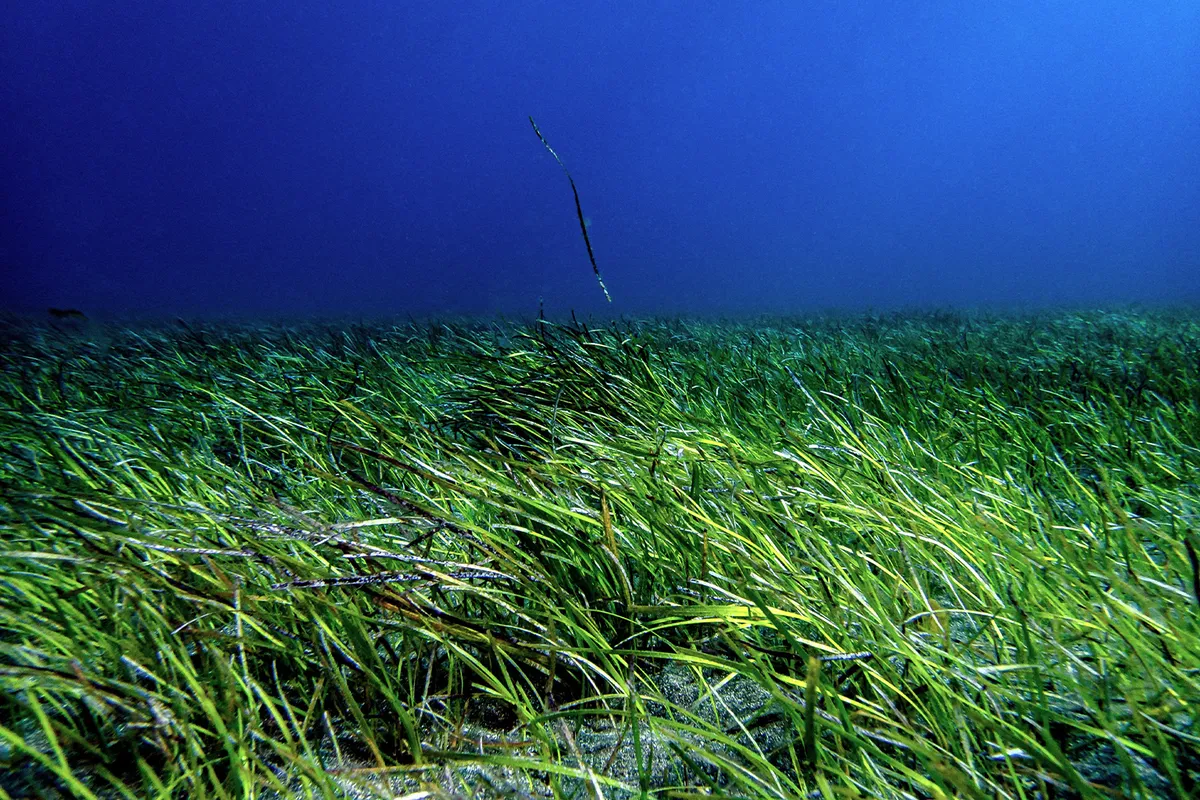
Heidi Nepf, a professor at MIT, explains that seagrass creates resistance to water movement. This reduces wave energy, which in turn lessens flooding and erosion on the shoreline.
For this to work well, seagrass meadows need to be large and dense. Maike Paul, a scientist in Germany, adds that the size and strength of the seagrass species matter. Larger, sturdier species, like broad-leaved Neptune grass (Posidonia oceanica), are better at reducing wave energy than smaller ones like dwarf eelgrass (Zostera noltii).
Seagrasses are also very important for stabilizing sediments. By building up sediments, meadows can help reduce flooding. A 2024 study in Nature found that losing Neptune grass in the Mediterranean would cause extreme water level increases in some areas.
While seagrass helps protect coasts, its full impact isn't yet known for all species. Paul says that engineered solutions are still needed for coastal and storm protection. Relying only on seagrass wouldn't be enough.
Paul notes that while they see some stabilization, more research is needed to provide data that coastal protection agencies can use. However, she emphasizes that seagrass offers many other benefits, making it a valuable ecosystem worth protecting and restoring.

Nourishing and Cleansing
Seagrasses do more than just reduce waves and stabilize soil. They also host organisms that help nourish beaches.
Gras explains that meadows are home to many organisms that form calcareous shells. When these organisms die, they leave behind sand, which feeds the beach and coastline. Research shows that one hectare of seagrass can produce several tons of calcareous sands each year.
Seagrass also benefits other ecosystems by improving water quality. Meadows act as filters, trapping sediment, reducing cloudiness, and cleaning pollutants from the water.
Studies show that seagrasses trap pollutants like microplastics, nutrients, and heavy metals. This improves water quality, which helps coral reefs that also protect coasts. Will Hamill, blue carbon director at the Great Barrier Reef Foundation, says seagrasses are crucial for good water quality flowing into the Great Barrier Reef.

Facing the Heat
Seagrass meadows worldwide are declining. Since the 19th century, about 30% of seagrass meadows have been destroyed. This is mainly due to pollution, coastal development, and dredging. Now, climate change is an increasing threat.
While seagrass is often resilient, a combination of stressors can lead to its decline.
Shark Bay in Australia is a clear example. A severe marine heat wave in 2010-2011, combined with floods that caused an algal bloom, devastated its seagrass meadows. Gras notes that the lack of oxygen and heat stress led to a massive die-off of Posidonia in the bay.
More recently, another heat wave off Western Australia destroyed meadows in Exmouth Gulf. This had ripple effects, highlighting how important healthy seagrass is.
In Exmouth Gulf, two seagrass species that dugongs eat were almost wiped out. Nicole Said, a research associate, says they are unsure how this will affect dugongs in the future.
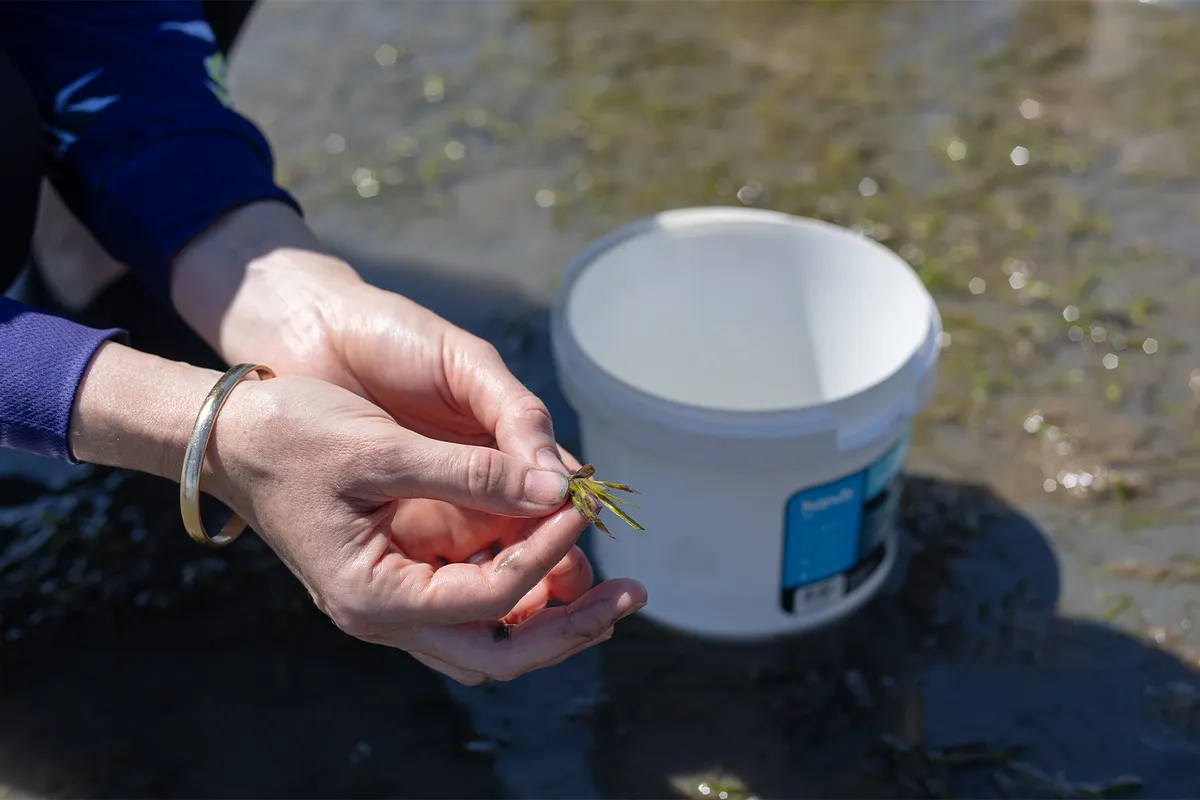
In Shark Bay, the loss of about 1,000 square kilometers (390 square miles) of meadows released an estimated 9 million metric tons of carbon dioxide.
One study suggested that Neptune grass could die off in the coming decades due to climate change. However, some seagrass species are proving tough. Gras says that seagrass is resilient and can adapt to change.
Restoring What's Lost
Efforts are underway globally to restore seagrass meadows and bring back their benefits. However, returning meadows to their original state is a costly and long-term challenge.
Fee Smulders, a marine ecologist, says seagrass is difficult to restore. Sometimes the same method works in one place but not another.
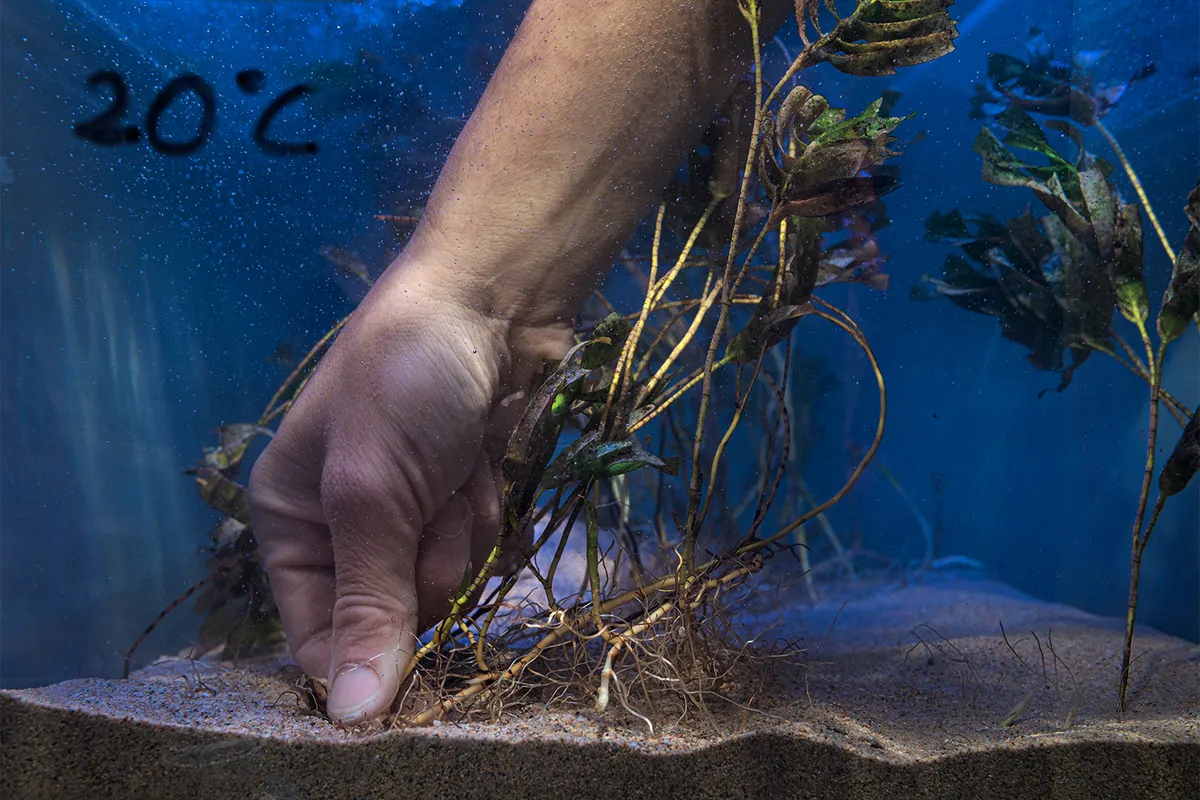
Experts stress that protecting seagrass before it's lost, and restoring it, is crucial. This is important not just for coastal protection, but for the many other "ecosystem services" it provides. Gras says there are multiple reasons to conserve and restore seagrass, from stabilizing coastlines to supporting marine life and benefiting the climate.
Currently, seagrass restoration is expensive and labor-intensive. Hamill mentions a project in Australia's Pelican banks, where volunteers and researchers plant about 200 seeds per square meter. Trials are now restoring 1 hectare (2.5 acres) within that meadow.
Restoration projects use various methods, including planting seed mats with adult plants and directly deploying seeds. Tadhg O Corcora from the Ocean Conservation Trust says planting adult plants has higher success rates but is harder on a large scale. Germination rates from seeds can vary widely.
Conservationists are exploring new tools and methods to help restoration and make meadows more resilient.
New techniques include hydro marine seeding, which uses a device to plant seeds directly into sediment. Automated robots are also being tested on the Great Barrier Reef for this task.
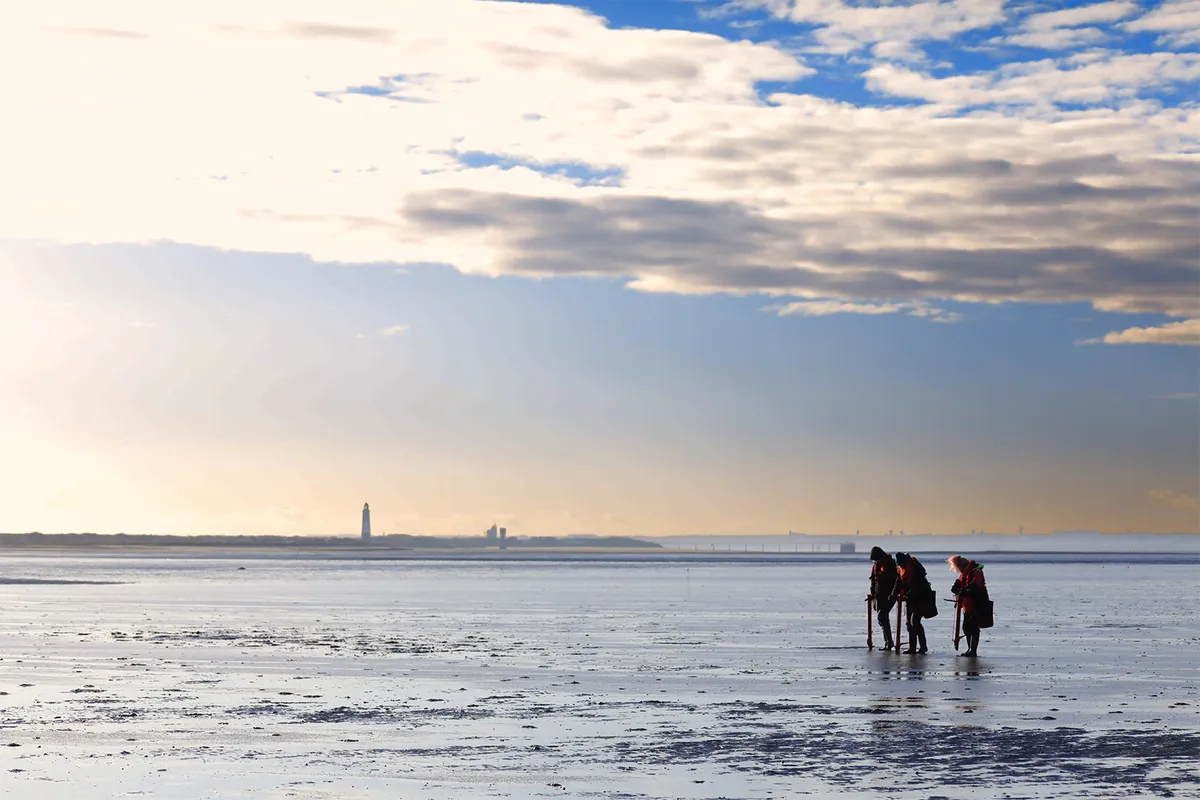
There's also hope for making meadows resistant to rising temperatures. Said's team found that even within the same species, seagrasses have different heat tolerances.
Said explains they are studying how thermal tolerance changes across species, populations, and locations. This will help predict impacts and focus conservation efforts. These findings suggest that using heat-tolerant seagrass from one location to restore meadows elsewhere could be beneficial.
While this research has focused on temperate species, Said's team is doing similar studies on tropical seagrass. They believe this approach could be a valuable tool for restoration worldwide. Said emphasizes the need for proactive interventions, as seagrass loss from climate impacts continues globally.
Deep Dive & References
- Seagrass blue carbon stocks and sequestration rates in the Colombian Caribbean - Scientific Reports, 2021
- Sandy coastlines under threat of erosion - Nature Climate Change, 2020
- Seagrass as a nature-based solution for coastal protection - Ecological Engineering, 2024
- Measuring the role of seagrasses in regulating sediment surface elevation - Scientific Reports, 2017
- Mediterranean seagrasses provide essential coastal protection under climate change - Scientific Reports, 2024
- The role of coastal plant communities for climate change mitigation and adaptation - Nature Climate Change, 2013
- Decreasing carbonate load of seagrass leaves with increasing latitude - Aquatic Botany, 2019
- Long‐term declines and recovery of meadow area across the world’s seagrass bioregions - Global Change Biology, 2021
- Breaking down seagrass fragmentation in a marine heatwave impacted world heritage area - Remote Sensing in Ecology and Conservation, 2025
- Sparse seagrass meadows are critical dugong habitat: A novel rapid assessment of habitat-wildlife associations using paired drone and in-water surveys - Ecological Indicators, 2024
- A marine heatwave drives massive losses from the world’s largest seagrass carbon stocks - Nature Climate Change, 2018
- Dramatic loss of seagrass habitat under projected climate change in the Mediterranean Sea - Global Change Biology, 2018