

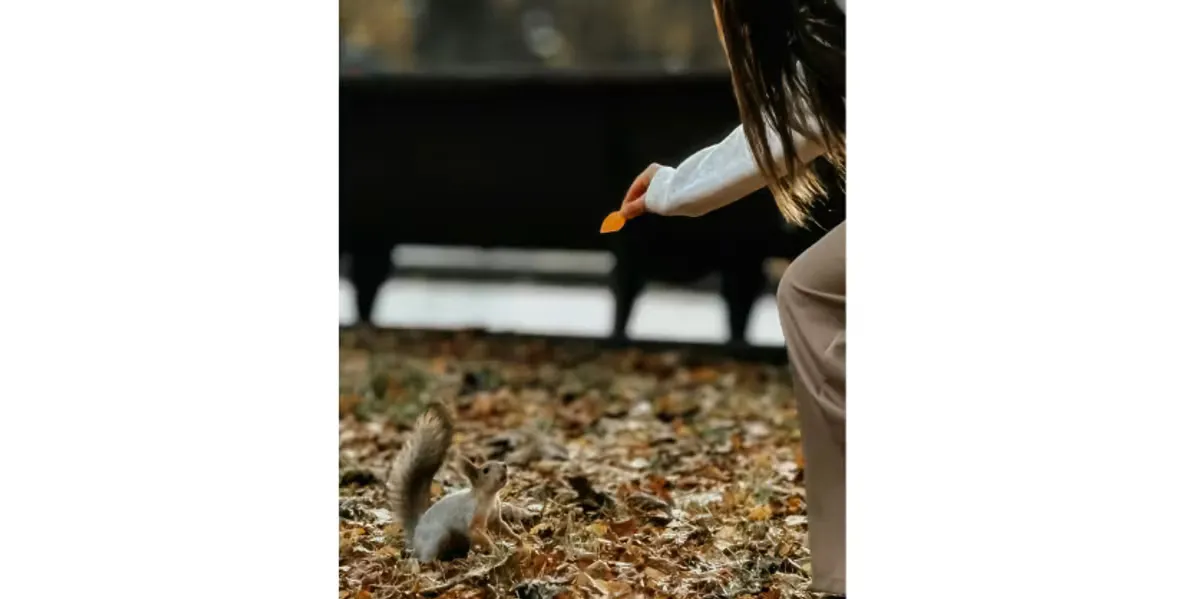
A security camera captured something that stops you mid-scroll: a squirrel, carefully carrying a cookie in its mouth, climbing up to a windowsill and placing it neatly by the front door—a gift, apparently, for the woman who'd been feeding it.
The video, originally posted to TikTok and then circulated on Reddit, shows the full arc of this small transaction. You see the woman arriving home, confused by the bright red cookie sitting in such an oddly deliberate spot. Then the footage rewinds: the squirrel, a regular visitor, making its way up the railing with the treat held tight, hopping onto the sill, and leaving it where it couldn't be missed.

The woman had been feeding this same squirrel every day. What the footage captures is what looks like reciprocal kindness—the animal's way of saying thank you.
We're a new kind of news feed.
Regular news is designed to drain you. We're a non-profit built to restore you. Every story we publish is scored for impact, progress, and hope.
Start Your News DetoxIt's easy to dismiss this as cute animal behavior and move on. But the story sparked something in the people who watched it. One Reddit user noted that squirrels forget about 80 percent of the nuts they bury, scattering them across yards and forests—accidentally planting trees. Another shared their own experience: they feed squirrels in winter, and in return, a squirrel planted an acorn in their empty planter. They nurtured it, planted it in the ground, and now the squirrel spends time in the tree it inadvertently created.
These aren't isolated moments. They're examples of something ecologists and animal behaviorists increasingly recognize: non-human animals form genuine relationships with humans when there's consistent, patient interaction. Squirrels have good memories for individuals who feed them regularly. They recognize faces. They adjust their behavior based on whether a person is trustworthy.
What the cookie moment really shows is that kindness doesn't have a language requirement. It moves between species the same way it moves between humans—through attention, through showing up, through small gestures that say: I see you, and you matter.
The woman's daily feeding wasn't a transaction waiting for a return. But the squirrel's gift suggests something deeper: that when you treat another creature with consistency and care, something shifts in how it relates to you. Not gratitude in the human sense, maybe. But recognition. Connection.
These small cross-species moments are becoming more common in our feeds and our neighborhoods, partly because more people are paying attention to the wildlife around them, and partly because wildlife is learning to coexist more closely with us. What happens next—whether we respond to these moments with curiosity or indifference—shapes the world both species share.





