

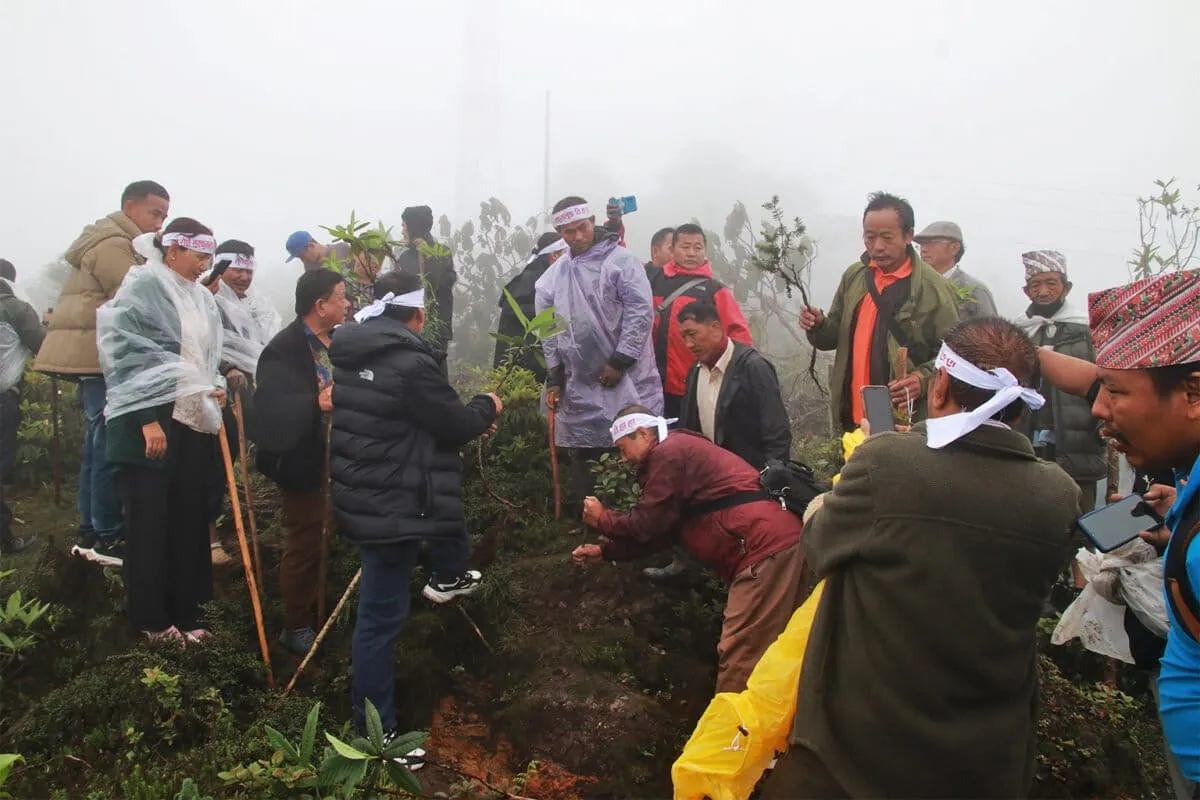
A cable car is being built to the mountaintop temple of Pathibhara Devi in eastern Nepal, a pilgrimage site for millions of Hindu visitors each year. But the same slopes are sacred to the Yakthung people, an Indigenous community who have lived in the region for generations. Tree clearing for the project, they say, threatens both the forest ecosystem and what they describe as the spiritual integrity of the site.
Now the World Bank Group's independent oversight body — the Compliance Advisor/Ombudsman (CAO) — is formally investigating whether the project's financial backers violated their own environmental and social safeguards.
The complaint and the investigation
In August 2025, Yakthung representatives filed a formal complaint against the International Finance Corporation (IFC), the World Bank's private sector arm, for providing advisory support to the cable car developer on ancestral Yakthung land. The CAO confirmed in December that the complaint meets its criteria for formal review and has entered the assessment phase — a process that typically involves examining project documents, community impact assessments, and whether the IFC followed its own policies on Indigenous rights and environmental protection.
We're a new kind of news feed.
Regular news is designed to drain you. We're a non-profit built to restore you. Every story we publish is scored for impact, progress, and hope.
Start Your News Detox"The Pathibhara issue falls within the CAO's mandate to address potential environmental and social impacts," Emily Horgan, communications lead at CAO, told Mongabay. This is significant because it means the investigation isn't just about whether the cable car is a good idea — it's about whether the process of building it respected the rights and concerns of people whose land it affects.
The cable car project is being developed by Pathibhara Devi Darshan Cable Car Pvt. Ltd., part of Nepal's IME Group, a prominent conglomerate. The company has framed the cable car as infrastructure that will improve access to the temple and boost local tourism revenue.
What happens next
The CAO's assessment phase will take several months. If investigators find merit to the Yakthung complaint, the process can move to a compliance review — a deeper examination of whether the IFC actually breached its own standards. This kind of scrutiny matters because the IFC's policies on Indigenous consultation and free, prior, and informed consent (FPIC) are meant to prevent exactly this scenario: major projects moving forward on Indigenous land without genuine community agreement.
For the Yakthung people, the investigation represents a rare opportunity to have an independent body examine whether their voices were actually heard, or whether consultation was just a box to check. Whether that leads to meaningful change — a project redesign, additional protections, or a halt to construction — remains to be seen.





