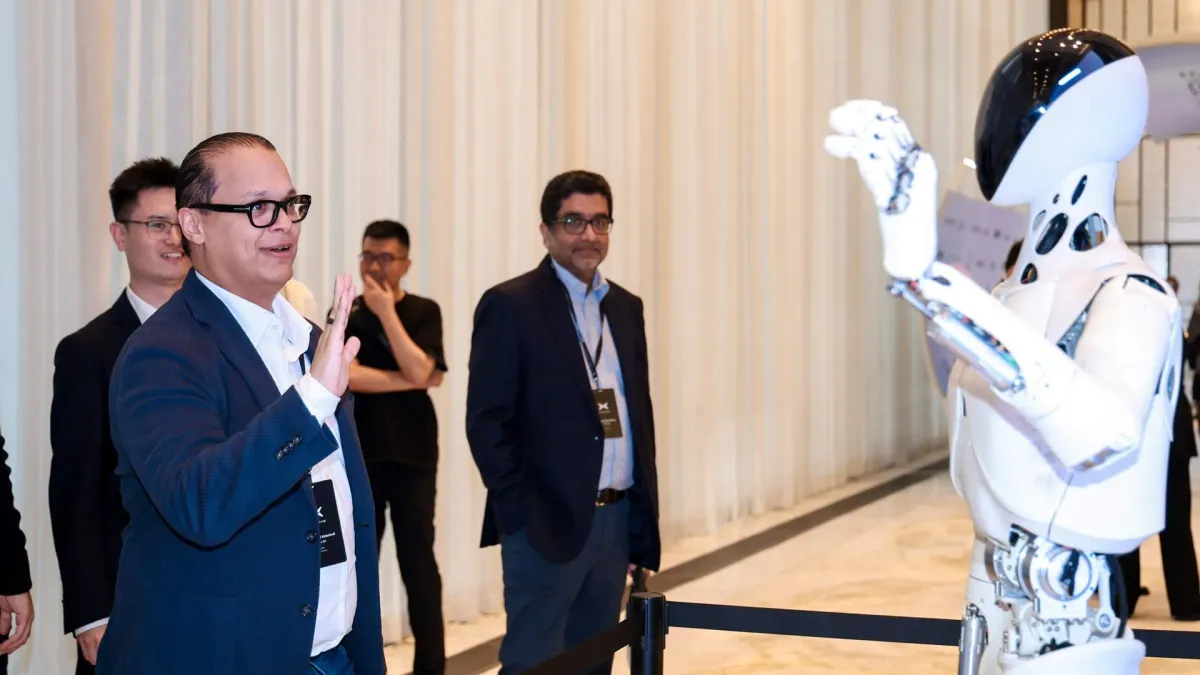
XPeng, the Chinese electric vehicle maker, just completed the first working ET1 humanoid robot—built to the same precision standards the company uses for cars. CEO He Xiaopeng announced the milestone on Weibo, noting the robot has already passed through a full production line, not just a lab prototype.
This matters because it signals something real: a company with actual manufacturing expertise is treating humanoid robots like they're serious products, not research projects. XPeng isn't starting from scratch. They're applying two decades of automotive engineering discipline—tolerances, quality control, scalability—to a robot that needs to move smoothly enough to work in retail stores or hotels without looking like it's about to malfunction.
From concept to production floor
XPeng introduced its first humanoid, called IRON, at an AI conference in 2024. It had over 60 joints and 200 degrees of freedom, which basically means it could move in ways that looked unsettlingly human. A year later, they showed a second-generation version with a "bionic spine," flexible synthetic skin, and custom AI chips. During the demo, people watching online initially thought an actual person was inside the suit—the company had to deliberately expose the mechanical parts to prove otherwise.
We're a new kind of news feed.
Regular news is designed to drain you. We're a non-profit built to restore you. Every story we publish is scored for impact, progress, and hope.
Start Your News DetoxNow they've built one that can actually be manufactured. The ET1 prototype incorporates technology borrowed from XPeng's electric vehicles and has already been tested in real conditions: XPeng's own factories and retail stores. That's not a simulation. It's a robot doing actual work.
The company is targeting mass production by the end of 2026. That's ambitious, but XPeng has the supply chain infrastructure and manufacturing experience most robotics startups lack. Their initial focus won't be home robots—those are harder to sell and require more safety certification. Instead, they're aiming at commercial roles: hospitality, retail, warehouse work. Places where a robot can be useful without needing to navigate a family home.
This is part of a bigger bet XPeng is making on what they call "physical AI"—systems that combine autonomous vehicles, robotaxis, and humanoid robots under one AI architecture. The same large language models and custom chips powering their self-driving cars are now powering robots that can pick things up and move around.
Whether this actually works at scale is still an open question. But XPeng just proved they can build one. That's the difference between a research announcement and something that might actually exist in a hotel lobby in two years.