Imagine trying to pull a tree stump out of the ground with a rope. Now, imagine doing that at a nanoscale, creating a perfectly sized hole in a membrane thinner than a whisper. That's essentially what researchers at KTH Royal Institute of Technology in Sweden have figured out, and it's a game-changer for tiny sensors.
For years, making the minuscule holes — called nanopores — that are crucial for high-tech sensors has been a painstakingly slow, expensive process, often crafting one pore at a time. Think of it like a bespoke suit, but for molecules. These sensors are vital for everything from tracking disease outbreaks to early cancer detection, because those tiny openings can literally detect and analyze individual molecules like DNA and proteins.
But the new method? It's like switching from a single tailor to an entire factory, churning out hundreds of bespoke suits simultaneously. Frank Niklaus, a professor at KTH, highlights that their study unveils a unique way to create these nanoholes using built-in mechanical stress. Because apparently, even tiny membranes get stressed.
We're a new kind of news feed.
Regular news is designed to drain you. We're a non-profit built to restore you. Every story we publish is scored for impact, progress, and hope.
Start Your News DetoxThe Art of the Micro-Tear
Instead of the traditional, tedious electron-beam drilling, this new technique leverages fracture mechanics to create openings as small as 6 to 10 nanometers. For context, a human hair is about 80,000 nanometers thick. So, yeah, these are small.
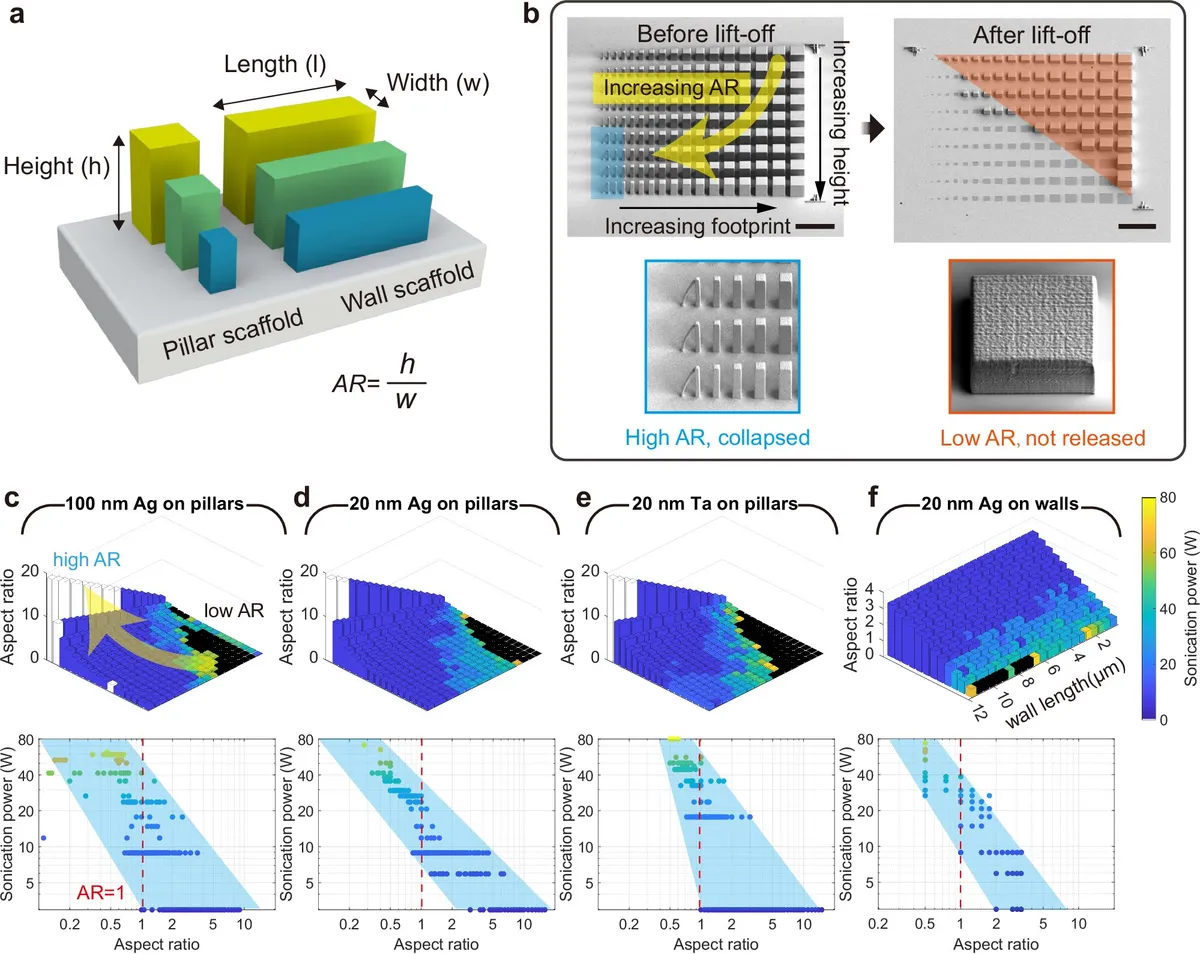
The process starts with layers of material on a silicon wafer. A top layer is stretched taut, like a drum skin. Below it, a second layer is carefully etched away, leaving a specific shape. This shape then dictates the nanopore in the third layer, which is the actual sensor membrane. Then comes the magic.
Xinxin Liu, the lead author and a doctoral student, explains it perfectly: a "beam pulls until it tears a nanoscale fragment from the membrane, creating the hole." She adds, "It's much like removing a tree stump with a rope—the beam attaches to the nanoscale anchor, pulling it away from the membrane, which serves as the ground." Which, if you think about it, is both impressively precise and slightly terrifying.
The technique has already proven its mettle with various materials, including the dielectric, metallic, and semiconductor membranes typically used in sensors. Plus, the resulting nanopores are already showing promise in DNA analysis and molecule detection. The team has even patented the technique and launched a company to commercialize it. They've already shipped samples for testing, moving this clever idea from the lab bench to something that might actually, you know, change things.
Because who knew pulling out tiny stumps could be so revolutionary?