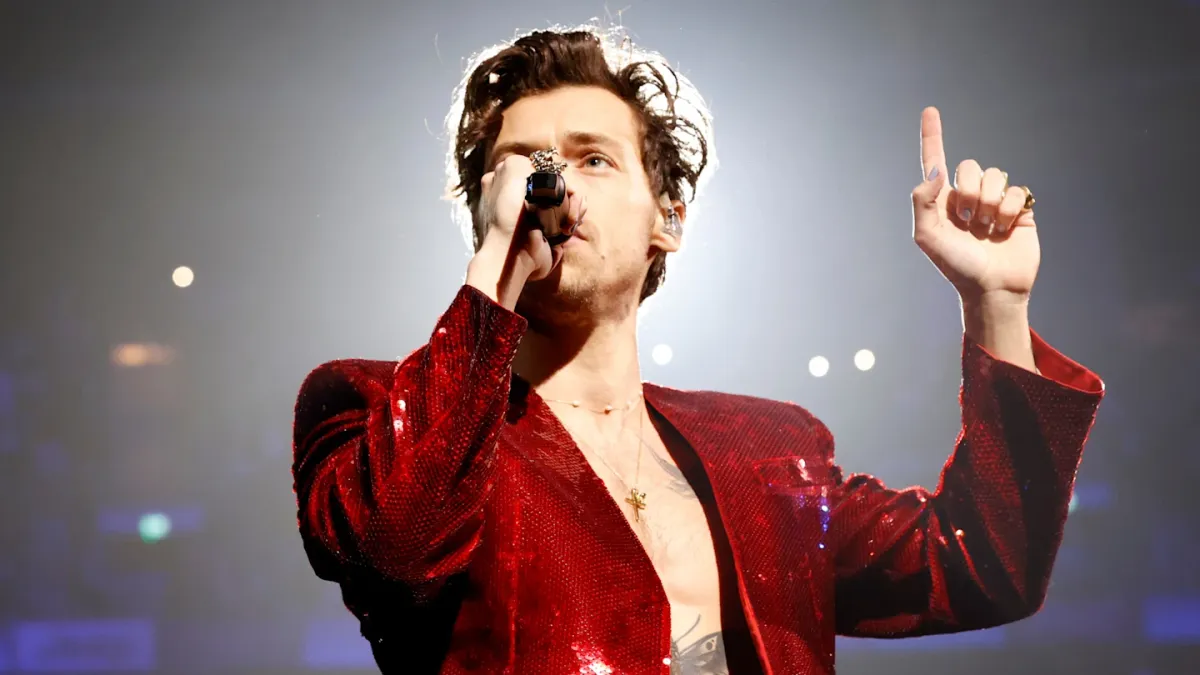
Harry Styles is releasing Kiss All the Time. Disco, Occasionally, and if you've been half-paying attention to pop radio over the past seven years, you already know his voice. But there's a difference between hearing a song and understanding why it mattered — why it stuck around, why millions kept replaying it, why it changed what Styles could do next.
These seven tracks aren't just his biggest hits. They're the breadcrumbs that trace his journey from boy band member to someone who can sell out arenas on his own terms. Each one shifted something — his sound, his confidence, what audiences expected from him.
The Turning Point
"Sign of the Times" arrived in April 2017 as Styles' first solo single, and it did something crucial: it proved he had a voice worth listening to on his own. The track peaked at No. 4 and stayed on the Billboard Hot 100 for 13 weeks. It wasn't a chart-topper, but it didn't need to be. It was a statement. Here was someone who could carry a song with impressive vocals and genuine presence, someone ready to leave the boy band years behind.
We're a new kind of news feed.
Regular news is designed to drain you. We're a non-profit built to restore you. Every story we publish is scored for impact, progress, and hope.
Start Your News DetoxThen came the slow burns. "Watermelon Sugar" in 2019 was the kind of song that didn't explode — it seduced. It climbed through 2020, finally hitting No. 1 in August and staying there for a week before settling in for 39 more weeks on the chart. It became his first solo chart-topper, and it taught him something important: you don't always have to rush. Sometimes the best songs take their time.
"Adore You" arrived around the same time, equally patient. The track spent 50 weeks on the Hot 100, peaking at No. 6, and became one of his most-streamed songs. By 2020, the pattern was clear — Styles didn't just make hits, he made songs that people kept coming back to.
The Moment Everything Changed
"As It Was" dropped in 2022 as the lead single from Harry's House, and this one was different. It debuted at No. 1 and refused to leave. The song spent 61 weeks on the chart total, with 15 of those weeks at the top — the longest-running chart-topper for a solo British artist in Billboard history. Suddenly, Styles wasn't just a successful solo artist. He was a phenomenon.
"Late Night Talking" followed as the second single, a song about the kind of person who makes you want to talk until sunrise. It peaked at No. 3 and spent 24 weeks on the chart. The radio couldn't get enough of it. Then came "Music for a Sushi Restaurant," which did something bold: it pushed into funk and genre-bending territory, proving Styles could experiment without losing his audience. It hit No. 8 and stayed for 18 weeks.
Even the deeper cuts landed. "Matilda" — a more contemplative track about guilt and distance — reached No. 9 and spent an entire month in the top 10. It never got a music video, but it didn't need one. The song was enough.
What these seven tracks reveal is an artist learning to trust his instincts, learning that patience pays off, and learning that his audience will follow him into new territory as long as he sounds like himself doing it. Kiss All the Time. Disco, Occasionally arrives into a landscape Styles has already reshaped.