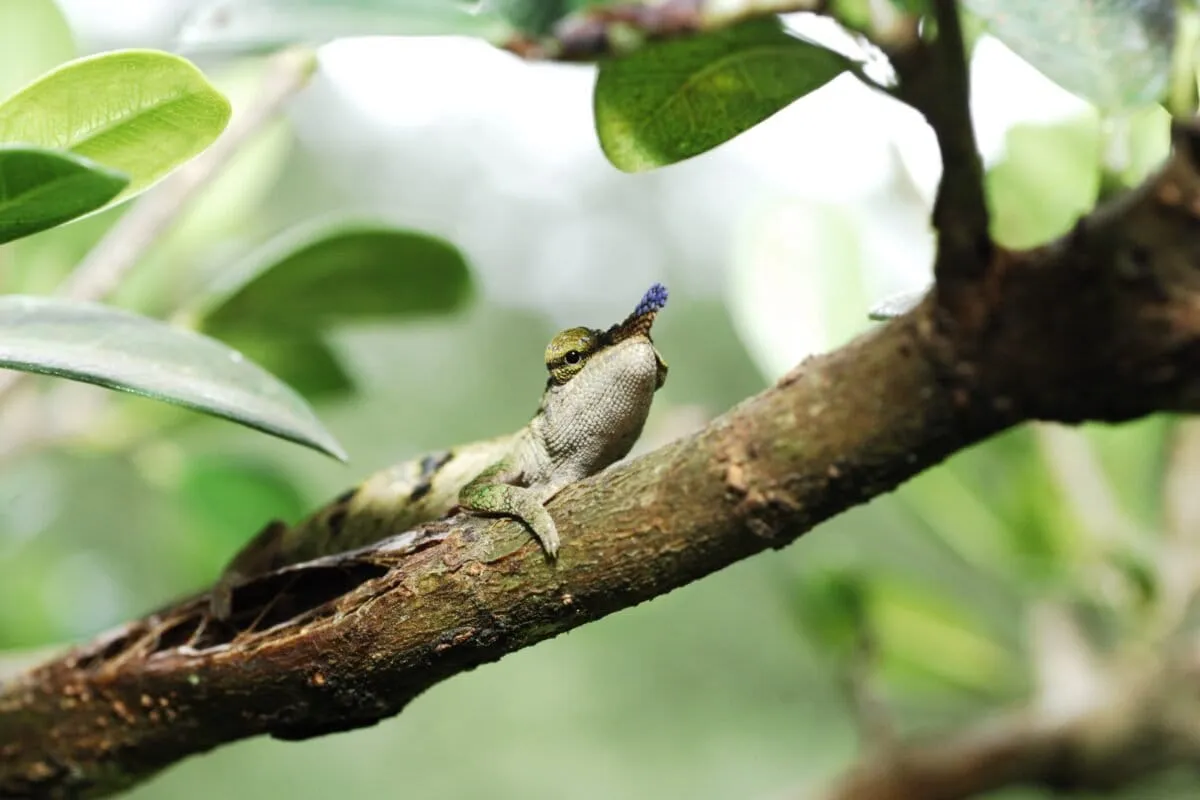
For years, scientists just lumped the blue-nosed chameleon in with a less flashy cousin, the Calumma boettgeri. Think of it as that distant relative you only see at holidays, who's also just vaguely yellowish-brown. But our blue-nosed friend? It's got a nose that lights up like a neon sign when it's excited. And for a long time, it didn't get the credit it deserved.
Turns out, this vibrant lizard, found only in northern Madagascar, was just waiting for its moment in the scientific spotlight. And in 2015, it finally arrived.

The Unveiling of Calumma linotum
Scientists, bless their patient souls, finally published the findings that declared the blue-nosed chameleon its own distinct species: Calumma linotum. Because apparently, a "blue rostral appendage and greenish turquoise extremities" (that's fancy talk for its stunning blue nose and green-tinged limbs) is just a little different from "inconspicuously yellowish brown."
We're a new kind of news feed.
Regular news is designed to drain you. We're a non-profit built to restore you. Every story we publish is scored for impact, progress, and hope.
Start Your News DetoxThis isn't just about a pretty face, though. There are subtle differences in size and shape that set it apart. The photo in question, snapped by Mongabay photo editor Julie Larsen, shows one of these beauties chilling in Montagne d’Ambre National Park. It's one of only two known spots on Earth where you can find them.
Now, for the good news: C. linotum is currently listed as "least concern" on the IUCN Red List. This is largely thanks to a healthy population within its well-managed park habitat. Let that satisfying number sink in.

But here's the catch: Chameleons, in general, are having a rough time. Hundreds of thousands are snatched from the wild every year, both legally and illegally, to feed the exotic pet trade. And here's the kicker: they're notoriously difficult to keep alive in captivity. Yet, their unique, sometimes absurd, looks make them irresistible to collectors. Because apparently that's where we are now.
C. linotum, like most of its chameleon kin, is on Appendix II of CITES. That's the global treaty that says, "Hey, if you want to trade these guys internationally, you're gonna need permits and someone's watching." Which, if you think about it, is both impressive and slightly terrifying, given their island home makes them far more vulnerable to extinction than their mainland counterparts. So, cheers to the blue nose — may it keep shining bright.