Blockchain has a speed problem. When thousands of sensors, cameras, and machines need to share data instantly—think a self-driving car making a split-second decision, or a hospital monitor alerting staff to a critical change—blockchain networks often can't keep up. The delays aren't fatal flaws, just friction. But friction matters when lives or safety are on the line.
Researchers at Chiba University in Japan just showed how to cut those delays nearly in half.
The bottleneck wasn't where anyone thought
Blockchain gets its reputation from cryptocurrency, but its real superpower is security through decentralization. Instead of one company controlling your data, a network of computers shares the work—making tampering nearly impossible. That's why engineers have been exploring it for the Internet of Things: millions of connected devices that need to trust each other.
We're a new kind of news feed.
Regular news is designed to drain you. We're a non-profit built to restore you. Every story we publish is scored for impact, progress, and hope.
Start Your News DetoxThe problem: blockchain networks introduce delays that can break real-time applications. For years, researchers assumed the blockchain protocol itself was the culprit. But Associate Professor Kien Nguyen's team dug deeper and found something else entirely.
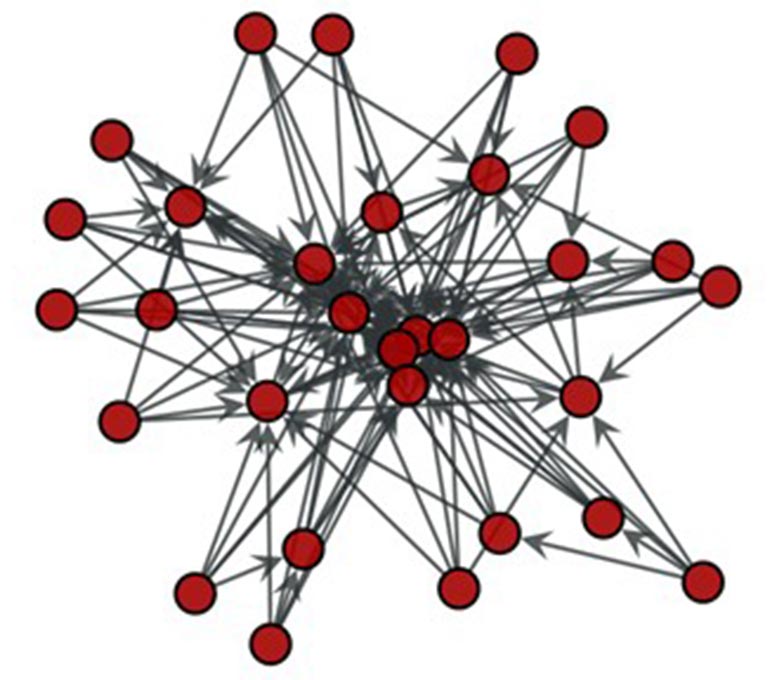
The real issue was how devices talk to each other. In a decentralized network, there's no central hub directing traffic. Instead, devices relay data peer-to-peer, creating overlapping paths. When the same piece of data travels multiple routes simultaneously, copies pile up. Queues form. The network chokes.
A device learns to be picky
Instead of accepting whatever connections chance provides, Nguyen's team created an algorithm called Dual Perigee that lets each device choose smarter neighbors. Here's how it works: every device watches how quickly its peers deliver data. If a connection consistently lags, the device drops it and connects elsewhere. No central authority needed. No complex calculations required. Just devices quietly optimizing their own connections until the network reorganizes itself into something faster.
In simulations with 50 devices, Dual Perigee cut delays by 48.54% compared to Ethereum's standard method. It also outperformed earlier peer-selection techniques by more than 23%. The kicker: it demands almost no extra computing power from the devices themselves.
Why this matters now
Smart cities, industrial monitoring, healthcare alerts, supply-chain tracking—these applications all depend on data that's both trustworthy and fast. Right now, they're stuck choosing between security and speed. Dual Perigee suggests that gap might be closing.
"Our approach can be applied to emerging IoT-based services that require fast and reliable data sharing," Nguyen explains. The research, published in IEEE Transactions on Network and Service Management in December 2025, isn't revolutionary in the sense of overturning everything. It's better than that: it's practical. A small algorithmic tweak that lets existing blockchain networks run nearly twice as fast without asking devices to work harder.
As IoT systems become more complex and interconnected, the pressure for speed will only grow. This work suggests that pressure might finally have an answer.