It's a clear winter morning in the village of Armeniș, deep in the southern Carpathian Mountains. Fluffy clouds sit atop the peaks as woodsmoke and the smell of fresh bread drift through the air. At the Dospita bakery, owner Mihai Miculescu is doing what he does most mornings—moving quickly between the oven and a steady stream of customers.
Over coffee and malai, a Romanian cornbread made with his family's secret recipe, Miculescu tells the story of how a creature he thought was gone forever came back to his mountains.
The return of a legend
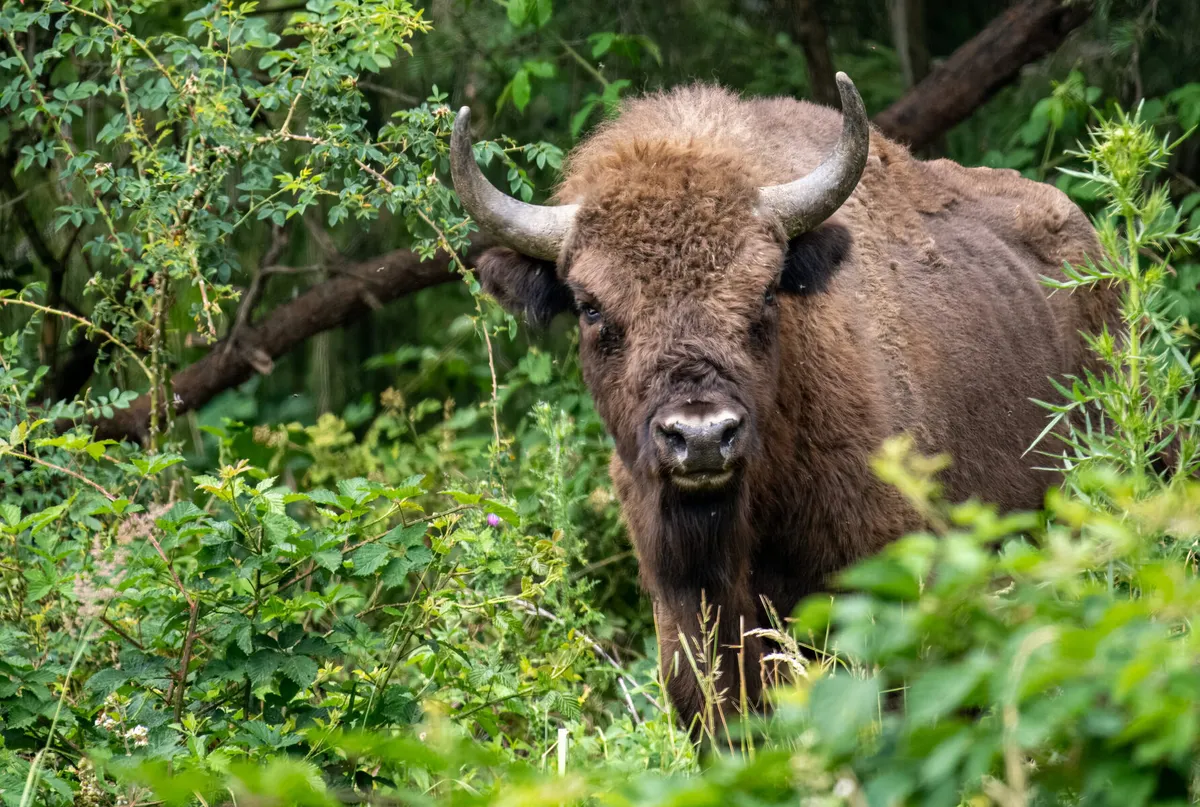
The last wild European bison was shot in 1927. At that point, fewer than 60 existed anywhere on Earth—all in zoos or private parks. As a child, Miculescu heard stories about the great, shaggy beasts that once roamed the Carpathians. He hiked through the mountains searching for a legendary footprint one was said to have left on a rock. He'd seen them in sanctuaries too. But nothing prepared him for the day he saw a wild bison in his own landscape.
We're a new kind of news feed.
Regular news is designed to drain you. We're a non-profit built to restore you. Every story we publish is scored for impact, progress, and hope.
Start Your News DetoxMore than a decade ago, conservationists from Rewilding Europe arrived in Armeniș with a proposal. They wanted to release European bison back into the Carpathians—a place the animals hadn't lived in freedom for nearly a century. Miculescu had questions. Would this bring tourists? What happened if people encountered a 900-pound animal face-to-face? He didn't know the answers, but curiosity won. He and his son volunteered to help build the enclosure that would hold the first relocated animals.
When the truck finally arrived with its cargo, something shifted in the village.
Today, bison herds roam freely across the Carpathian landscape once again. The reintroduction program has grown beyond Armeniș, with multiple herds now established across Romania and neighboring regions. It's the kind of ecological recovery that seemed impossible a generation ago—not because the science was unknown, but because the will to try had vanished along with the animals themselves.
For Miculescu and others in the region, the bison's return has meant more than ecological restoration. It's brought a quiet pride to communities that had inherited only stories of what was lost. The animals that once shaped the landscape are reshaping it again, and the people who live there are learning what it means to share their mountains with a gentle giant that refuses to stay extinct.
The next chapter of this story is still being written—in hoofprints across snow, in the eyes of children seeing a wild bison for the first time, in the slow rewilding of a landscape that remembers what it used to be.