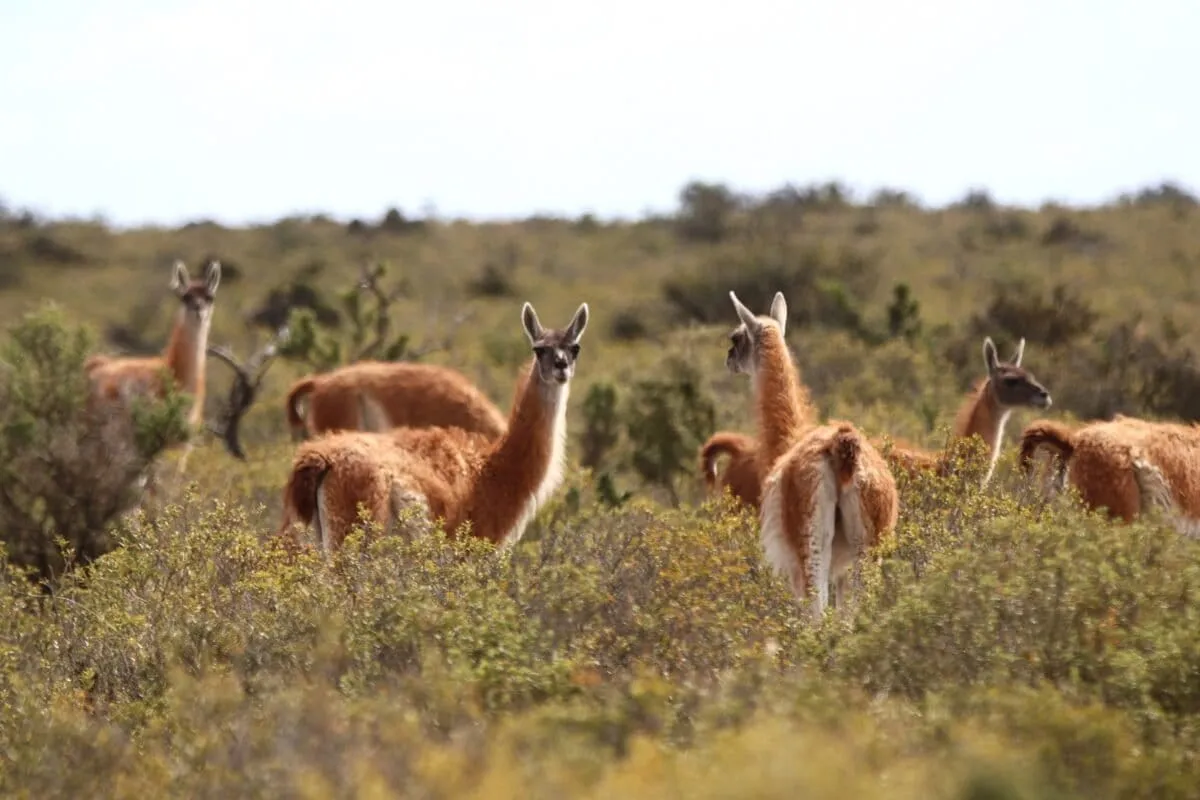
Five guanacos—South America's largest wild camelids—have just completed a 3,200-kilometer journey from Patagonia to El Impenetrable National Park in Argentina's Chaco region. After a year of adjustment, they've been released into grasslands that haven't seen their kind since 1913.
The reintroduction is part of a larger rewilding effort to restore the Dry Chaco ecosystem. Guanacos are natural grazers, and their return could help reverse decades of degradation caused by cattle ranching. Rewilding Argentina, the conservation group leading the project in coordination with Argentina's National Parks Administration, sees this as a critical step toward ecological recovery in a region where livestock farming had pushed the species to local extinction.
The story of the guanaco's disappearance from the Chaco is straightforward: hunting and habitat loss. By the early 20th century, they were gone from the province entirely. Today, around 1.5 to 2.2 million guanacos survive across South America's southern and western grasslands, but roughly 90% live in Patagonia—far from where they once roamed. Small fragmented populations persist only along the Paraguay-Bolivia border.
We're a new kind of news feed.
Regular news is designed to drain you. We're a non-profit built to restore you. Every story we publish is scored for impact, progress, and hope.
Start Your News DetoxThe translocation question
Here's where the optimism hits a complication. Some Argentinian researchers are raising concerns about mixing guanaco populations with different genetic backgrounds. Move animals across vast distances, they argue, and you risk disrupting the genetic integrity of both the source and recipient populations. It's a legitimate scientific tension: rewilding sounds straightforward until you factor in the complexity of gene pools shaped by thousands of years of isolation.
The five guanacos released—three females, one male, and a juvenile—represent a careful first step. But the debate reflects a broader challenge in modern conservation: how do you restore what was lost without accidentally breaking something else in the process. The animals spent a full year acclimating before release, suggesting the teams involved are taking the risks seriously.
What happens next will matter. If the guanacos thrive and their presence genuinely restores grassland health, this model could inform other reintroduction projects across Argentina and beyond. If complications emerge—genetic or ecological—the lessons will be just as valuable. Either way, the Chaco's grasslands are no longer waiting in silence for a species that once shaped them.