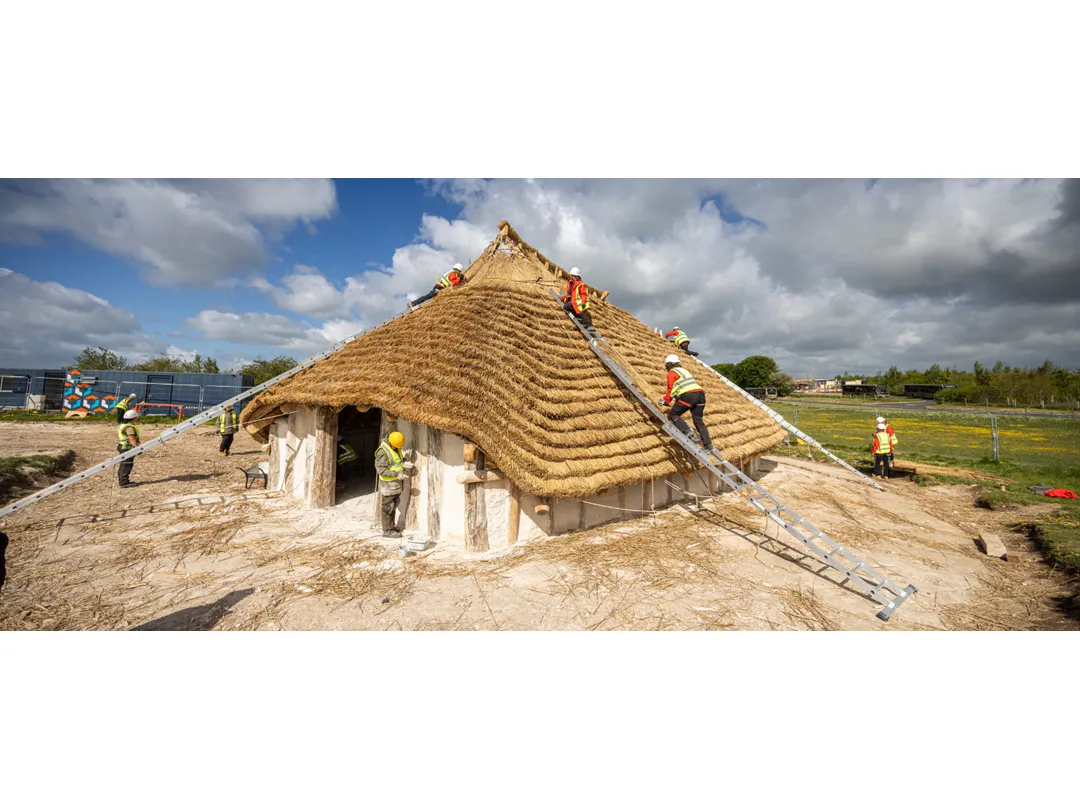
Ever wonder where the ancient folks who lugged those massive stones for Stonehenge actually partied? Or, you know, just hung out? English Heritage just dropped a cool $1.34 million on a historically accurate replica of a 4,500-year-old community hall right near the iconic monument. It's called the Kusuma Neolithic Hall, it stands 23 feet tall, and it’s basically an ancient VIP lounge, minus the velvet rope.
The idea is to give visitors a peek into the daily grind (and probably the occasional feast) of the people who engineered one of the world's most enduring mysteries. Because apparently, once you’ve figured out how to move multi-ton boulders, the next logical step is to build a really impressive hut.
Building an Ancient Vibe
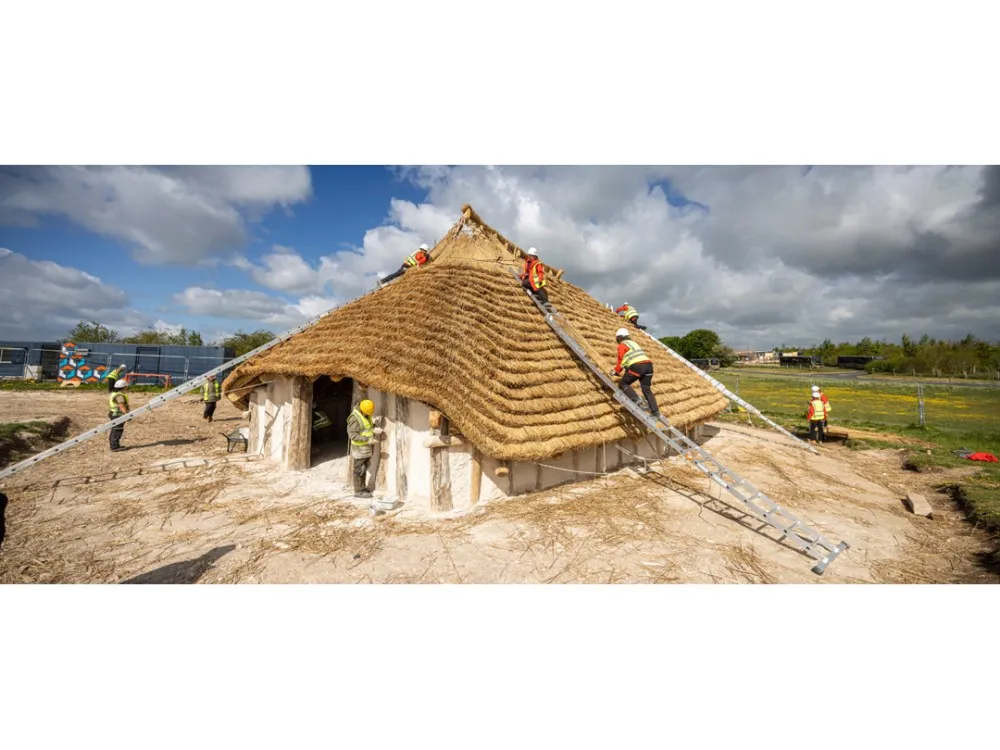
The hall isn't just some modern architect's best guess. It's a meticulously crafted doppelgänger of a structure unearthed at Durrington Walls, a nearby ancient settlement. Over nine months, a small army of more than 100 volunteers channeled their inner Neolithic builders, using only period-appropriate tools — think stone axes and, presumably, a whole lot of elbow grease. Local materials like reed thatch, pine, and chalk daub completed the authentic look, all under the watchful eye of experimental archaeologist Luke Winter.
We're a new kind of news feed.
Regular news is designed to drain you. We're a non-profit built to restore you. Every story we publish is scored for impact, progress, and hope.
Start Your News DetoxWhile no one knows the original building's exact purpose (it’s a little hard to find ancient meeting minutes), archaeological digs at Durrington Walls turned up enough animal bones and pottery shards to suggest it was a prime spot for large-scale shindigs. So, even if the Stonehenge crew didn't have this exact hall on-site, it paints a pretty vivid picture of Neolithic life and — let's be honest — their excellent party planning skills.
One volunteer, Emma Groeger, described the thrill of seeing the structure rise, noting that hoisting the two main oak doorposts into place required the entire team to work in unison. Which, if you think about it, is both impressive and slightly terrifying when you’re dealing with ancient construction methods.
Matt Thompson of English Heritage noted that this hall isn't just a pretty face; it’s an educational powerhouse. Starting in September, it will transform into a living-history learning space for school groups, proving that even after 4,500 years, some things — like the need for a good classroom — never really change.