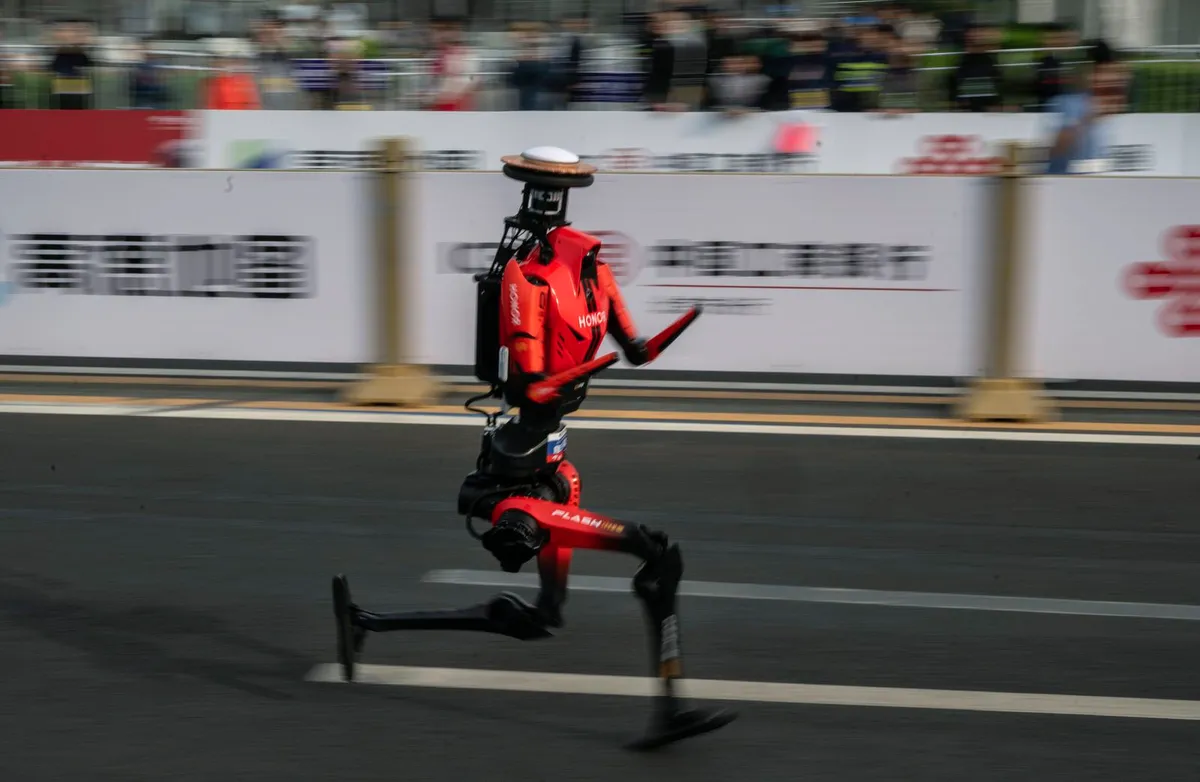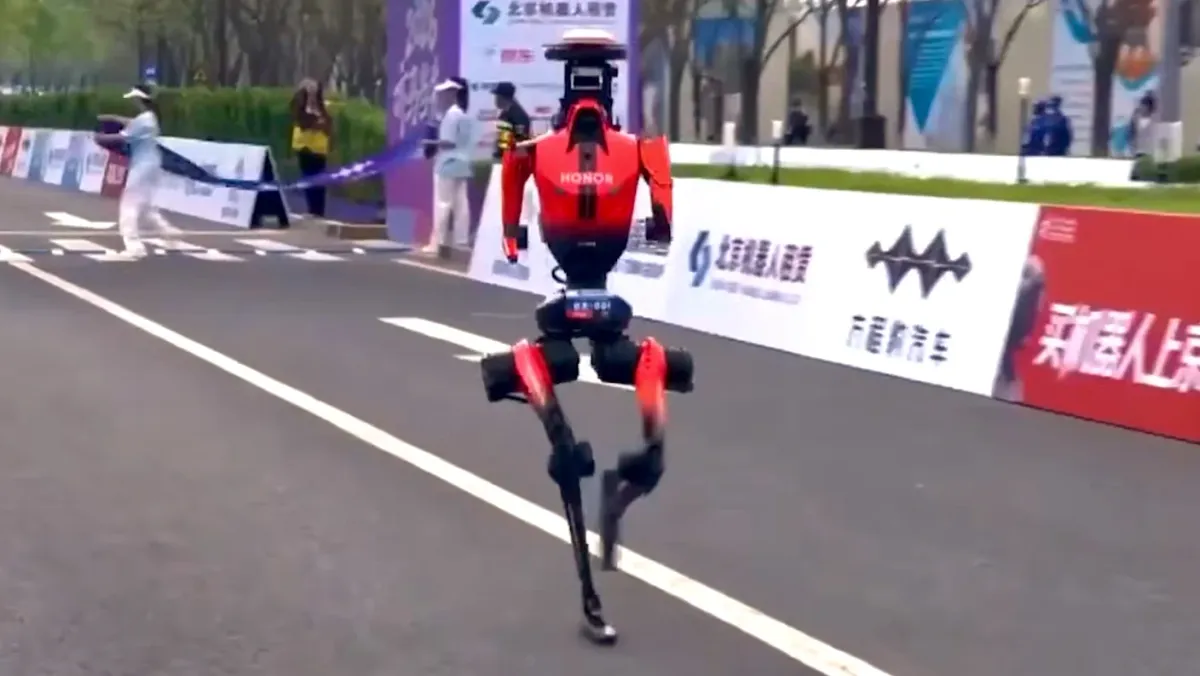
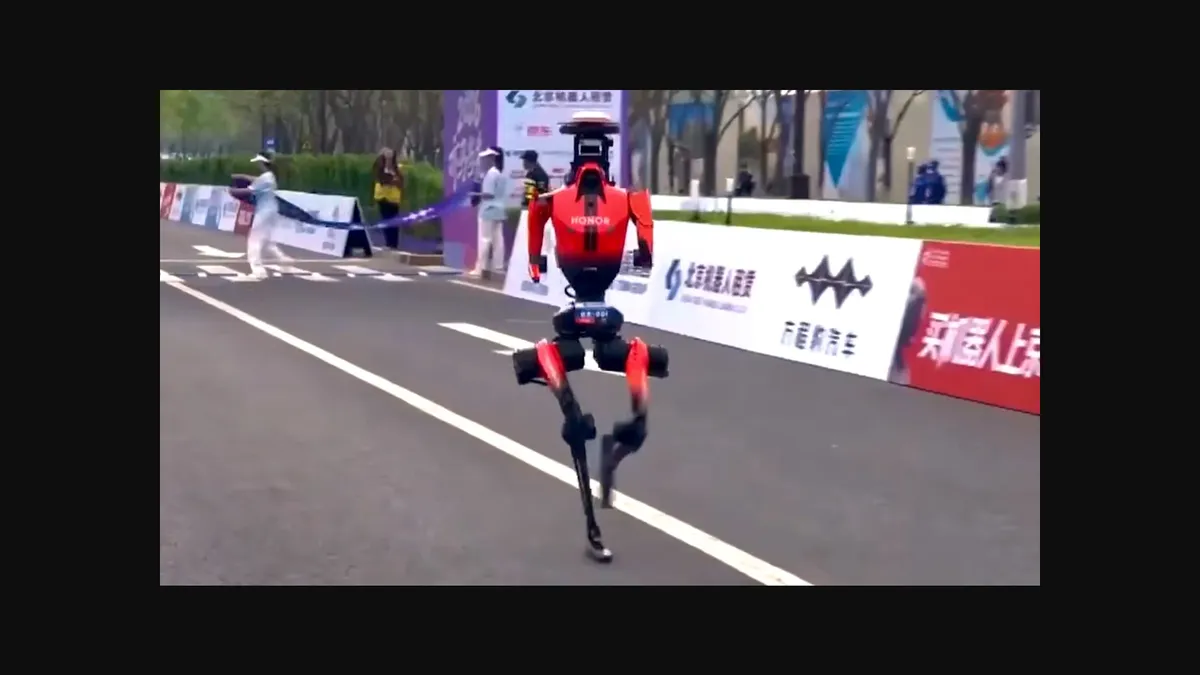
Apparently, the future of competitive running might involve less sweating and more… liquid cooling. A humanoid robot just obliterated the human world record for a half marathon, clocking in at 50 minutes and 26 seconds in Beijing. That's nearly seven minutes faster than Jacob Kiplimo's previous record. Let that satisfying number sink in.
This isn't just about bragging rights for our new robot overlords; it's a giant leap for humanoid tech. A mere year ago, most robots couldn't even finish the same race. Now, one's basically leaving Olympic athletes in its dust. Which, if you think about it, is both impressive and slightly terrifying.
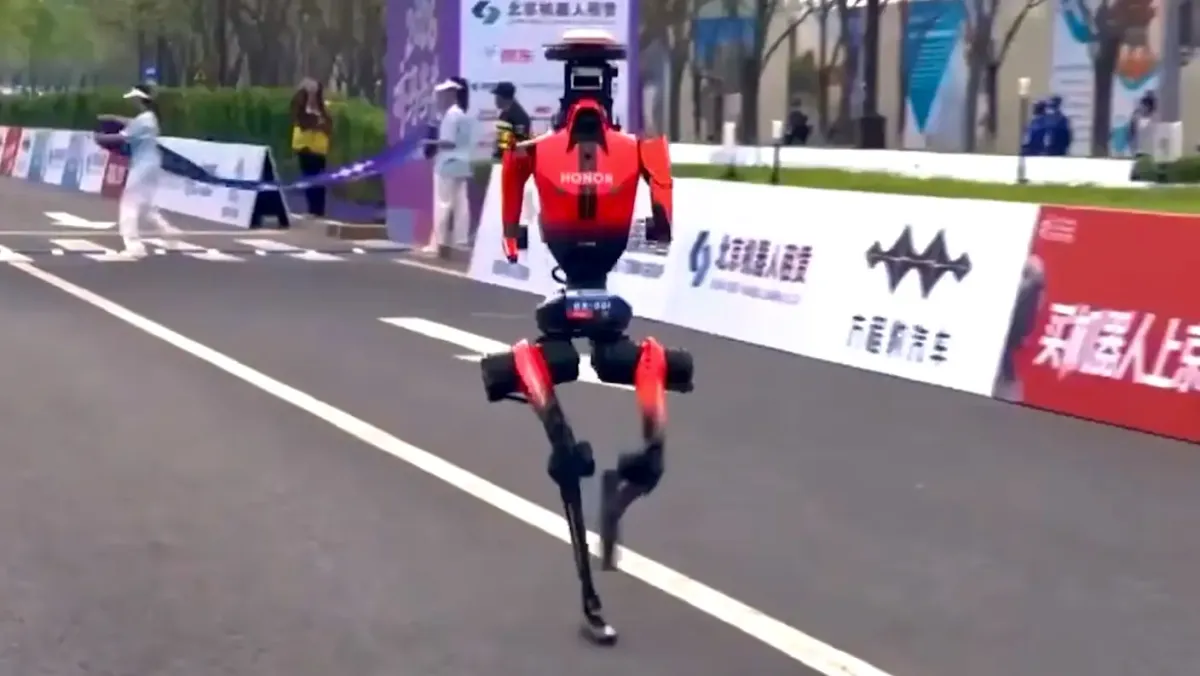
Named Lightning (because, of course), this 5-foot-6-inch marvel was built by Chinese smartphone giant Honor. It ran the entire 13 miles autonomously, looking suspiciously like an elite human runner, if elite human runners had smartphone-grade liquid cooling systems.
We're a new kind of news feed.
Regular news is designed to drain you. We're a non-profit built to restore you. Every story we publish is scored for impact, progress, and hope.
Start Your News DetoxThe Race to Robot Domination
The Beijing E-Town Half Marathon saw over 300 robots compete this year. A solid 40% of them completed the course unassisted, a stark contrast to last year's mechanical carnage. The track wasn't exactly a walk in the park either, featuring slopes, narrow passages, and 20 turns designed to trip up even the most stable biped.
According to Du Xiaodi, an engineer on Lightning's team, this speed isn't just for show. Faster running pushes the limits of structural reliability and cooling tech, which then trickles down into industrial applications. So, the robots are basically training for their future factory jobs by outrunning us.
China, it turns out, is really serious about humanoid robots. They're pouring money into the sector and already churn out about 80% of the world's humanoid robots. Events like this marathon and the World Humanoid Robot Games are essentially their version of a robot fashion show, letting companies strut their stuff.
Of course, it wasn't all smooth sailing. One robot face-planted into a barricade. Another veered into a bush post-finish line. And one, truly embodying the spirit of perseverance, crossed the finish line held together with tape after a mid-race tumble. Because even advanced AI sometimes just needs a bit of sticky-tape engineering.
What's Next for Our Speedy Bots?
Experts say this race is a massive win for China's robotics components — motors, joints, batteries, you name it. Long-distance running is the ultimate stress test, proving these parts can handle repeated strain, which is crucial for industrial use. This rapid advancement is heating up the robotics race between China and the US, with American firms now lobbying for their own national strategy.

Now, running fast in a straight-ish line is one thing. The nuanced movements and perception needed for, say, making you a latte or assembling a car are quite another. Experts agree that robot companies still need to seriously up their software game for humanoids to be truly practical.
But make no mistake: the gap between human athletes and their silicon counterparts is shrinking faster than a smartphone battery on a cold day. Expect even crazier feats in the not-too-distant future. Maybe next year they'll make them run a full marathon while simultaneously solving a Rubik's Cube.