Researchers at Penn State have created a material that does something octopuses do naturally: change appearance and texture on demand. The catch is they've built it from hydrogel—a soft, water-rich synthetic material that can be programmed to respond to heat, solvents, or mechanical stress.
The team, led by Hongtao Sun, developed a fabrication method that embeds information directly into the material using halftone patterns, similar to the dots in newspaper photographs. This lets a single sheet of material do multiple things at once: hide images, reveal them under specific conditions, shift texture, morph into new shapes, and even encrypt information.
How Hidden Messages Actually Work
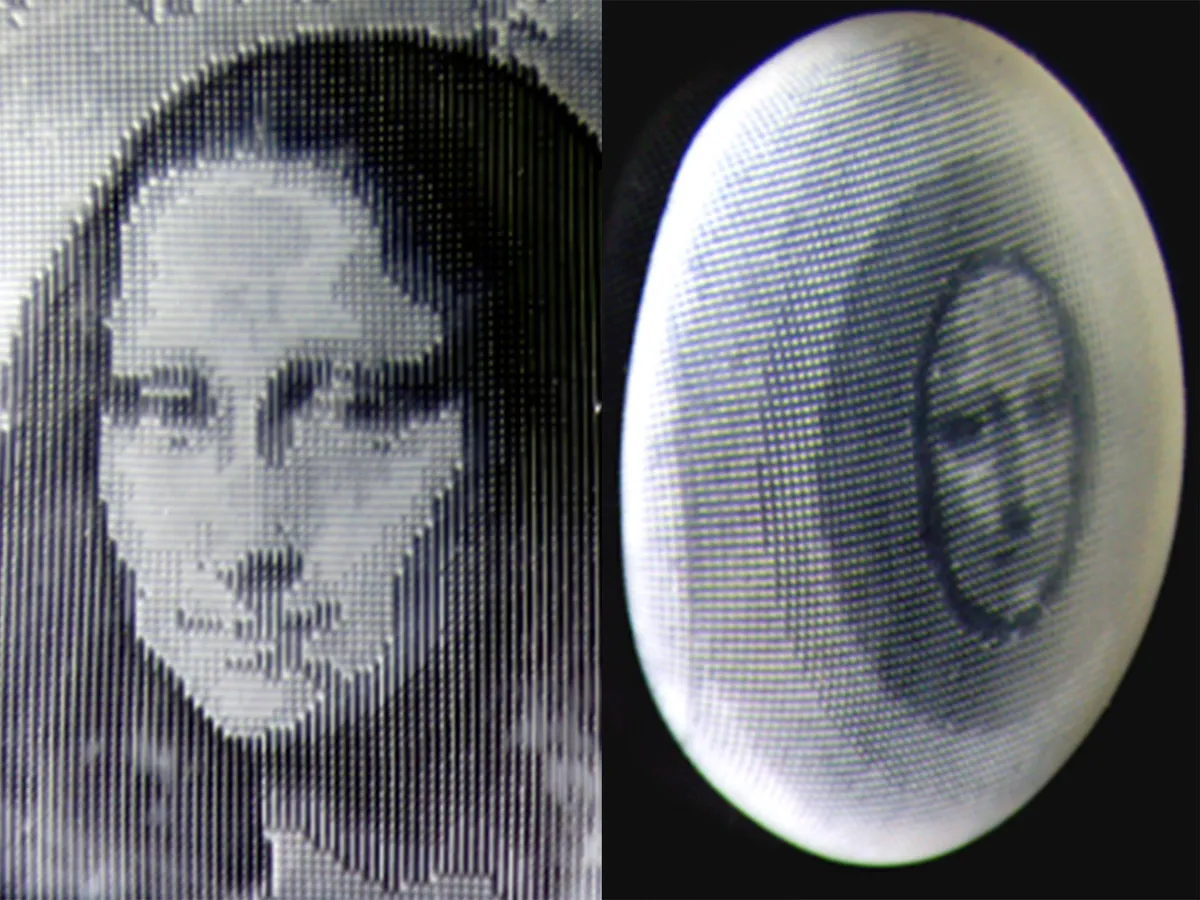
The most striking demonstration involved encoding a photo of the Mona Lisa into a hydrogel film. When washed with ethanol, the image disappeared completely—just clear material. Dip it in ice water or heat it gradually, and the portrait slowly reappears. The same material can also reveal patterns when you stretch it and analyze how it deforms, adding a mechanical layer to the encryption.
We're a new kind of news feed.
Regular news is designed to drain you. We're a non-profit built to restore you. Every story we publish is scored for impact, progress, and hope.
Start Your News DetoxHaoqing Yang, a doctoral candidate and first author of the research, explained the practical angle: "This behavior could be used for camouflage, where a surface blends into its environment, or for information encryption, where messages are hidden and only revealed under specific conditions."
What makes this different from previous shape-shifting materials is that it doesn't require stacking multiple layers or combining different substances. One thin film does it all. The researchers showed they could encode an image, then have that same image gradually appear as the flat sheet curves into a dome-like structure—coordinating shape change and visual display simultaneously, the way a cephalopod coordinates its body and skin patterning.
What This Means Beyond the Lab
The implications ripple outward quickly. Adaptive camouflage for military or wildlife applications. Biomedical devices that respond to body temperature. Soft robotics that can change grip or movement patterns on command. Security features embedded directly into materials rather than printed on top. Even the ability to store and reveal information in ways that are harder to counterfeit or intercept than traditional encryption.
Sun's team is now working on scaling this up—developing a platform that can encode multiple functions into a single adaptive material with precision. The research builds on their earlier work on 4D-printed smart hydrogels published in Nature Communications, where they first showed how to program flat sheets to morph into three-dimensional forms.
The next phase isn't about one breakthrough application. It's about proving that a single material can be smart enough to do several jobs at once, all triggered by conditions as simple as temperature or pressure.