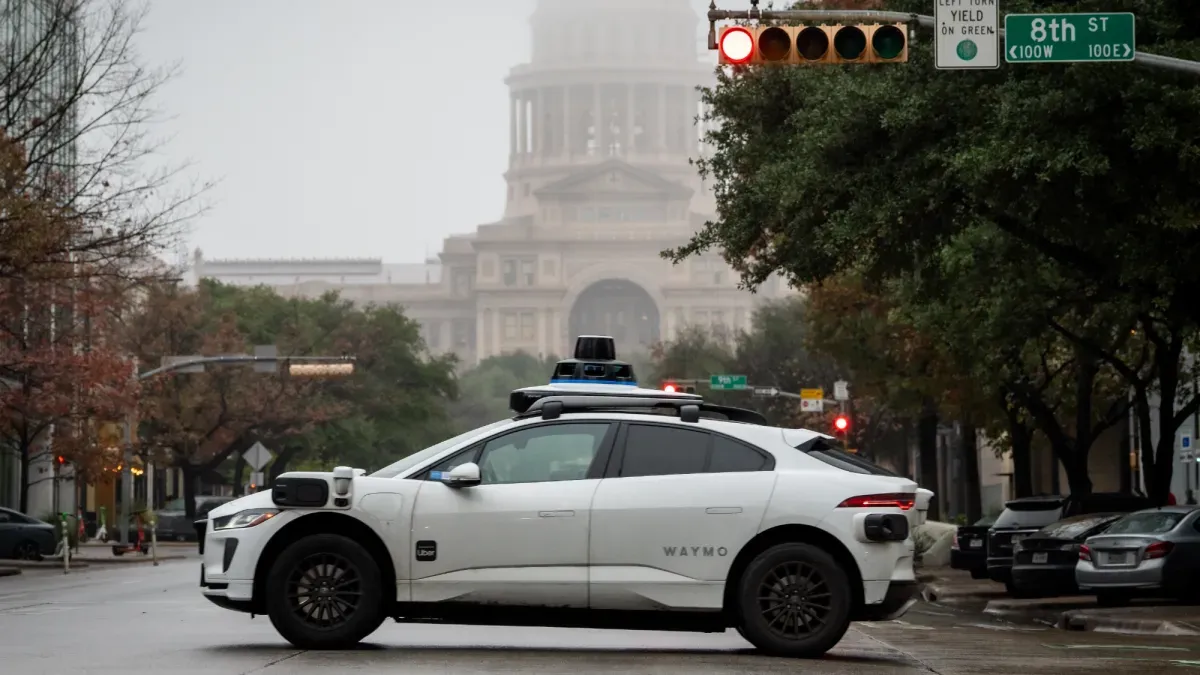
A self-driving Waymo car in Santa Monica hit a child who ran out from behind a parked SUV in January. The vehicle's sensors saw the child — but not in time to stop. It's a stark reminder that even the most advanced cars on the road today have a blind spot: they can't see around corners.
Researchers at the University of Pennsylvania think radio waves might fill that gap. They've built a system called HoloRadar that lets robots and autonomous vehicles detect people and objects hidden behind walls, parked cars, or anything else blocking the line of sight.
In campus tests, a mobile robot equipped with HoloRadar consistently identified people and objects it couldn't see directly. The system worked by bouncing radio signals off surfaces and reconstructing what lay beyond them — essentially using walls as mirrors.
We're a new kind of news feed.
Regular news is designed to drain you. We're a non-profit built to restore you. Every story we publish is scored for impact, progress, and hope.
Start Your News DetoxWhy radio waves work where cameras fail
Most self-driving cars rely on cameras, radar, and LiDAR — technology that shoots laser pulses to map surroundings. LiDAR is precise, but those laser pulses stop dead when they hit an obstacle. Radio waves are different. Their longer wavelengths pass through barriers, the same way your phone signal reaches you inside a building.
The trade-off is resolution. Radio waves give you a fuzzier picture than a camera or LiDAR. But that fuzziness is actually useful here. HoloRadar uses an AI model in two stages: first filtering out noise and making educated guesses about what's hidden, then reconstructing a 3D model of the hidden area. The result isn't photorealistic, but it's detailed enough to spot a person or bicycle.
This matters because most pedestrian accidents happen at intersections or when someone darts from behind a parked vehicle — exactly the scenarios where current sensors fail. A car equipped with HoloRadar wouldn't need perfect vision around that corner. It just needs to know something is there.
The researchers see HoloRadar as a supplement, not a replacement, for existing sensor suites. Add it to a car's LiDAR and cameras, and you've covered a genuine gap. As autonomous vehicles move from test tracks to city streets where accidents are inevitable, that gap becomes harder to ignore.
The next step is scaling the technology — moving from a research robot to an actual vehicle, and testing it in real-world conditions where radio interference and urban clutter create noise the campus tests didn't face. But the core idea is sound: sometimes the best way to see around a corner is to use a different kind of light altogether.