
Engineers have built something counterintuitive: a microphone made entirely of glass that works better in extreme conditions than anything made of metal or electronics. The device is so small it fits inside a fiber-optic cable, yet it can pick up ultrasound frequencies far beyond human hearing—all while surviving temperatures hot enough to melt most materials.
The real breakthrough isn't just durability. It's that this glass microphone can listen inside high-voltage transformers without getting drowned out by electromagnetic interference that would cripple conventional sensors. That matters because transformers are the backbone of electrical grids, and catching problems early—before a small fault cascades into a blackout—could save utilities millions and keep power flowing to hospitals, data centers, and homes.
How sound becomes light
Instead of using a metal diaphragm that vibrates and sends electrical signals (the way your phone's microphone works), this one uses a phenomenon called the photoelastic effect. Tiny vibrations inside the glass fiber actually change how light travels through it. By measuring those changes in light, the researchers can detect sound—including the subtle electrical crackles that signal a transformer is developing problems.
We're a new kind of news feed.
Regular news is designed to drain you. We're a non-profit built to restore you. Every story we publish is scored for impact, progress, and hope.
Start Your News Detox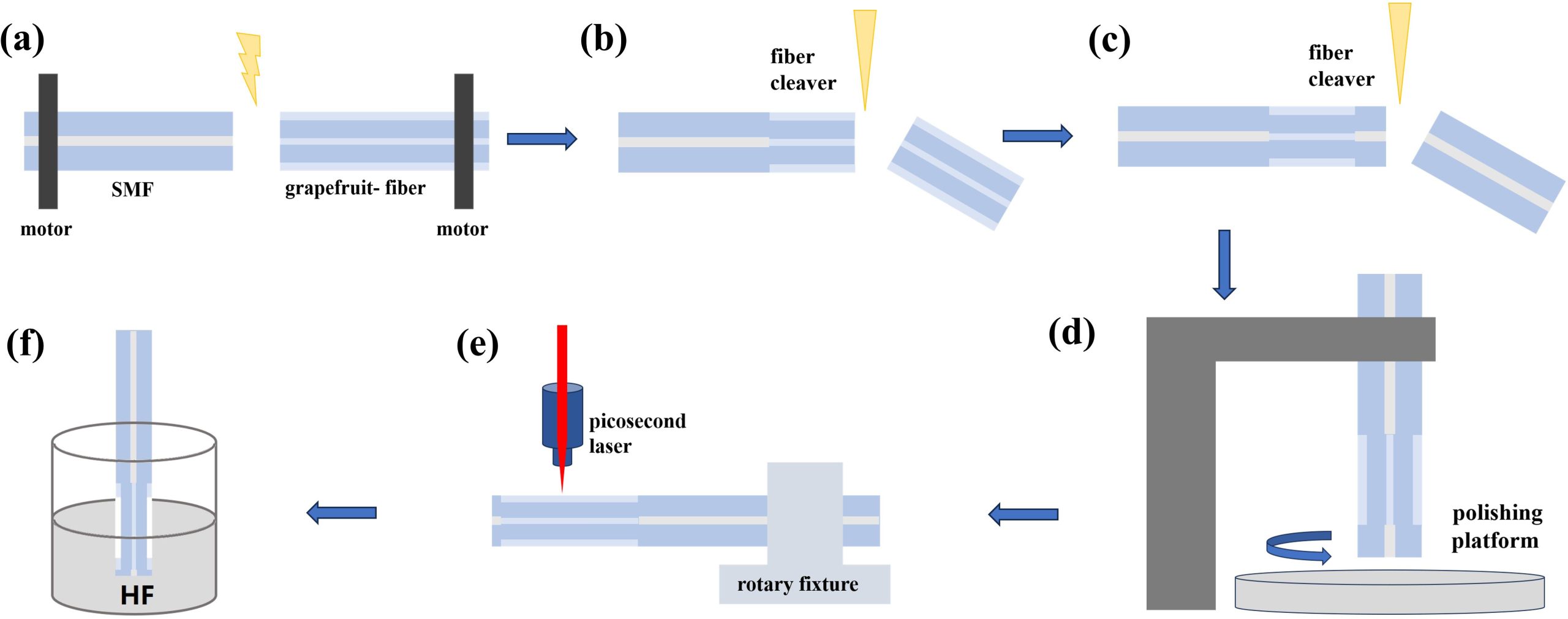
The engineering required to pull this off is intricate. Inside a single strand of silica fiber, the team created a suspended glass beam and vibration-sensitive membrane—essentially building a tiny optical instrument inside a hair-thin cable. They used picosecond lasers to etch these structures with nanometer precision, a process that sounds like science fiction but is becoming increasingly practical.
When researchers tested it in a 1,000-degree furnace for 100 minutes, the microphone kept working. It transmitted clear signals the entire time. They also verified it could detect frequencies from 40 kHz to 1.6 MHz—a range so wide it covers both airborne sound and underwater acoustics.
"The entire interferometric structure is integrated directly within a hair-thin fiber," said Xiaobei Zhang, who led the research at Shanghai University. "This self-packaged monolithic design enables seamless deployment in high-temperature and space-constrained environments without needing any additional protection."
The practical payoff is straightforward: place this microphone inside a running transformer, and it can warn operators about partial discharge—small electrical faults that develop long before they become catastrophic failures. In a grid already stressed by aging infrastructure and increasing demand, that early warning could be the difference between a managed repair and a cascading outage.
The team is already planning the next phase: integrating acoustic metamaterials to push sensitivity even further, and developing ultra-robust all-silica packaging using 3D printing and ultrafast laser machining. That work will make the microphone tough enough to survive not just hours in a lab furnace, but years inside real equipment.