For most of modern history, the open ocean has been treated as a place apart. Beyond the 200-nautical-mile limits of national jurisdiction, it was governed by custom, fragmented rules, and the assumption that what lay far offshore was too vast to manage and too resilient to exhaust. That assumption has worn thin.
On January 17th 2026, a new United Nations agreement—the Biodiversity Beyond National Jurisdiction accord, or BBNJ—will enter into force, creating the first global framework aimed explicitly at conserving life in the waters and seabed beyond national borders. It's the kind of agreement that takes decades to negotiate because it requires nearly every country on Earth to agree on rules for places no single nation controls.
What's actually being protected
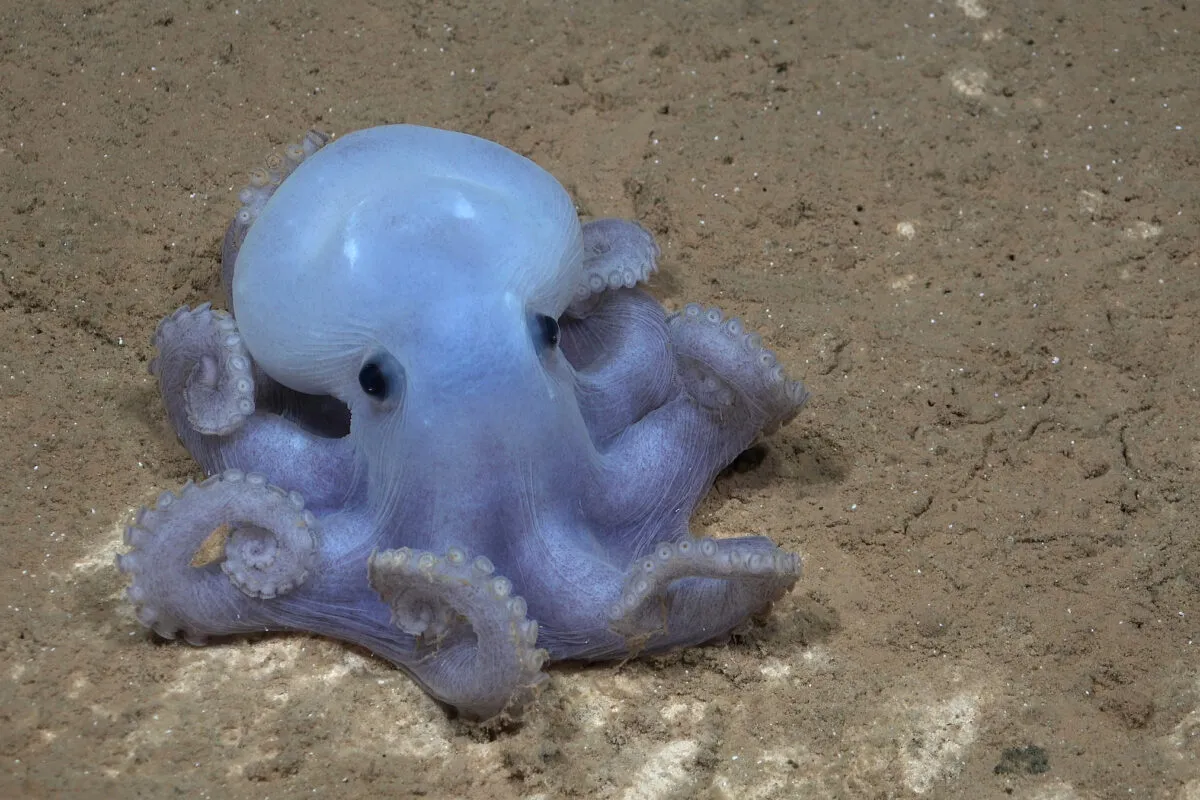
The scale of what BBNJ covers is genuinely hard to grasp. Areas beyond national jurisdiction account for roughly 60% of the ocean and more than 40% of the planet's surface. These aren't empty stretches—they include deep trenches where pressure-resistant creatures thrive, seamount chains that rise from the seafloor, midwater ecosystems most of us will never see, and largely invisible communities of organisms that regulate nutrient cycles and store vast amounts of carbon. Less than 1.5% of this space is currently protected in any formal sense.
We're a new kind of news feed.
Regular news is designed to drain you. We're a non-profit built to restore you. Every story we publish is scored for impact, progress, and hope.
Start Your News DetoxMeanwhile, fishing, shipping, bioprospecting, and exploratory mining have expanded there faster than the rules governing them. Companies prospect for genetic material in deep-sea organisms. Industrial vessels drag nets across the seafloor. The ocean beyond borders has become a frontier of extraction with almost no guardrails. BBNJ is an attempt to close that gap.
The treaty was finalized in 2023 after two decades of negotiation—a timeline that reflects how contentious the issue was. Fishing nations worried about restrictions. Pharmaceutical and biotech companies wanted access to marine genetic resources. Developing countries wanted to ensure they benefited from any discoveries. Getting 60 countries to ratify it took until September 2025, when Morocco became the decisive 60th. More than 80 states are now full parties. The United States helped shape the text but has not ratified it.
The agreement rests on four practical pillars: establishing marine protected areas in international waters, conducting environmental impact assessments for high-seas activities, managing marine genetic resources and ensuring benefits are shared, and building capacity in developing nations so they can participate in ocean governance. It's not perfect—enforcement will be complicated, and some nations are already discussing how to minimize restrictions on their fishing fleets. But it's the first time the global community has agreed on explicit rules for conserving life beyond anyone's backyard.
What happens next is the hard part: turning a framework into actual protection. The treaty establishes a governing body that will meet regularly to designate protected areas and set rules for different activities. The first protected areas could be designated within months. Whether they meaningfully slow industrial activity in the deep ocean, or become paper protections that exist in name only, depends on whether countries actually enforce them—and whether they're willing to say no to profitable extraction.