In 1974, Marina Abramovic stood motionless for six hours while strangers decided what to do with her body. She'd placed a table between them—a rose, a gun, a knife, honey, a whip—and told them: use these however you want. I won't stop you. What started as curiosity turned brutal. People tore her clothes. They pressed weapons toward her. When it ended, the audience fled, shaken by what they'd been willing to do.
That performance, "Rhythm 0," became a mirror held up to human nature: remove the rules, and something darker often emerges.
Fifty years later, British artist Briony Godivala tried something similar—except in a space where there are no rules to begin with.
We're a new kind of news feed.
Regular news is designed to drain you. We're a non-profit built to restore you. Every story we publish is scored for impact, progress, and hope.
Start Your News DetoxThe QR Code Experiment
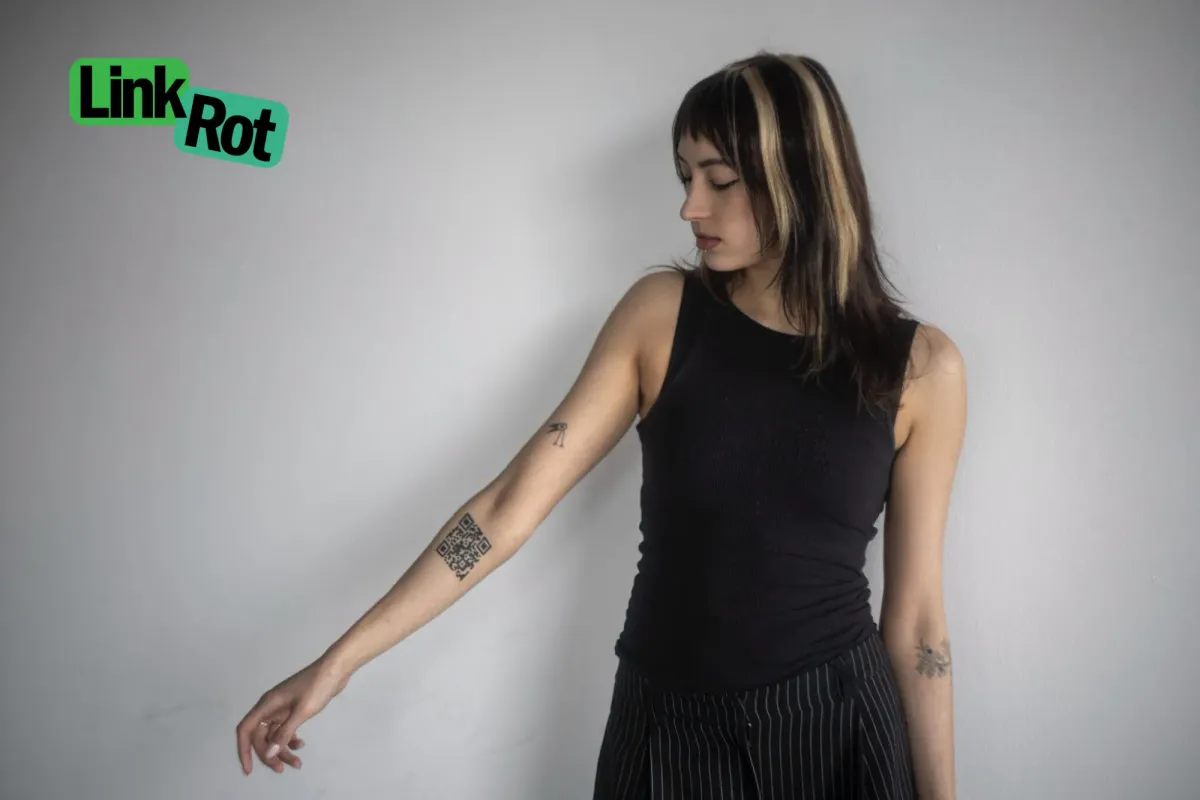
In January 2025, Godivala had a QR code tattooed on her forearm. For a year, the public would vote daily on where that code should link. A news site. A Wikipedia page. A video. A meme. Whatever won the vote, that's where the code would point the next day. Godivala committed to scanning it herself, clicking through whatever the internet chose.
The first month seemed manageable. Then a hacker started flooding the votes with the same anime episode, day after day. Most people online shrugged—"you should've expected worse," they said.
And they were right.
Over the following weeks, the links shifted darker. Godivala found herself directed to videos of death. Pornographic content. Fascist propaganda. Each morning, she'd scan her own arm and see what strangers had voted for her to witness.
It's "Rhythm 0" for the algorithm age—except Abramovic could stand still and let silence do the work. Godivala has to constantly post updates, promote the project on social media, maintain a neutral expression while documenting everything. Performing passivity online, it turns out, requires constant activity.
Abramovic's performance happened in a room where people faced her directly, where their actions had immediate, visible consequences. Godivala's happens in the diffuse space of the internet, where anonymity loosens inhibition and the performer can't even see who's voting. The moral weight of "I'm doing this to you in person" vanishes.
The archive of past winning links reads like a cross-section of the internet's id: shock content mixed with business promotions, old-school websites, Wikipedia rabbit holes, broken links leading nowhere. It's not malicious in any organized way—it's just what happens when you hand control to a crowd with no skin in the game.
Godivala's project doesn't offer a neat conclusion about human nature or digital culture. Instead, it exposes something more unsettling: the difference between violence that requires presence and violence that doesn't. One haunts you because you see the person. The other happens in the abstract, which might be exactly why it feels easier to participate in.