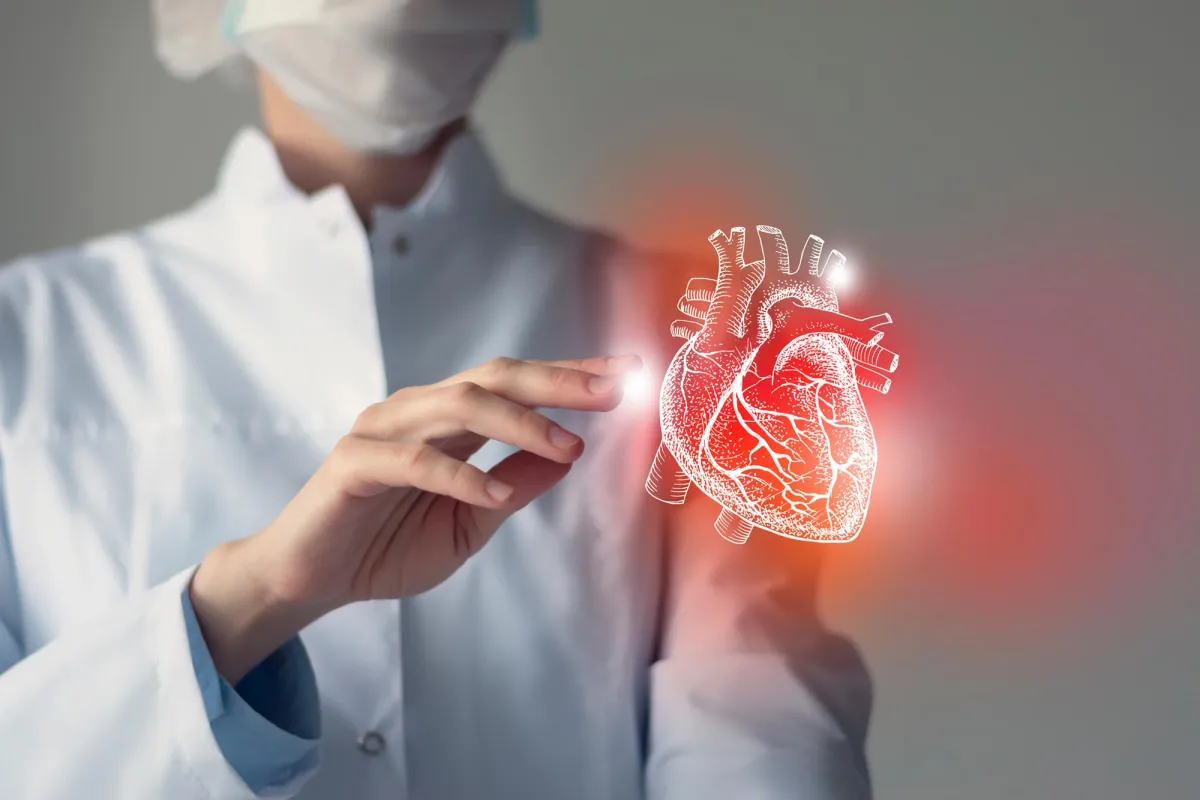
A new RNA-based therapy aims to help the heart heal itself after an injury. Normally, heart muscle cells do not grow back after a heart attack, leading to permanent damage. This damage often causes heart failure later on.
Ke Cheng, a professor at Columbia Engineering, noted that the heart has very limited ability to regenerate. Researchers are now working on a strategy to help the heart repair itself, not just prevent further damage.
Turning the Body Into a Drug Factory
Cheng and his team have developed an experimental therapy that uses RNA to make the body produce its own healing molecule. This molecule becomes active only when it reaches the heart.
We're a new kind of news feed.
Regular news is designed to drain you. We're a non-profit built to restore you. Every story we publish is scored for impact, progress, and hope.
Start Your News DetoxThe therapy involves a simple injection into the arm. This means doctors would not need to open the chest or guide a wire to the heart to deliver the drug.
Cardiologist Torsten Vahl, a co-author of the study, highlighted the need for such a solution. He sees many patients with severe heart damage after heart attacks, which often leads to heart failure.
In early studies, a single injection reduced scar tissue and improved heart function in both small and large animals. This suggests a simpler and more accessible treatment option than current procedures like transplants.
Learning from Newborn Hearts
Newborn mammals can briefly regrow heart muscle cells. A hormone called atrial natriuretic peptide (ANP) helps with this by promoting blood vessel growth, reducing inflammation, and limiting scar tissue. As the body ages, ANP levels drop, and this healing ability largely disappears.
Researchers compared newborn and adult mice after heart attacks. In newborns, the gene for ANP's precursor increased more than 25 times. In adults, it only rose about 10 times, which might not be enough for repair. When this gene, called Nppa, was blocked in newborn mice, they lost much of their natural healing ability.
Cheng explained that the idea is to learn from nature. Newborn hearts produce more of this molecule after a heart attack, which helps them regenerate. Adults do not produce enough, so the team found a way to supplement it.
ANP has long been recognized for its potential, but it breaks down quickly in the body, making it hard to use as a traditional drug.
Using Muscle as an RNA Drug Factory
Delivering drugs to the heart in a lasting and non-invasive way is difficult. The heart does not absorb drugs as easily as organs like the liver or lungs. Current methods often involve invasive procedures like injections directly into the heart or its surrounding sac.
Instead, the researchers created a two-step strategy. They developed RNA-lipid nanoparticles carrying instructions for Nppa. When injected into muscle in the arm or thigh, cells start producing pro-ANP, an inactive molecule. This pro-ANP travels through the bloodstream to the heart.
In the heart, an enzyme called Corin converts pro-ANP into active ANP. Corin is much more abundant in the heart, ensuring the drug is activated mainly where it is needed.
To make the effect last longer, the team used self-amplifying RNA (saRNA), which can replicate inside cells. A single injection continued to work for at least four weeks. This means patients might only need an injection once a month.
Future Outlook
Before human trials, the therapy needs to work under various realistic conditions. Cheng's team tested their approach in large animals, older mice, and mice with conditions like atherosclerosis and type 2 diabetes. They also tested delayed treatment, giving the therapy one week after a heart attack. The treatment remained effective in all cases.
This approach could also help treat other conditions like kidney disease, high blood pressure, and preeclampsia.
Cheng plans to produce the therapy at the Columbia Initiative in Cell Engineering and Therapy and start a phase-one safety trial at Columbia University Irving Medical Center.
Deep Dive & References
Single intramuscular injection of self-amplifying RNA of Nppa to treat myocardial infarction - Science, 2026