Scientists at the University of Kentucky have found a biological signal that might explain a concerning side effect of new Alzheimer's treatments. This discovery could lead to a simple blood test to identify patients at risk before they start therapy.
The study looked at amyloid-related imaging abnormalities (ARIA). ARIA can cause brain swelling or small bleeds, seen on MRI scans. It's a major safety concern for anti-amyloid drugs like lecanemab. These drugs are a big step forward in slowing Alzheimer's, but ARIA risk has limited their use.
Uncovering an Immune Fingerprint
Before this study, predicting ARIA risk mainly relied on genetics. People with the APOE ε4 gene variant are known to have a higher risk. However, this explanation wasn't complete. Many patients without the variant still developed complications, and some with it did not. This made treatment decisions tough for doctors and families.
We're a new kind of news feed.
Regular news is designed to drain you. We're a non-profit built to restore you. Every story we publish is scored for impact, progress, and hope.
Start Your News Detox"We asked a simple question: do people who develop ARIA show a different immune 'fingerprint' in their blood than those who don't? The answer appears to be yes," said Josh Morganti, Ph.D., a neuroscience professor and researcher at the University of Kentucky.
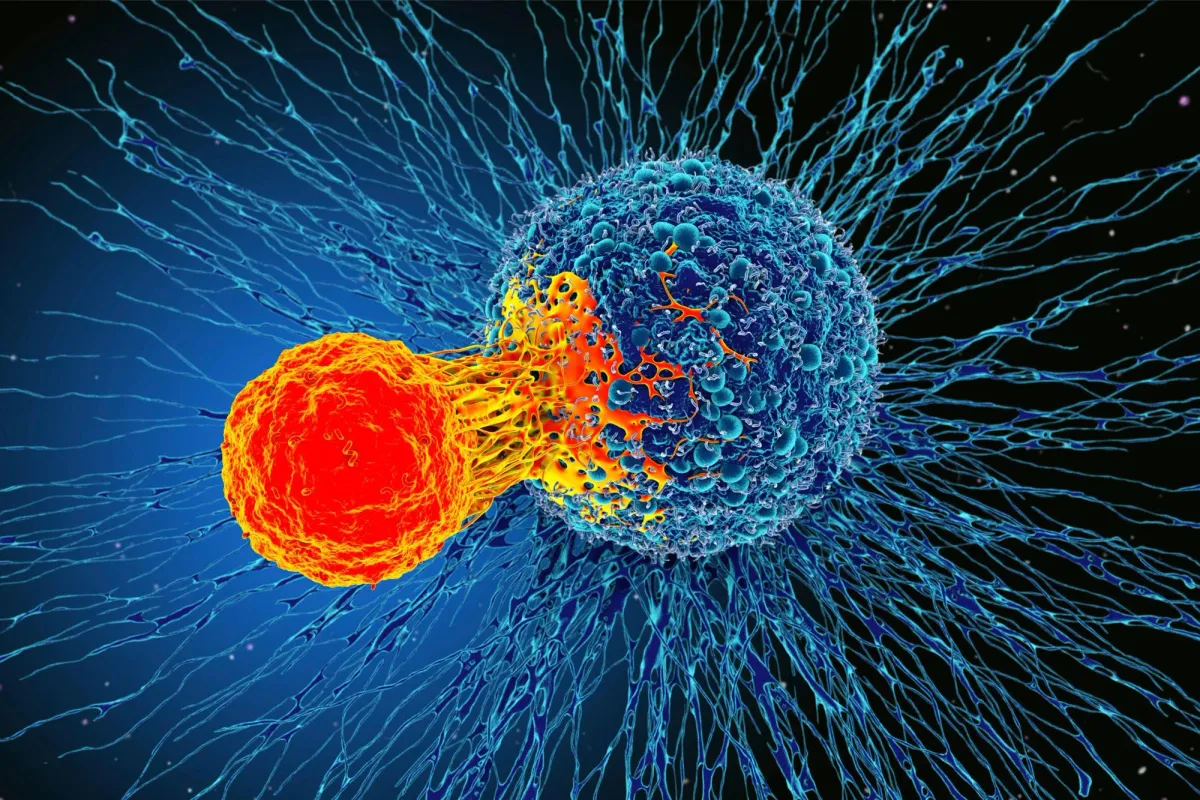
The team studied blood samples from patients treated with lecanemab. They found that patients who developed ARIA had more of a specific type of T cell. These immune cells showed increased activity and seemed ready to respond.
"This isn't random noise. We're seeing a coordinated immune response that distinguishes patients with ARIA at a biological level," Morganti noted.
A Simple Blood Test for Prediction
One key finding is that this immune signal can be found with a standard blood test. This means no invasive procedures are needed.
"Until now, we really didn't understand why some people develop ARIA and others don't," Morganti explained. "And we can't biopsy someone's brain to figure that out. This study shows that we can learn something meaningful from the blood." This is an important step toward a real-world screening tool.
Lance Johnson, Ph.D., a physiology professor and researcher, said these findings pave the way for more personalized Alzheimer's care. "We now know that ARIA isn't just an imaging artifact. There's biology behind it that we can measure. That means we have something to work with," Johnson said.
The study shows that certain T cells grow, change their metabolism, and can interact with blood vessels. This offers new insight into the biological processes behind ARIA risk.
"This suggests ARIA may have a biological signature we can detect in the blood," Johnson added.
A Path to Safer Treatments
Researchers hope these findings will lead to safer and more accessible Alzheimer's therapies. If validated in larger patient groups, these immune patterns could become a predictive blood test. This test could identify high-risk individuals before treatment starts.
"If we can validate these findings, doctors could adjust treatment based on a patient’s immune profile," Morganti said. This could mean closer monitoring, different dosing, or targeted interventions. "For people and families facing an Alzheimer’s diagnosis, anything that makes these new treatments safer and more accessible is meaningful."
Johnson noted, "Right now, ARIA is a cloud hanging over these otherwise groundbreaking therapies. If we can use this work to help predict or even prevent these side effects, it will be a big step forward."
Both researchers stressed that more work is needed. However, the study moves the field from guesswork to measurable biological markers.
Collaboration and Support
The University of Kentucky team thanked their partners at Norton Neuroscience Institute and Norton Research Institute.
"I’m incredibly proud of the work our team has done to bring hope to patients facing an Alzheimer’s diagnosis," said Gregory E. Cooper, M.D., Ph.D., director of the Norton Neuroscience Institute Memory Center. "These findings have the potential to significantly improve the safety and precision of care for patients undergoing anti-amyloid therapy."
Johnson and Morganti said this partnership shows how academic research benefits from working with community-based clinical programs.
"Lecanemab-treated patients represent a rare and difficult-to-access population. Dr. Cooper and his team’s energy and enthusiasm to collaborate, coordinating care and research sample collection during active treatment, made this work possible," Morganti said.
Deep Dive & References
Clonal expansion of cytotoxic CD8⁺ T cells in lecanemab-associated ARIA - Nature Communications, 2026