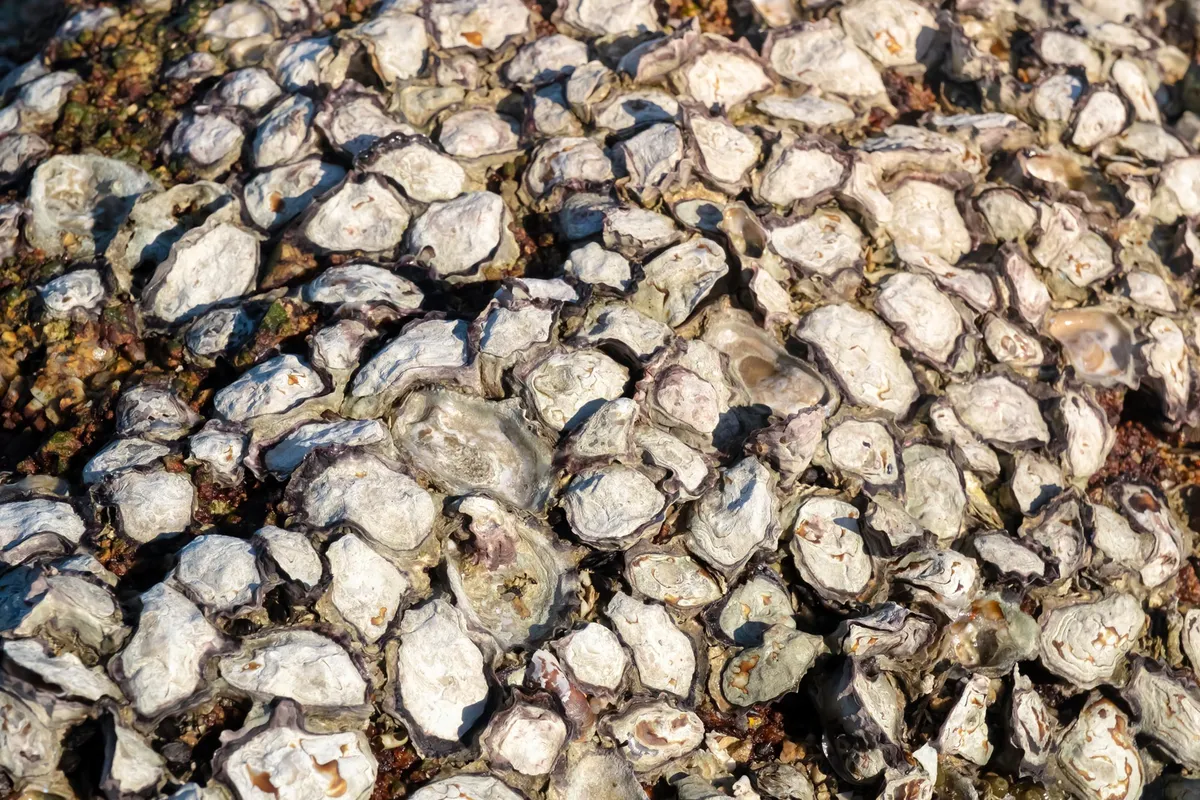
Scientists have found a better way to restore oyster reefs. They learned that copying the shapes of natural reefs helps young oysters survive much better.
New research shows how to design artificial habitats more effectively. This method uses a detailed look at how natural reefs are built.
How Natural Reefs Help Oysters Survive
A study in Nature found that the complex shapes of natural oyster reefs are not random. Their structure helps young oysters settle, survive, and avoid predators.
We're a new kind of news feed.
Regular news is designed to drain you. We're a non-profit built to restore you. Every story we publish is scored for impact, progress, and hope.
Start Your News DetoxDr. Juan Esquivel-Muelbert from Macquarie University explained that oysters are "ecosystem engineers." They build reefs from living oysters and old shells.
"Reefs are not just piles of shells," Dr. Esquivel-Muelbert said. "They are finely tuned 3D systems. Their shape controls who lives, who dies, and how fast the reef grows."
Copying Reef Shapes
To understand these structures, Dr. Esquivel-Muelbert and his team studied Sydney rock oyster (Saccostrea glomerata) reefs. They used 3D photogrammetry to get detailed measurements of the reefs' complex shapes.
The team then made 16 types of concrete "tiles." These tiles copied different levels of complexity found in natural reefs. Each tile had varying numbers and heights of ridges.
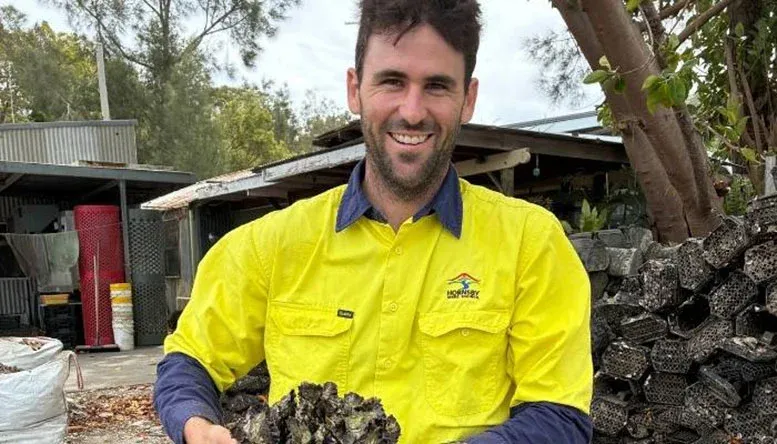
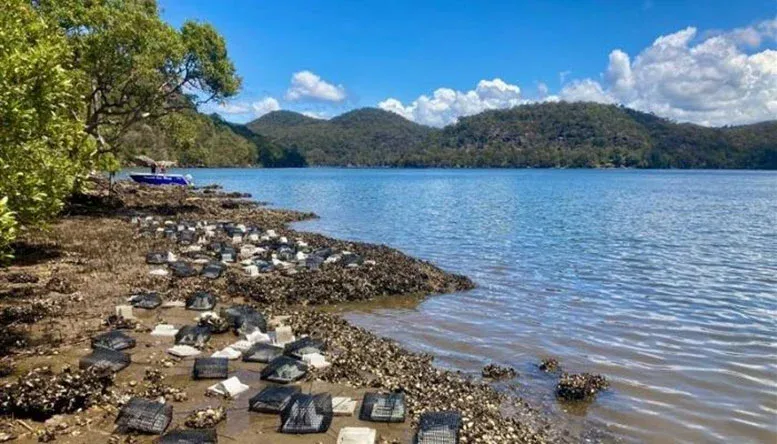
Researchers placed these tiles in three estuaries near Sydney: Brisbane Water, the Hawkesbury River, and Port Hacking. Some tiles were protected with cages to keep predators away. Others were left open. All tiles were near existing oyster reefs to ensure a supply of oyster larvae.
The team watched how well young oysters settled, grew, and survived on each type of tile.
Designs That Help Oysters Thrive
The study found that the best designs were not the tallest or most complex. Instead, oysters survived best in habitats that had specific shapes, just like natural reefs.
"Our experiment showed the best design for both starting and long-term survival was one that gave many small spaces for baby oysters to grow," Dr. Esquivel-Muelbert said. These spaces also offered protection from predators and harsh environmental stress.
He added that while total surface area is important, young oysters are tiny. They are easily eaten by fish and crabs or harmed by heat and drying out. "There’s no point in having lots of oyster larvae turning up if they don’t survive," he noted.
Hope for Global Reef Restoration
These findings can help restoration projects rebuild oyster reefs and other marine habitats. Using these design ideas could make reef restoration more successful worldwide.
Professor Melanie Bishop, a coastal ecologist, said that about 85% of Australia's oyster reefs have been lost since European settlement.
"Oysters were harvested for food," Professor Bishop explained. "The reefs were also dredged, and shells were crushed to make lime for cement. Many early Sydney buildings used oyster shell mortar."
Oyster reefs do more than just support oysters. They provide homes for hundreds of species and help protect coastlines from erosion.
Professor Joshua Madin from the Hawaiʻi Institute of Marine Biology said this work shows there are "universal architectural rules for reef persistence." He added, "Nature has already solved the design problem. Our job is to read that blueprint and scale it up to help reefs grow faster and survive longer."
Deep Dive & References
The natural architecture of oyster reefs maximizes recruit survival - Nature, 2026