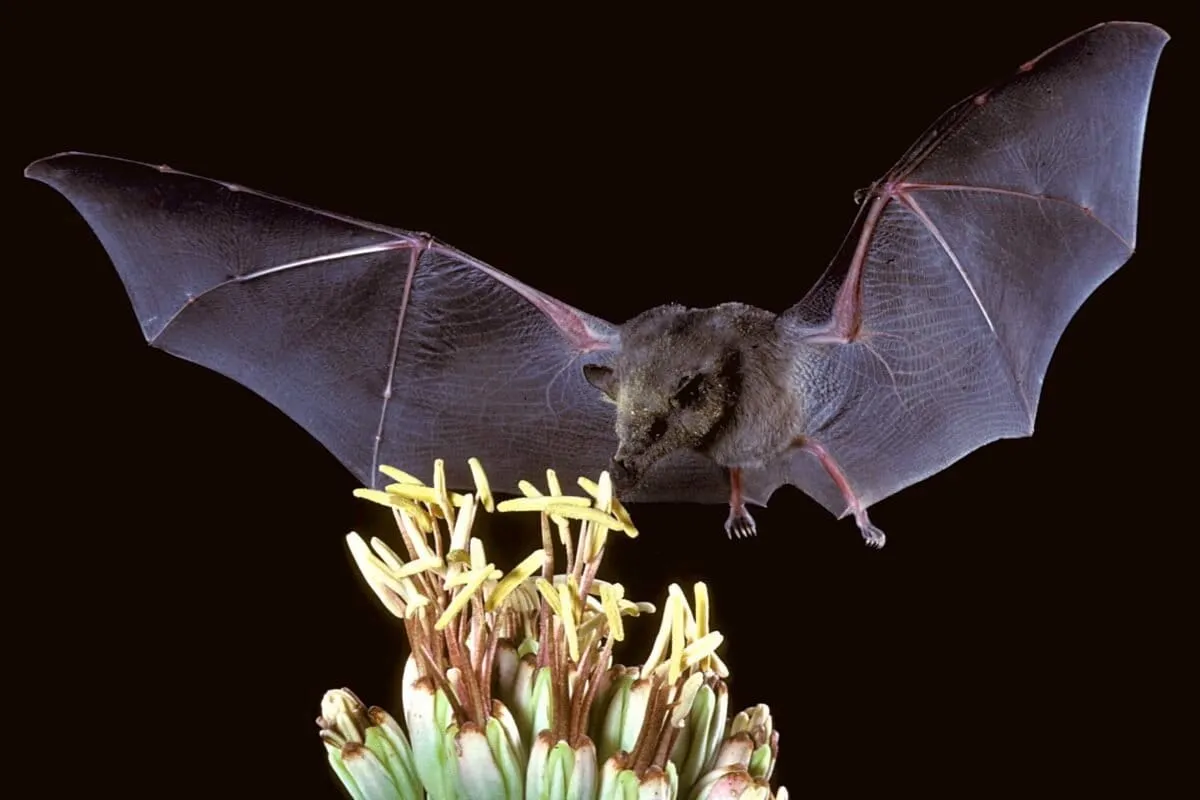
Mexican long-nosed bats are traveling deeper into the American Southwest than scientists have ever documented, chasing their primary food source northward as drought reshapes the desert landscape.
These small, endangered bats have always made an annual pilgrimage from Mexico to feed on agave nectar during summer months. Researchers have long tracked them in predictable locations — Big Bend National Park in Texas, the bootheel region of New Mexico. But DNA evidence from Bat Conservation International's latest research confirms they're now venturing roughly 100 miles beyond their known roosts, pushing into Arizona and other northern territories.
The reason is straightforward: their usual feeding grounds are drying up. "The Bootheel region has been hit hard by drought, and the agaves there don't seem to flower as abundantly as they once did," explains Kristen Lear, director of the Agave Restoration Initiative at Bat Conservation International. "So that's kind of driving them farther north, where the agaves are a little bit less hit by drought."
We're a new kind of news feed.
Regular news is designed to drain you. We're a non-profit built to restore you. Every story we publish is scored for impact, progress, and hope.
Start Your News DetoxFor a bat weighing less than an ounce, this shift means adding an extra night's journey to an already demanding migration. The bats navigate by echolocation and memory, following flowering agave plants that bloom in sequence across the landscape — a natural highway of nectar that's now becoming fragmented.
Restoring the pathway
The extended migration isn't sustainable indefinitely. Researchers and conservation groups on both sides of the U.S.-Mexico border are now focused on restoring the desert habitats these bats depend on, replanting agave species that provide reliable nectar sources. The goal is to rebuild the "stepping stones" of food that allow the bats to complete their migration without exhausting themselves.
This effort matters beyond one endangered species. Mexican long-nosed bats are key pollinators for agave plants and other desert flowers. As they feed, they transfer pollen between plants, supporting the broader ecosystem — and, indirectly, the tequila and mezcal industries that depend on healthy agave cultivation.
The bats' northward push is a visible signal of how climate change is already reshaping migration patterns across North America. But it's also a reminder that some problems have solutions we can actually implement. Habitat restoration takes time and coordination, but it's work that's already underway.