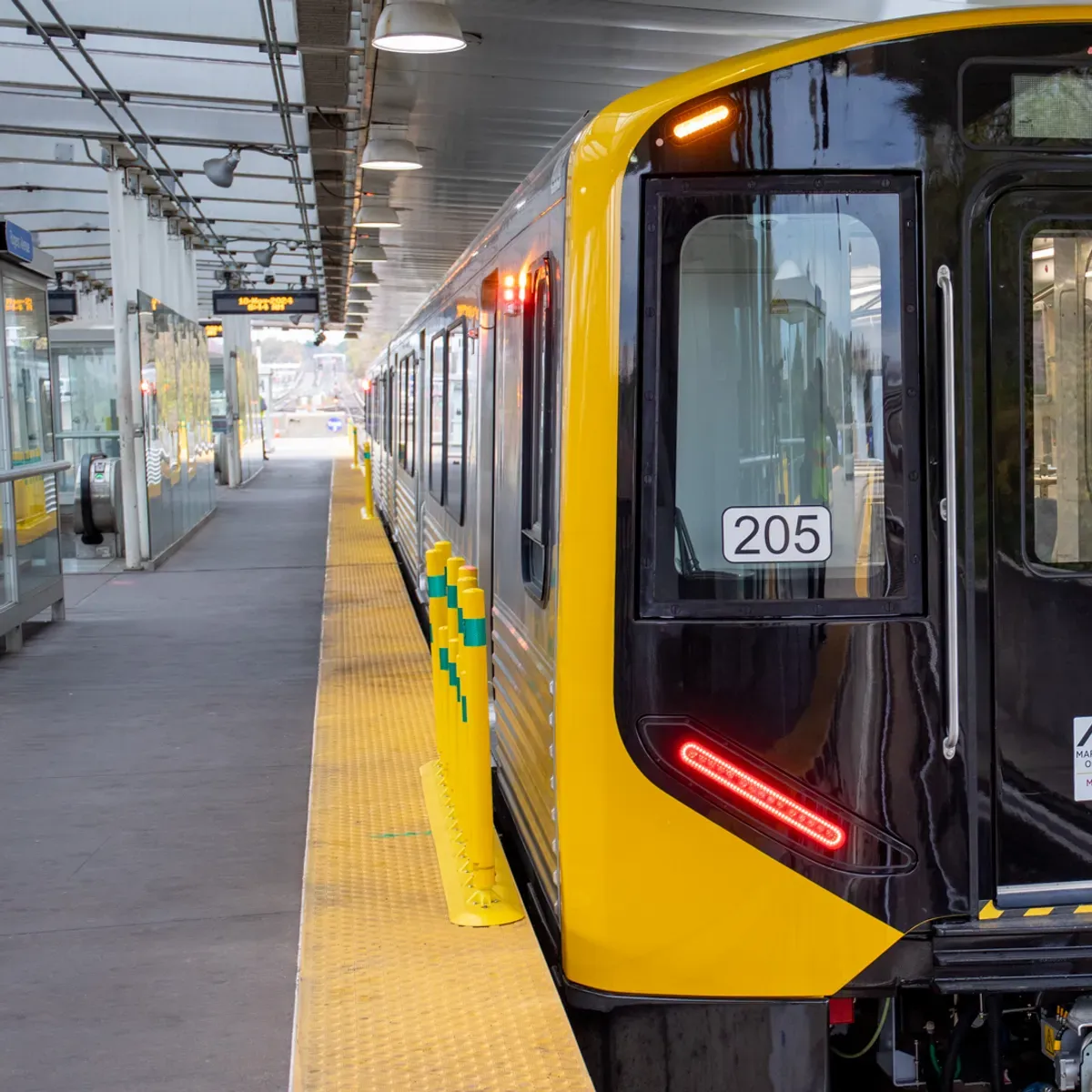
Baltimore's subway system just got its first new trains in over four decades. Six Hitachi rail cars rolled into service on January 8, the opening move in a complete fleet replacement that will bring 78 new vehicles to the 15.5-mile network by 2027.
The current fleet has been running since 1983. That's not quite ancient by transit standards, but it's old enough that commuters have grown used to what an aging system feels like: slower boarding, cramped conditions, lighting that makes you squint. The new cars address these friction points directly. Wider doors mean faster boarding. There's actual space for bicycles. The lighting doesn't make you feel like you're in a 1980s office building.
But the real upgrade is invisible. Hitachi installed a modern communications-based train control and signaling system that uses wireless connectivity between trains. That means better reliability and efficiency — the kind of infrastructure improvement that doesn't grab headlines but makes the difference between a commute that works and one that doesn't.
We're a new kind of news feed.
Regular news is designed to drain you. We're a non-profit built to restore you. Every story we publish is scored for impact, progress, and hope.
Start Your News DetoxA $400 million bet on the system
This isn't a modest refresh. The full investment is $400 million, funded entirely by federal grants. That reflects how seriously the region is taking the problem. A 2026 report by the Central Maryland Transportation Alliance found that public transportation in the Baltimore area is "too often unreliable and does not efficiently connect to employment centers." For a city trying to compete for workers and investment, a functioning transit system isn't optional.
The manufacturing side matters too. Hitachi is building these trains at a $100 million factory in Hagerstown, Maryland — about 45 minutes northwest of Baltimore. At full capacity, the facility will employ 460 people and produce up to 20 rail cars per month. That's real employment in a region that needs it.
Currently, the Baltimore subway carries between 350,000 and 500,000 riders per month. These aren't the numbers of a system that's collapsed, but they're not growing either. New trains alone won't fix everything — the Central Maryland Transportation Alliance was clear that the network needs better connections to where people actually work. But they're a foundation. A modern, reliable system is the baseline for everything else.
The full transition happens over the next two years. By 2027, every train on the line will be less than five years old.