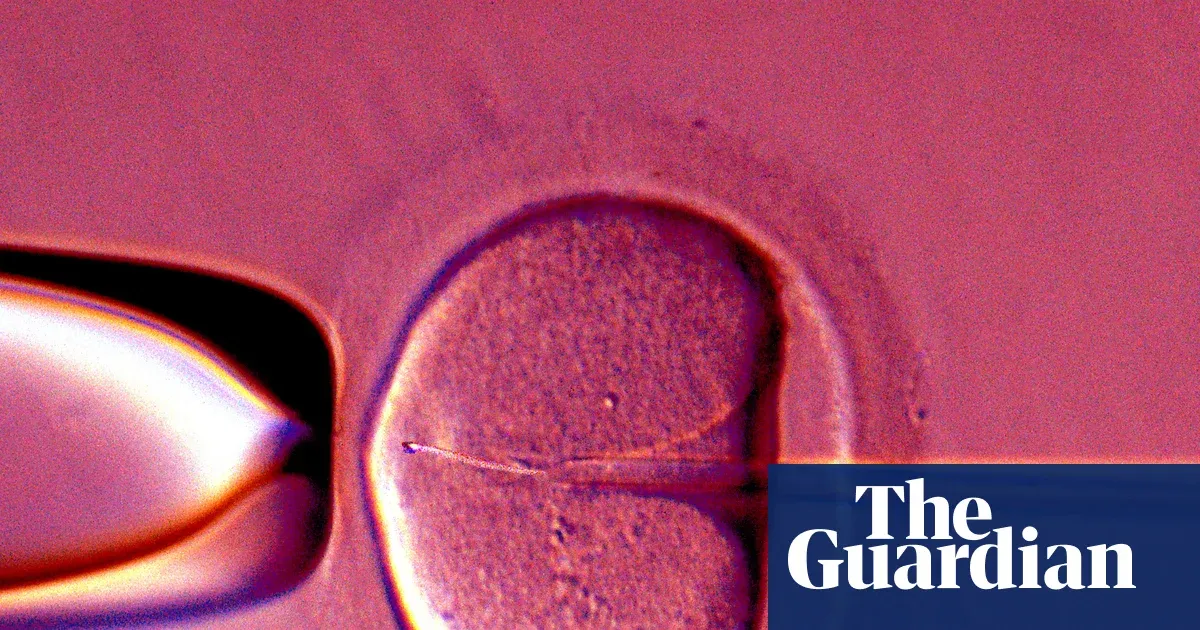
Nearly 70% of England's local health authorities have cut fertility treatment to a single cycle of IVF, despite official guidance recommending three. For millions of women trying to conceive, this means their best chance at NHS-funded help comes down to one attempt—a shift that's happened quietly over the past year as budget pressures have intensified.
The research, published by fertility charity Progress Educational Trust, reveals that 29 of England's 42 integrated care boards now offer only one round of IVF to women under 40 who have been unable to conceive for two years. Four areas reduced access in just the past 12 months. Only two health authorities remain aligned with the official guidance from the National Institute for Health and Care Excellence (Nice).

What makes this harder: of the 29 areas offering a single cycle, 19 provide only a partial cycle. That means not all viable embryos created are transferred to the woman, further reducing the chance of success in that one funded attempt. The whole of the north-west, for example, now offers just one cycle. It's what Sarah Norcross, director of PET, calls a "race to the bottom"—and it's creating a postcode lottery where your postcode, not your medical need, determines your options.
We're a new kind of news feed.
Regular news is designed to drain you. We're a non-profit built to restore you. Every story we publish is scored for impact, progress, and hope.
Start Your News Detox"Infertility is already incredibly stressful, and it puts people under even more pressure because there is so much riding on whether that one NHS-funded cycle is going to work," Norcross explained. For many people, that single cycle is their only realistic chance at treatment—private fertility care costs from £5,000 upward, pricing out most families.
The timing matters. England's fertility rate has fallen to 1.41 children per woman in 2024, the lowest on record and below the replacement level of 2.1. The NHS estimates that about one in seven couples experience difficulty conceiving. Yet the system designed to help is contracting, not expanding.
There is one recent bright spot: NHS South East London expanded from one partial to two full cycles in July 2024. It's a small shift, but it shows the direction is possible. Health minister Karin Smyth has called the current postcode variation "unacceptable." The Department of Health and Social Care has signaled that updated Nice guidelines are expected this spring, which could reset expectations across the country. Scotland, meanwhile, has already moved toward two cycles with a phased, financially modeled approach—a model some argue England should follow.
The question now is whether updated guidance will actually shift practice, or whether local budget pressures will continue to override national recommendations.