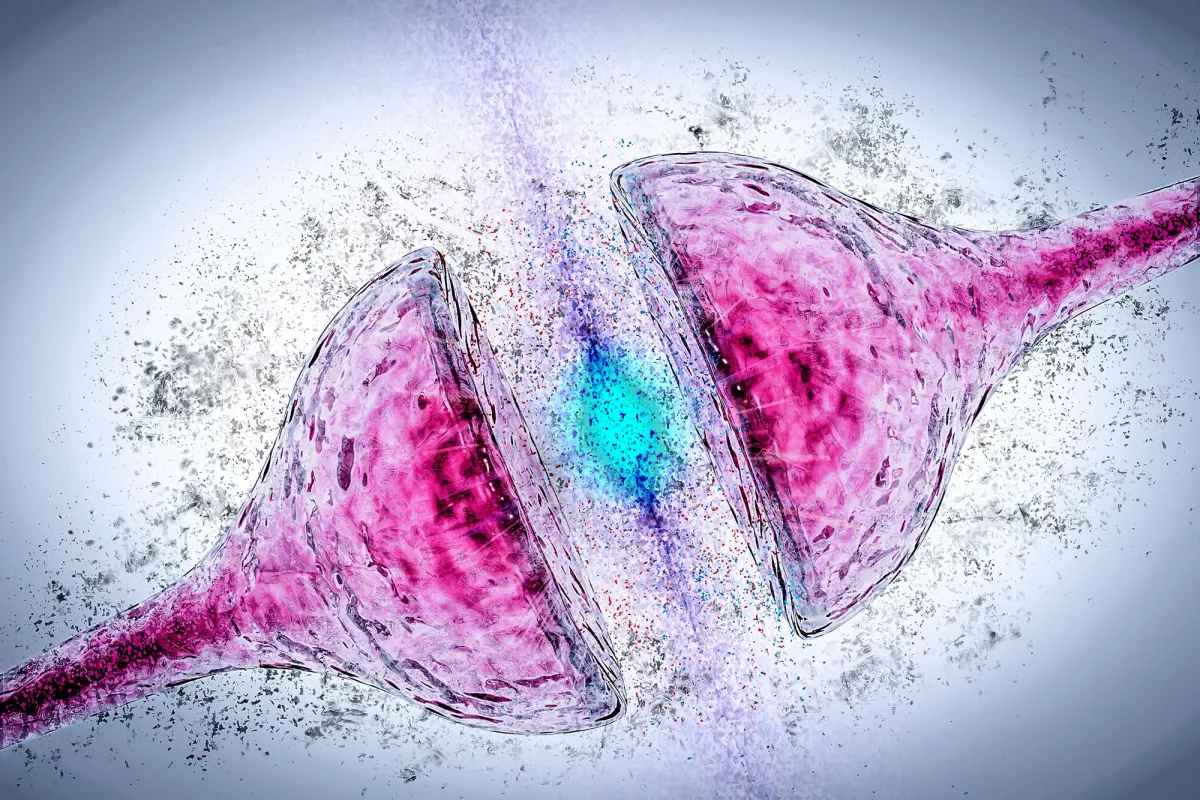
Scientists may have just connected two of the biggest puzzles in Alzheimer's research: amyloid buildup and brain inflammation appear to work through the same molecular pathway, essentially tricking neurons into dismantling their own memory-storing connections.
The discovery centers on a receptor called LilrB2, which normally acts like a pruning shears for synapses — the contact points where brain cells communicate. During healthy development and learning, this pruning is essential. But in Alzheimer's, the system seems to go haywire.
Researchers at Stanford have spent years tracking LilrB2. Back in 2006, they found that blocking this receptor in mice protected against memory loss in Alzheimer's models. Then in 2013, they showed that amyloid beta — the sticky protein that accumulates in Alzheimer's brains — binds directly to LilrB2 and signals neurons to strip away synapses. The connection was striking: target the receptor, preserve the memory.
We're a new kind of news feed.
Regular news is designed to drain you. We're a non-profit built to restore you. Every story we publish is scored for impact, progress, and hope.
Start Your News DetoxBut amyloid buildup only tells part of the story. Inflammation is equally implicated in Alzheimer's, and researchers have increasingly linked it to excessive synapse loss. This raised a question: could inflammation molecules be hitting the same LilrB2 receptor that amyloid does?
A Shared Trigger
To test this, the team screened molecules from the complement cascade — the immune system's cleanup pathway. One stood out: a protein fragment called C4d. When researchers injected it into healthy mouse brains, something remarkable happened. "Lo and behold, it stripped synapses off neurons," said Carla Shatz, the study's lead researcher. A molecule previously thought to be functionally inert was actively dismantling neural connections.
The implication is significant. Both amyloid and inflammation may be pulling the same lever. They converge on LilrB2, triggering neurons to prune their own synapses at an accelerated, destructive rate. This means Alzheimer's isn't just about toxic protein accumulation — it's about neurons becoming overzealous participants in their own unraveling.
The findings, published in the Proceedings of the National Academy of Sciences, also challenge a long-held assumption in the field. Many researchers thought immune cells in the brain were doing most of the synaptic damage. This work suggests neurons themselves are active agents in the process, responding to signals they shouldn't be receiving in the first place.
For treatment, this opens a different door. Current FDA-approved Alzheimer's drugs target amyloid plaques directly, but they've shown limited benefit and significant side effects. If synaptic pruning is the real culprit, blocking LilrB2 or the molecules that trigger it might preserve memory more effectively than clearing plaques alone. Instead of cleaning up the mess, you'd prevent the demolition from happening.
The next phase will test whether blocking this pathway in animal models can slow or reverse cognitive decline. If it works, it could reshape how researchers think about treating Alzheimer's — not as a disease of toxic protein, but as a system gone wrong in how it decides which connections to keep.