Turns out, Canada's biggest art fraud case ever — involving at least 1,000 fake paintings by a celebrated Indigenous artist — wasn't cracked by a grizzled detective or a high-tech art lab. It was thanks to a little-known federal agency that usually helps museums figure out if a painting needs a dusting.
The Canadian Conservation Institute (CCI), part of the Heritage Department, just spilled the details on its role in taking down a massive forgery operation. We’re talking about thousands of fake Norval Morrisseau paintings, the kind that were once selling for hundreds of thousands of dollars, now exposed.
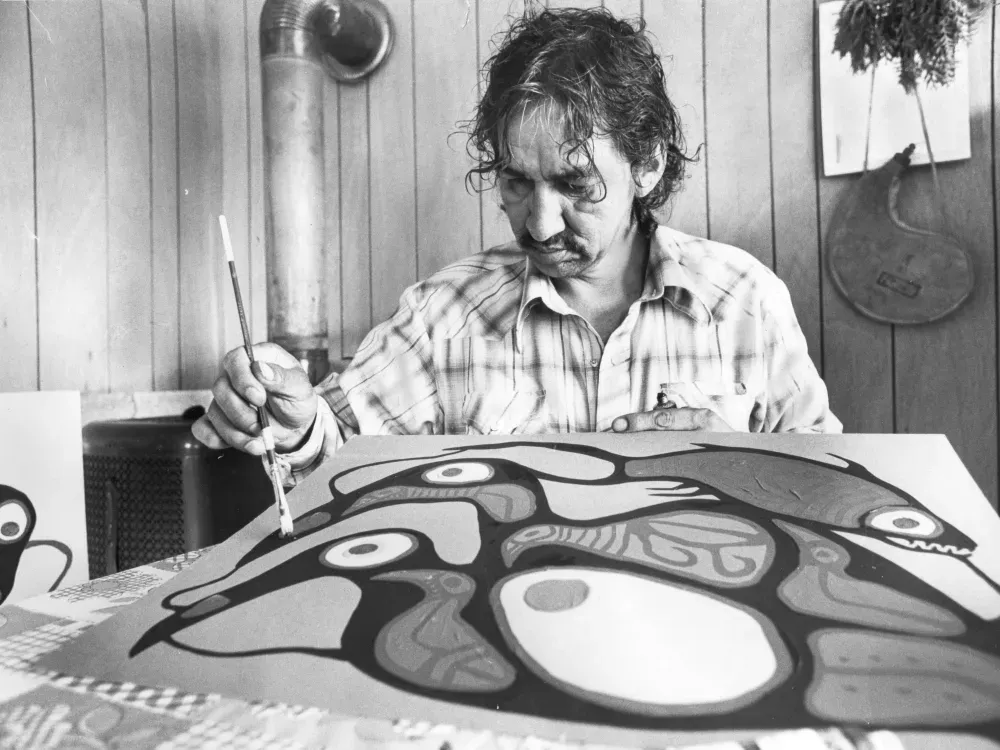
The Painter, the Payout, and the Problem
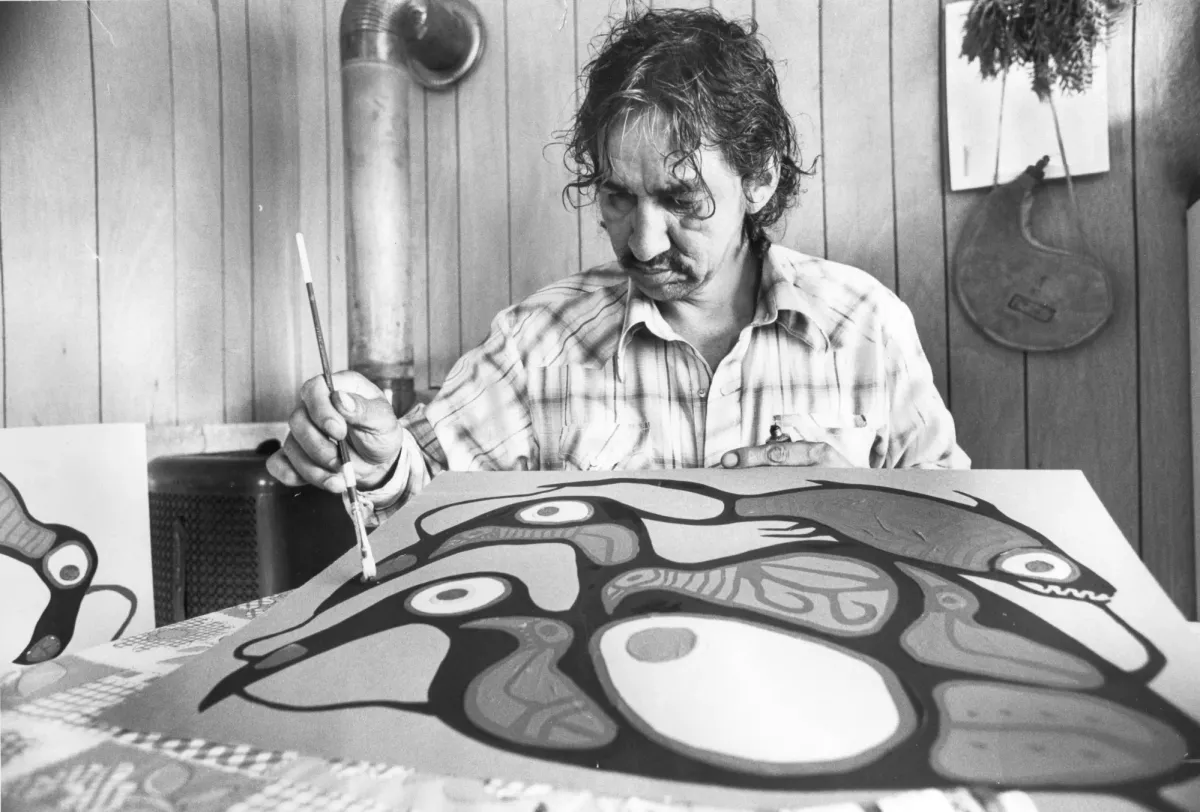
Norval Morrisseau, who passed in 2007, wasn't just any artist. He founded the Woodland School art movement, and his work is seriously sought after. In 2022, his painting Animal Unity (1978) fetched a cool $312,000 Canadian. So, naturally, where there's that kind of value, there's often... well, other kinds of value creation.
We're a new kind of news feed.
Regular news is designed to drain you. We're a non-profit built to restore you. Every story we publish is scored for impact, progress, and hope.
Start Your News DetoxMorrisseau himself knew something was up late in his life, disavowing a family foundation created by his own children to authenticate his art, which, ironically, was later found to have approved fakes. Because apparently, that's where we are now.
The whole thing started bubbling up in 2005 when Kevin Hearn, keyboardist for the Barenaked Ladies (yes, that Barenaked Ladies), bought a supposed Morrisseau. He lent it to the Art Gallery of Ontario, where a curator, Gerald McMaster, immediately had a bad feeling. Hearn’s lawyer then discovered the gallery had cooked up the painting's backstory, and it was even signed on the back — something Morrisseau never did. Hearn sued, won $60,000, and then couldn’t collect because the gallery owner conveniently died.
Then came the 2019 documentary, There Are No Fakes, which brought the whole messy saga to a wider audience, revealing that Morrisseau's own family members had used child labor to churn out these fakes. Let that sink in.
How a Special Camera Caught the Crooks
The Ontario Provincial Police spent over two years on the case before finally sending four suspicious paintings to the CCI in 2021. Mylène Choquette, a senior scientific documentation technologist, aimed a special camera at one canvas. This camera reveals infrared light, showing what lies beneath the surface.
What she found made her do a double-take. Hidden under the red and light blue paint were the letters “R” and “LB.” As in, a paint-by-numbers system. Forgers had literally sketched out where each color should go, like a kids' art kit, but for a multi-million-dollar fraud ring. Choquette told CityNews she had to walk away and come back to confirm she wasn't seeing things. Indeed, the letters were still there.
The conservators also found “medium green” marked on the canvas and detected modern plastics like polyvinyl acetate and styrene in the paint. Morrisseau, on the other hand, exclusively used acrylics. Armed with this evidence, the police sent another 26 suspected fakes to the CCI, which Choquette and her team meticulously examined between 2021 and 2023.
Justice, Finally
Police charged eight people from three different fraud rings with 40 offenses, including forgery and defrauding the public of over $5,000. David Voss was identified as the ringleader, and Gary Lamont was accused of recruiting Indigenous artists, including Morrisseau’s nephew Benji and other family members, to create at least 1,000 fakes.
Four suspects, including Voss, pleaded guilty. Benji also admitted guilt and went through a First Nations restorative justice program. Charges against two others were dropped, but CCI representatives testified in the trial of Jeff Cowan, who was found guilty of fraud.
The CCI kept its role under wraps until now, believing that sharing the story would benefit all Canadians. Jennifer Poulin, a senior conservation scientist at the CCI, summed it up perfectly: “Norval Morrisseau is one of the most important artists in Canada... when an artist like that is picked out and abused and treated this way, it affects the entire country.”
It’s a reminder that sometimes, the quiet, unassuming agencies are the ones doing the most important work, ensuring that what we see on the wall is actually what it claims to be. Which, if you think about it, is both impressive and slightly terrifying in equal measure.