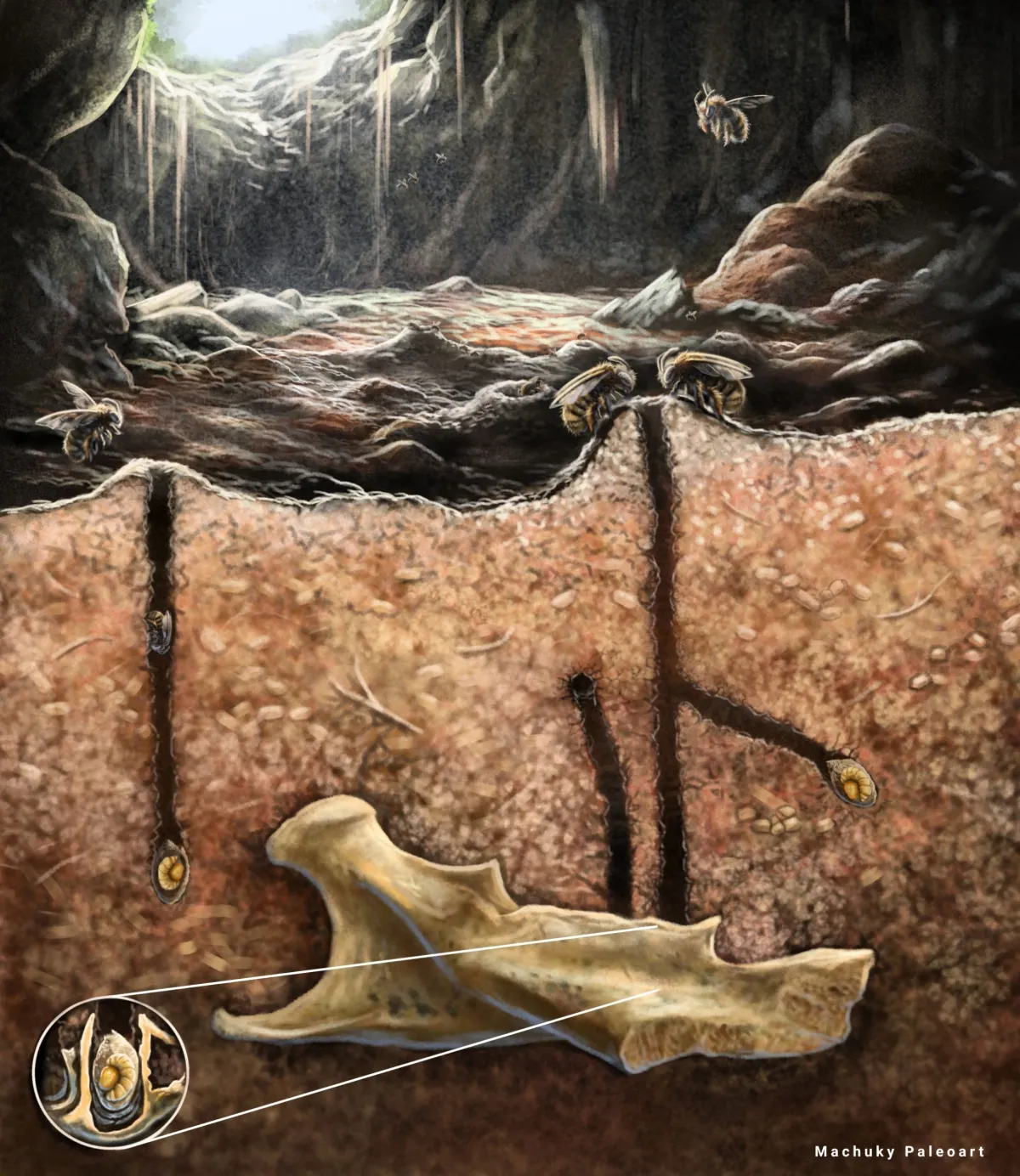
Twenty thousand years ago, a cave on Hispaniola became an unlikely real estate market. Owls had claimed it first, roosting and regurgitating pellets packed with the bones of prey. Then bees arrived and saw opportunity in what the owls had left behind—building nests directly inside empty tooth sockets.
It's the first time paleontologists have found evidence of ancient bees colonizing pre-existing fossil cavities, and it rewrites what we thought we knew about how insects adapted to their environments in the deep past.
The Discovery
Juan Almonte Milan, curator of paleobiology at the Dominican Republic's Museo Nacional de Historia Natural, identified the cave site in the country's south as unusually rich in fossils. Inside, layers of bone deposits were stacked vertically, separated by bands of carbonate that formed during ancient rainy periods. The site held remains from over 50 species—rodents dominated the count, but paleontologists also found bones from sloths, birds, and reptiles.
We're a new kind of news feed.
Regular news is designed to drain you. We're a non-profit built to restore you. Every story we publish is scored for impact, progress, and hope.
Start Your News DetoxWhile sorting through fossil bags, paleontologist Lazaro Viñola López noticed something that didn't fit the pattern of random sediment accumulation. Inside some tooth sockets, the sediment formed smooth, concave surfaces—shapes that reminded him of wasp nests he'd seen before. When the team CT scanned the bones, the images revealed structures matching the mud nests built by certain bee species today. Some nests even contained grains of ancient pollen, a signature of bee activity.
The researchers classified the nests as Osnidum almontei, named after the scientist who first discovered the cave.
Why Bones Became Homes
The setup was almost perfect for this unlikely partnership. The limestone landscape in this region has minimal soil coverage, making it difficult for bees to excavate traditional ground nests. The cave offered shelter. And the owls—living there generation after generation, regurgitating pellets—had essentially delivered a ready-made construction material. The bees mixed their saliva with dirt to craft individual chambers for their eggs, likely protecting offspring from predators like wasps that might otherwise raid exposed nests.
This discovery highlights something paleontologists often overlook: trace fossils—the marks and structures left by organisms—can reveal ecosystems just as clearly as bones themselves. Understanding how insects adapted and where they lived reshapes the whole picture of ancient environments. It's a reminder that survival isn't always about finding new territory. Sometimes it's about recognizing what's already there and making it work.