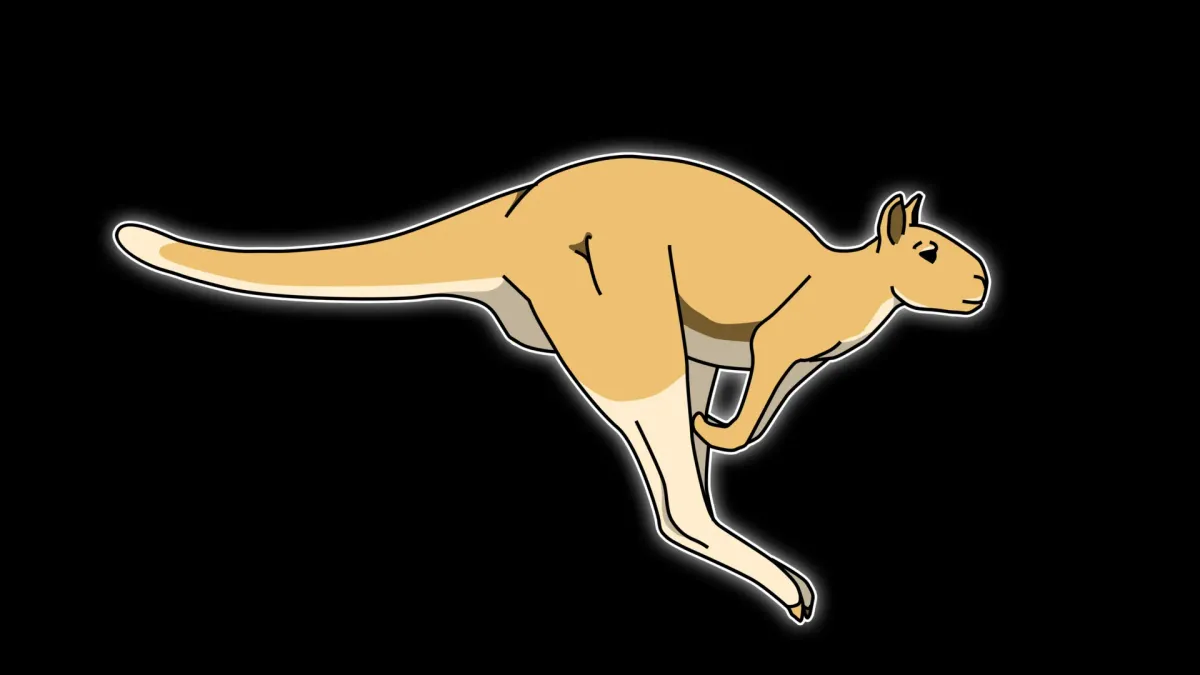
Scientists have overturned a long-held assumption about prehistoric kangaroos: the giants among them—some weighing up to 250 kilograms—could actually hop, at least in short bursts.
For decades, researchers believed that once kangaroos exceeded about 160 kilograms, their ankles simply couldn't handle the stress. But a new study in Scientific Reports suggests this conclusion was premature. By examining the skeletal structure of both modern and fossil kangaroos, a team led by Megan Jones found that even the heaviest species had the mechanical capability to get airborne.
The researchers compared the hindlimbs of 94 living kangaroos and wallabies with 40 fossil specimens spanning 63 species, including the extinct giant Protemnodon that roamed Australia during the Pleistocene. The key was understanding the heel bones and Achilles tendons—the biological machinery that absorbs impact during hopping. By measuring heel bone size in living animals, Jones and her colleagues could estimate how large the tendons of giant kangaroos would need to be to handle the forces of landing. When they checked whether fossil heel bones were large enough to support those tendons, the answer was yes. The metatarsals—the bones in the foot—were strong enough. The structural capacity was there.
We're a new kind of news feed.
Regular news is designed to drain you. We're a non-profit built to restore you. Every story we publish is scored for impact, progress, and hope.
Start Your News DetoxBut here's the catch: capacity doesn't mean habit. The researchers are careful to note that giant kangaroos probably didn't use hopping as their main way of getting around. Imagine a 250-kilogram animal repeatedly launching itself across the landscape—it would burn enormous amounts of energy for relatively little distance covered. That's inefficient, especially when walking or trotting would get the job done.
Instead, occasional hopping may have served a specific purpose: escape. When a marsupial lion like Thylacoleo was bearing down, a brief explosive burst of hops could have been the difference between survival and becoming dinner. We see this strategy today in smaller hopping animals—rodents and small marsupials that aren't primarily hoppers but can throw in a rapid bounce when predators appear.
This shift in understanding matters because it shows how fossils can mislead us. A skeleton alone can't tell you how an animal actually moved through its world. You need biomechanics, comparative anatomy, and a willingness to question assumptions that have calcified into textbooks. The giant kangaroos weren't the lumbering, earthbound creatures we imagined. They were more capable, more adaptable—and probably more interesting.