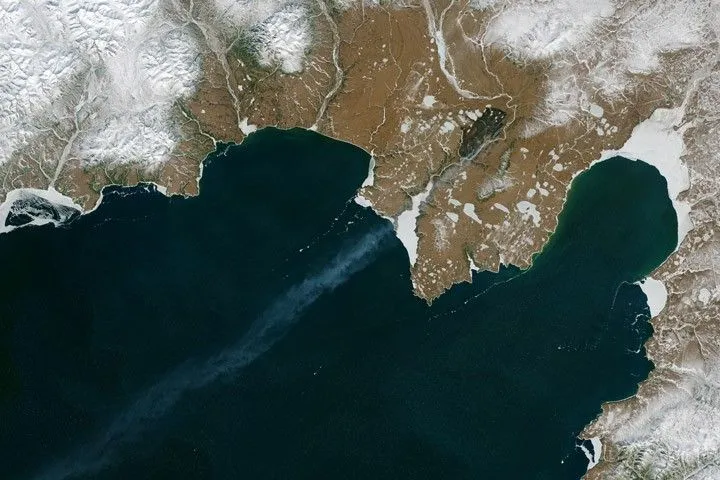
Arctic wildfires are intensifying in ways the region hasn't seen before. They're burning larger, hotter, and longer than they did just decades ago—a shift tied directly to the Arctic warming nearly four times faster than the global average. That rapid warming is drying out the landscape, making it more flammable, while lightning strikes are now reaching farther north than historical records show.
What worries scientists most isn't just the number of fires, but their intensity. "Fire has always been a part of boreal and Arctic landscapes, but now it's starting to act in more extreme ways that mimic what we've seen in the temperate and tropical areas," says Jessica McCarty, Deputy Earth Science Division Chief at NASA's Ames Research Center.
That intensity matters because it changes how entire ecosystems function. Intense fires can kill off trees, trigger the growth of new species, and burn deep into carbon-rich soil in ways that alter water systems and accelerate snowmelt. For Tatiana Loboda, chair of the Department of Geographical Sciences at the University of Maryland, this is the central concern: "It's the intensity that worries us the most because it has the most profound impact on how ecosystems are changing."
We're a new kind of news feed.
Regular news is designed to drain you. We're a non-profit built to restore you. Every story we publish is scored for impact, progress, and hope.
Start Your News DetoxThe Underground Problem
But the real complication lies beneath the surface. The Arctic sits on peat deposits thousands of years old and permafrost that can predate human civilization. When intense fires burn into these deep layers, they can create "zombie fires"—smoldering underground through winter, reigniting when conditions shift. As the Arctic warms and permafrost thaws, the carbon locked inside for millennia releases into the atmosphere. The numbers are staggering: Arctic peat and permafrost together store twice as much carbon as the entirety of Earth's atmosphere.
"This is old ice—ice that is part of our hydrologic system and formed a homeostasis of climate that we as a species grew up in," McCarty explains. "There will be changes that we can't predict: humanity has not experienced the climate the planet is heading towards."
Understanding what's happening requires better tools and closer watching. NASA satellites have tracked 25 years of wildfire data, providing an invaluable record of how fire patterns are shifting. But scientists say the observations need to be more targeted. "We know some of what is happening, but we need to better understand why, and how to monitor these isolated areas," McCarty says. "This means we'll need satellites and field campaigns that are thinking about this more complex fire landscape."
What unfolds in the Arctic won't stay there. As the region continues to warm and burn, the release of ancient carbon carries consequences that ripple across the entire planet.