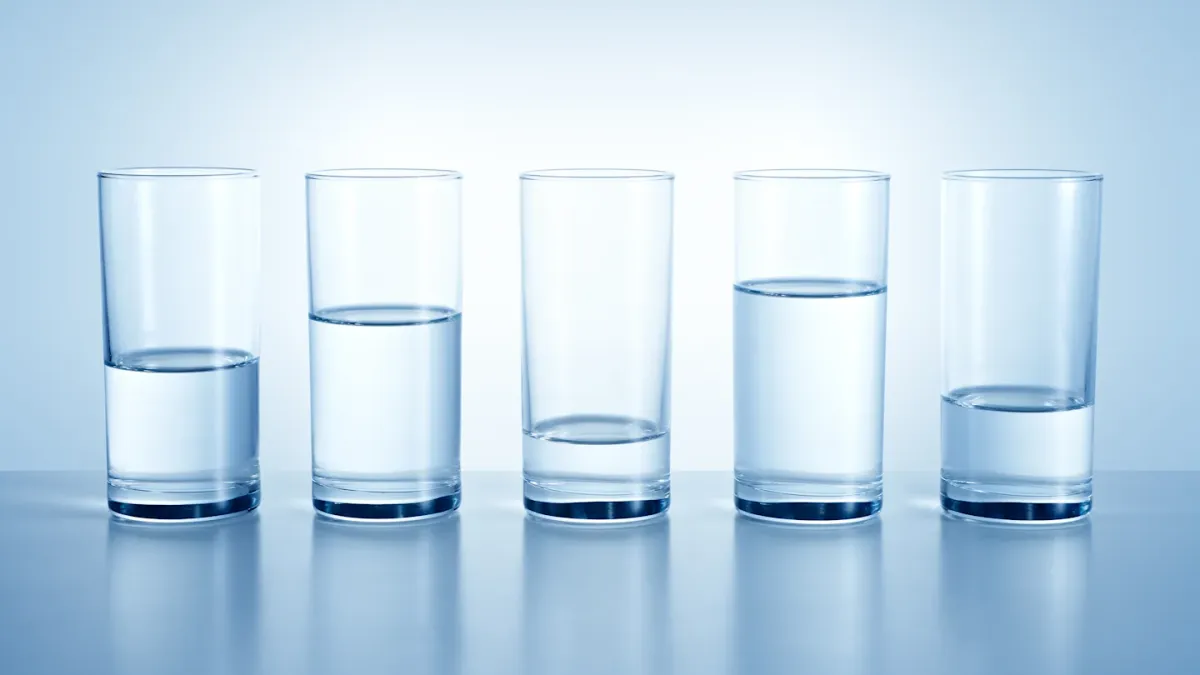
Your body is roughly 50 to 70 percent water, and it's surprisingly good at telling you when it needs more. Yet most of us obsess over hitting some magic number—eight glasses, ten glasses, a liter by noon—instead of paying attention to what our bodies are actually signaling.
Water does the unglamorous work that keeps everything running: regulating temperature, flushing waste, lubricating joints, delivering nutrients to cells. Even mild dehydration—the kind you might not consciously notice—drains your energy and makes basic functions harder. So the question isn't whether you need water. It's how much, and how to know when you've had enough.
The Baseline (Which Isn't Actually One-Size-Fits-All)
Health experts land on roughly 3.7 liters of fluids daily for men and 2.7 liters for women. But here's the catch: that includes everything—tea, soup, watermelon, lettuce. Your body doesn't distinguish between a glass of water and the water content in your breakfast. And yes, this exceeds the old "eight 8-ounce glasses" rule, which persists mostly because it's easy to remember, not because it's universally right.
We're a new kind of news feed.
Regular news is designed to drain you. We're a non-profit built to restore you. Every story we publish is scored for impact, progress, and hope.
Start Your News DetoxYour actual needs shift constantly. A runner on a hot day needs far more than someone in an air-conditioned office in winter. Pregnancy, illness, altitude, medication—all of it changes the equation. The baseline is useful as a starting point, not a finish line.
The Real Signals
Instead of counting, Mayo Clinic suggests trusting two simple markers: thirst and urine color. If you rarely feel thirsty and your urine is pale yellow or nearly clear, you're almost certainly drinking enough. These aren't poetic metaphors—they're your body's actual feedback system, evolved over millennia to keep you in balance.
There is such a thing as too much water. Hyponatremia—dangerously low sodium from excessive water intake—can overwhelm your kidneys. But it's genuinely rare, typically only seen in extreme endurance athletes or people with specific medical conditions. For most people, it's not a realistic worry.
The Smarter Approach
Instead of rigid rules, adjust for what's actually happening in your life. Exercise hard, drink more before and after. Heat wave rolling in, increase your intake. Fever or stomach bug, your needs spike. Pregnant or breastfeeding, you're supporting two systems now.
The point is this: your body has been managing hydration since before you were born. It's asking for what it needs constantly—through thirst, through the color of your urine, through how you feel. The goal isn't to outsmart it with formulas. It's to pay attention and respond. Some days that's eight glasses. Some days it's twelve. Some days it's less.
Listen, adjust, move on. Your body will let you know if something's wrong.