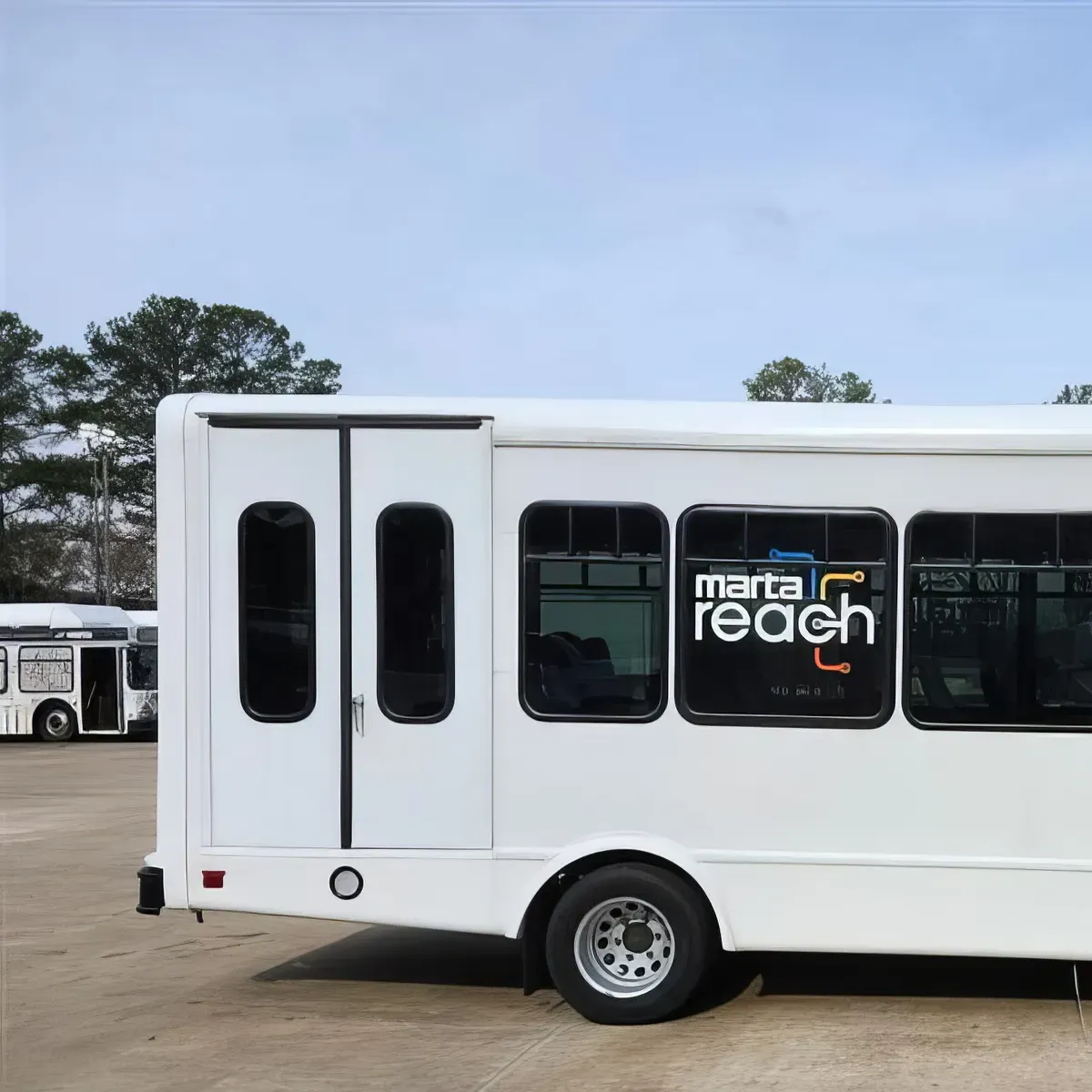
Starting Saturday, Atlanta residents in 12 neighborhoods can summon a shared van to their door for $2.50—the same price as a bus ride. MARTA Reach, the city's new on-demand service, operates 18 hours daily and guarantees pickup within 30 minutes, whether you request through an app or by phone.
It's a practical response to a real problem: the "last-mile" gap that keeps people from using transit. You might live two blocks from a bus route that doesn't quite reach your destination, or work somewhere with no direct connection. A car service solves that friction. MARTA is betting that by removing those small barriers, more people will ditch their cars entirely.
The timing matters. MARTA Reach launches just before the agency overhauls its entire bus network on April 18, cutting routes from 113 to 81 while adding frequency and directness to the remaining lines. The redesign reflects how Atlanta has actually grown—new neighborhoods, shifted job centers, changing commute patterns. On-demand service fills the seams that a restructured grid will inevitably create.
We're a new kind of news feed.
Regular news is designed to drain you. We're a non-profit built to restore you. Every story we publish is scored for impact, progress, and hope.
Start Your News DetoxHow It Works (and Why It Matters)
The service covers 12 zones across metro Atlanta, each with its own pickup area. Rides connect you to rail stations, bus hubs, and park-and-ride lots, which means MARTA Reach isn't meant to replace longer trips—it's the bridge to get you there. Four free transfers on the Breeze fare card sweeten the deal for people chaining rides together.
The vans are wheelchair accessible from day one, with lifts and dedicated slots. That's not a footnote—it's foundational. Too many transit innovations launch with accessibility as an afterthought. MARTA built it in.
What makes this different from other cities' on-demand experiments is scale and integration. This isn't a pilot for a narrow demographic or a single neighborhood. It's embedded into a larger network redesign, which suggests MARTA sees it as permanent infrastructure, not a test. Cities like Denver and San Francisco have tried on-demand services, but often as isolated programs. Atlanta is threading it through the entire system.
The free-fare period through March 28 is partly marketing, partly genuine accessibility—letting people try it without risk. After that, $2.50 keeps it affordable for daily users, especially those combining it with regular transit.
The one friction point: the new wheelchair-accessible vans are delayed due to a safety recall. For now, the service launches with temporary vehicles, which works but underscores how dependent transit innovation is on manufacturing timelines and federal safety processes. That's less about MARTA and more about the broader supply-chain reality agencies navigate.
The real test comes in April, when the bus network shrinks and MARTA Reach has to actually deliver on its promise to fill the gaps. If it does, other mid-sized cities watching Atlanta will likely follow. If it doesn't, on-demand becomes another well-intentioned service that couldn't quite solve the geometry of sprawl.