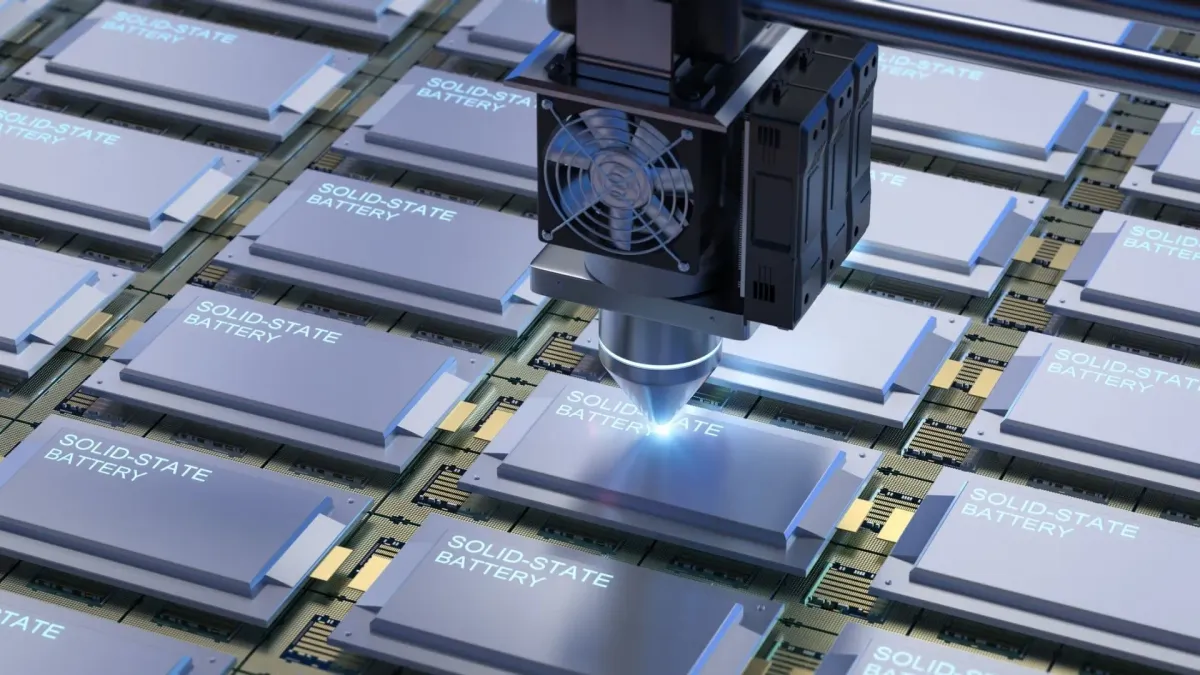
The EV battery has a problem: it's holding back everything else. Current lithium-ion technology maxes out at around 300 miles per charge, takes 30 minutes to recharge, and occasionally catches fire. For a decade now, researchers have been chasing a solution that sounds almost mythical—solid-state batteries, which swap the liquid electrolyte for solid material and promise to fix all three problems at once.
The appeal is straightforward. Solid electrolytes are more thermally stable (harder to overheat), let you pack more energy into the same space, and can last longer. What's less clear is which version will actually work at scale. Across the world's laboratories and pilot factories, seven distinct approaches are emerging as the most credible contenders.
The heavy hitters
Lithium-metal solid-state batteries start with a simple idea: replace the graphite anode in a traditional battery with pure lithium metal. Lithium stores roughly 10 times more charge per unit weight than graphite, which immediately translates to longer range. Companies like QuantumScape are betting their commercial future on this design. The solid separator also solves a safety nightmare called dendrite formation—tiny metal whiskers that grow through liquid electrolytes and cause short circuits. With a solid barrier, those whiskers can't form.
We're a new kind of news feed.
Regular news is designed to drain you. We're a non-profit built to restore you. Every story we publish is scored for impact, progress, and hope.
Start Your News DetoxSulfide solid electrolytes take a different path. They conduct lithium ions nearly as fast as liquid electrolytes do, which means you could charge an EV in minutes without sacrificing performance. They're also mechanically softer than ceramic alternatives, which matters more than it sounds—softer materials squeeze better into the gaps between electrodes during manufacturing, making them easier to scale into the massive battery packs EVs need. If sulfide batteries can be made cheaply enough, they might be the first solid-state design to hit the mass market.
Ceramic electrolytes (usually made from materials like lithium lanthanum zirconium oxide) are the rigid, dependable option. They're chemically stable and can handle higher voltages, which means more energy stored with less risk of thermal runaway. The trade-off is obvious: they're hard to work with in manufacturing and don't flex well when electrodes expand and contract during charging. Researchers are now engineering new ceramic architectures that keep the strength but improve ionic flow—potentially creating batteries durable enough for a million kilometers of driving.
Polymer electrolytes are the flexible alternative. They conduct ions more slowly at room temperature than other options, but their plastic-like properties mean they maintain contact with electrodes through repeated charge cycles, improving reliability. More importantly, they're cheaper and easier to manufacture at scale, which appeals to EV makers who can't wait another decade for the perfect battery.
The emerging challengers
Halide electrolytes are newer and less proven, but they've caught researchers' attention because they combine strong ionic conductivity with electrochemical stability—a pairing that's rare. Unlike some sulfide designs, halides don't degrade when paired with high-voltage cathodes, meaning more total energy storage. They're also cheaper to produce, which could matter more than raw performance once the technology matures.
Thin-film solid-state batteries work by layering ultra-thin deposits of solid electrolyte and electrode material. This precision manufacturing enables extremely high energy density and tight control over battery structure. They're already in use powering medical implants and microelectronics, but scaling them up to EV-sized packs remains an open challenge. The question isn't whether the technology works—it's whether you can build it affordably in a factory, not a lab.
Lithium-sulfur solid-state batteries pair a lithium metal anode with a sulfur cathode. Sulfur has roughly twice the energy capacity of traditional cathode materials, which sounds like a game-changer until you remember that sulfur tends to dissolve in liquid electrolytes, destroying the battery in the process. A solid electrolyte prevents that dissolution. If researchers crack the stability problem, these batteries could push EV range well beyond today's limits.
What this actually means
None of these technologies is ready for your next car yet. Manufacturing costs are still too high, and scaling from lab prototypes to mass production always reveals unexpected problems. But the diversity of approaches matters. It suggests the industry isn't betting everything on one unproven design—there are multiple paths to a working solid-state battery, which increases the odds that at least one will succeed.
The timeline is probably five to ten years before the first solid-state EVs hit dealerships, with sulfide and lithium-metal designs most likely to arrive first. When they do, the difference will be noticeable: faster charging, longer range, and batteries that are genuinely safer. That's not mythical. That's just engineering catching up to what we've known was possible for years.