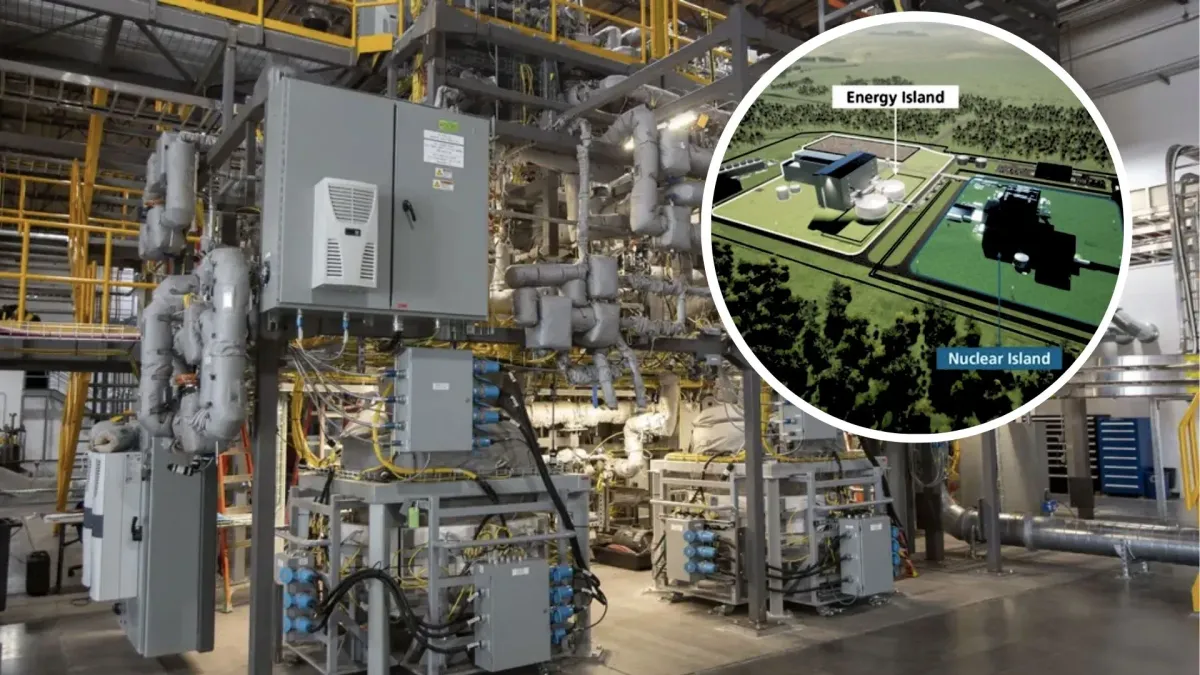
The U.S. Nuclear Regulatory Commission has just approved the first commercial-scale advanced nuclear reactor to be built in America. TerraPower's Natrium plant in Kemmerer, Wyoming will be unlike anything the U.S. has powered before — and it signals a real shift in how the country might meet its energy needs.
The 345-megawatt reactor won its construction permit in record time. The NRC completed its technical review in 18 months, six weeks faster than originally scheduled. For context: nuclear approvals have historically been glacial. This speed matters because it suggests the regulatory machinery can actually move when applications are thorough and political will aligns.
TerraPower, backed by Bill Gates, submitted the first commercial advanced reactor application in March 2024. Construction is expected to begin within weeks, with the plant operational in the early 2030s. The location is strategic — a retiring coal plant in Wyoming, meaning the infrastructure and skilled workforce are already there. The region won't lose jobs; it will transition them.
We're a new kind of news feed.
Regular news is designed to drain you. We're a non-profit built to restore you. Every story we publish is scored for impact, progress, and hope.
Start Your News DetoxWhat Makes Natrium Different
Most reactors do one thing: generate steady baseload power. The Natrium design does something smarter. It pairs a sodium-cooled reactor with a molten salt storage system. The reactor produces 345 megawatts continuously, but during peak demand hours, the integrated storage system can push output to 500 megawatts — without firing up the reactor itself. It's like having a battery built into the power plant.
This matters more than it might sound. The grid is becoming less predictable. Renewable energy fluctuates. Electrification is ramping up. A power plant that can flex its output to match demand — without burning more fuel — is genuinely useful infrastructure for a decarbonizing grid. No other advanced reactor design currently integrates this capability.
The reactor will run on HALEU (high-assay low-enriched uranium), a fuel type that's more efficient than conventional reactor fuel. The U.S. Department of Energy is funding domestic HALEU production, which means the project won't rely on foreign fuel supplies — a strategic advantage that's become harder to ignore.
Why the Speed Matters
The accelerated timeline reveals something important: regulatory bottlenecks aren't always technical. TerraPower's application was complete. The company spent four years in pre-submission dialogue with the NRC, answering questions before they were asked. Federal support for nuclear energy — including executive orders aimed at faster approvals — removed some friction. The result: a 27-month process compressed to 18 months.
This is the first domino. Other advanced reactor developers are watching. If Natrium demonstrates that the NRC can review and approve new reactor designs at reasonable speed, the entire economics of building advanced nuclear in America shifts. Faster approval timelines mean lower financing costs. Lower costs mean more projects become viable.
The project has up to $2 billion in Department of Energy funding through the Advanced Reactor Demonstration Program. That's substantial support, but it's worth noting: this isn't a subsidy for an unproven technology. It's co-investment in a commercial plant that will feed power into the grid and prove the design works at scale.
TerraPower's Natrium reactor represents a real test. Not of whether advanced nuclear can work in theory — the physics has been sound for years. But whether it can be built, licensed, and operated in the United States within a reasonable timeline and budget. The next few years will tell us whether this approval was a one-off or the beginning of a new pattern.