In summer 2020, Shubham Mishra watched a technician check a burning e-bike battery with his bare hands. No diagnostic tools. Just instinct and hope.
"That was the moment," he recalls. "It wasn't just about building a device—it was about finding something people could actually trust."
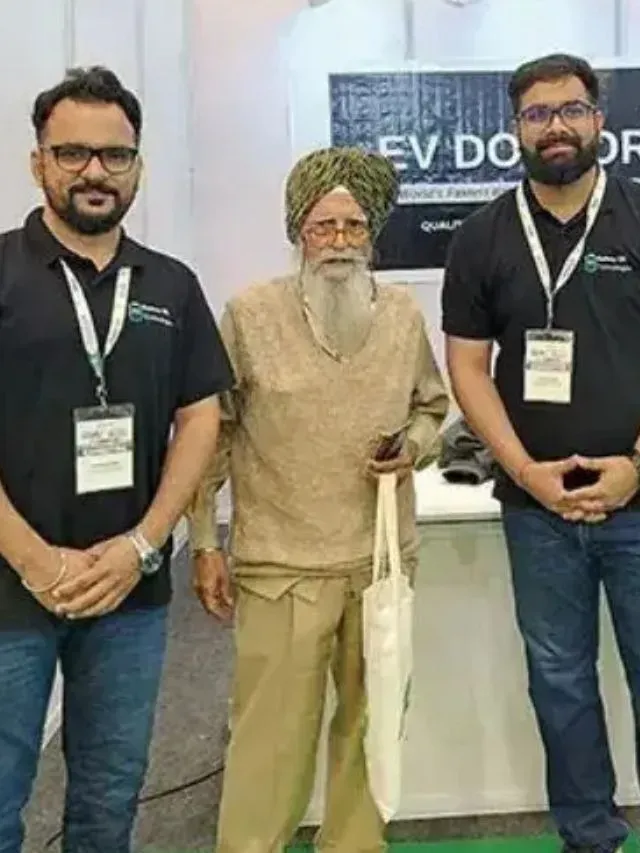
Mishra had already been circling the problem at Gensol Engineering, passing rows of electric two-wheelers and wondering: what if battery diagnostics could be simple enough for any workshop owner to use? In 2019, he quit to find out. With instrumentation engineer Ajay Vashisht, he launched E-Vega Mobility Labs on a Rs 2 lakh grant and Rs 5 lakh in government funding.
We're a new kind of news feed.
Regular news is designed to drain you. We're a non-profit built to restore you. Every story we publish is scored for impact, progress, and hope.
Start Your News DetoxWhen the pandemic hit in 2020, their growth plans froze. Instead of waiting, the two spent the downtime differently—talking to battery makers, technicians, and EV experts across India. A pattern emerged: batteries weren't just broken; they were misunderstood. Workshop owners couldn't diagnose problems reliably. Technicians had no way to know what was actually failing. And no one had a fast, trustworthy method to check if a battery was safe to use.
"Existing methods were slow and clunky," Vashisht explains. "I believed we could compress hours of testing into minutes."
A Device That Actually Works
In August 2022, they launched EV Doctor—a 300-gram device powered by 25+ AI models. The concept is deliberately simple: connect it to a battery and charger. Wait 15 minutes. Get a detailed health report on your phone.
Accuracy runs above 96.7 percent. For a workshop owner in Udaipur named Pawan, the difference was immediate. "Before, I could test two or three batteries a day," he says. "Now it's 10 to 15." But the real win was safety. "I've tested hundreds of batteries with EV Doctor. Not one has caused thermal issues." That's the kind of trust that spreads through word-of-mouth.
The numbers show how fast it's spreading. Year one: 20 units sold. By 2023, 150. In 2024, 500. By 2025, over 1,500 EV Doctor devices will be running in workshops worldwide—a trajectory that suggests this wasn't just a clever invention, but something the market was waiting for.
What makes this story stick is the pricing strategy. The device originally cost Rs 25,000. Today it's Rs 10,000 for smaller garages. That's not accidental—it's a deliberate choice to make diagnostics available to the workshops that need it most, the ones running on thin margins.
There's also a ripple effect most people miss: proper battery diagnostics extend lifespan by 8 to 10 years. That means every battery tested properly is one fewer battery in a landfill, and one fewer battery a customer has to buy. In a country where EV adoption is still climbing, that compounds fast.
The next wave isn't about selling more devices—it's about what happens when diagnostic data becomes standardized across thousands of workshops. Right now, each shop operates in isolation. Imagine what becomes possible when that data connects.