Sun Valley, Idaho has long been known for its world-class skiing, but the region's real draw these days might be what happens when you step away from the slopes. Between ancient lava fields that trained Apollo astronauts, one of the darkest night skies left in North America, and an annual parade of 1,200 sheep down Main Street, central Idaho is quietly becoming a destination for people seeking something other than a resort experience.
The Central Idaho Dark Sky Reserve, certified as a "gold tier" site by the International Dark Sky Association in 2017, covers just under 1,500 square miles of protected public lands within the Sawtooth National Forest. It's one of the last remaining places in the world where you can see the Milky Way with genuine clarity. The reserve hosts regular viewing events timed to meteor showers, lunar eclipses, and the solstices—moments when the night sky becomes almost overwhelming in its detail. Wildlife thrives under these protected conditions too: bears, wolverines, elk, wolves, and sandhill cranes all inhabit the wilderness.
The Landscape That Trained Astronauts
Craters of the Moon National Monument, just south of Sun Valley, offers something equally striking in daylight. President Calvin Coolidge called it "a weird and scenic landscape" when he protected the 750,000-acre site in 1924, and the description still holds. The park is a lunar terrain of lava flows, cinder cones, and sagebrush—created thousands of years ago by eruptions along the Great Rift, a 52-mile stretch of deep cracks in the Earth's crust. NASA recognized the resemblance too. In the 1960s, Apollo astronauts trained here, walking across the same black rock and navigating lava tubes they'd later encounter in their lunar missions. Today, visitors drive the 7-mile Loop Road or hike among the caves, and the park is designated as a dark sky site itself.
We're a new kind of news feed.
Regular news is designed to drain you. We're a non-profit built to restore you. Every story we publish is scored for impact, progress, and hope.
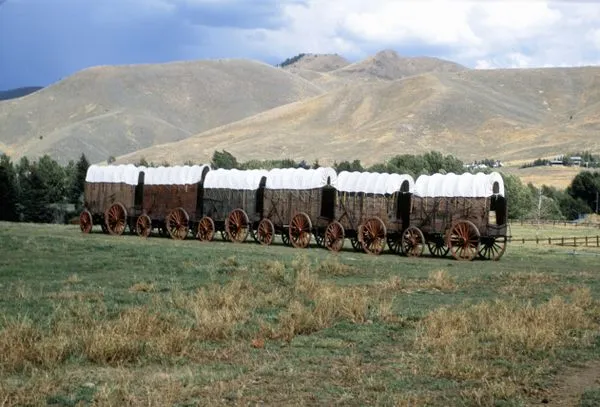
Start Your News DetoxBack in Ketchum, the town's cultural life has deepened well beyond après-ski. The Sun Valley Museum of Art, free to enter since it opened in 1971, has grown to display works ranging from Andy Warhol to regional artists. The Wood River Museum of History & Culture and the Ore Wagon Museum tell the story of Shoshone-Bannock peoples, Basque and Peruvian sheep herders, and the mining boom that shaped the region. The Sawtooth Botanical Garden—five acres representing central Idaho's varied ecosystems—centers on a Tibetan prayer wheel blessed by the Dalai Lama, the only one in North America powered by flowing water.
The Trailing of the Sheep Festival each October is perhaps the most visceral expression of what makes Sun Valley different. For five days, roughly 1,200 sheep migrate down Ketchum's main street, commemorating the seasonal movement of herds from high mountain pastures to southern grazing grounds. The festival celebrates the Basque, Peruvian, and Scottish ranchers who made this migration possible, with sheepdog trials, wool-making workshops, and lamb-centered cooking classes. The 2026 festival runs October 7–11.
Even dining reflects this regional identity. The Pioneer Saloon, opened in 1950 on Main Street, won a 2025 James Beard America's Classics Award for its steaks, prime rib, and Idaho trout. The walls hold Hemingway's hunting rifle and other artifacts from the writer who spent his final years in Sun Valley before his death in 1961. His grave—a simple rectangular marker under two spruce trees in the local cemetery—has become a pilgrimage site, with visitors leaving bottles, coins, and pens alongside flowers.
What's emerging in Sun Valley is a kind of tourism built on specificity rather than spectacle. The dark skies aren't a gimmick; they're a genuine rarity. The sheep parade isn't staged for cameras; it's a working tradition that happens to be photogenic. The landscape is genuinely alien. As more travelers seek experiences rooted in place and culture rather than resort amenities, Sun Valley's particular mix of natural oddity and human history is starting to look less like a ski town with side attractions and more like a destination in its own right.