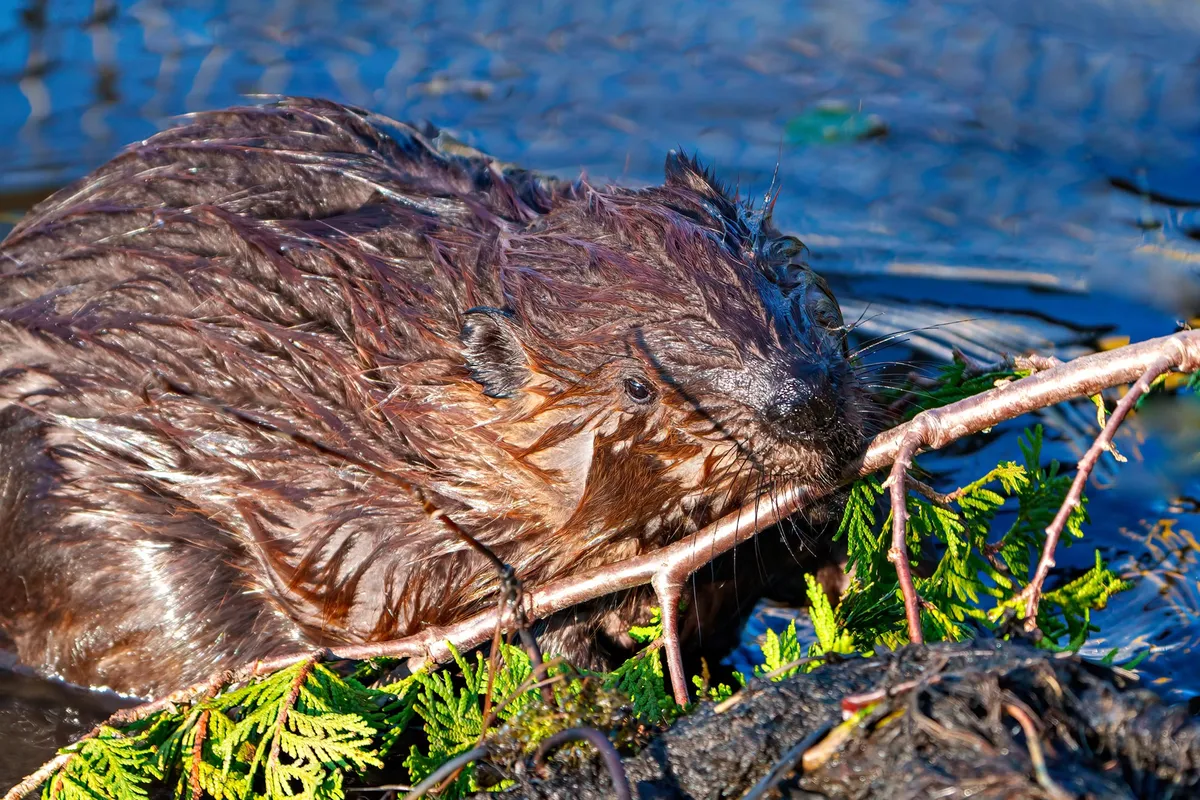
Beavers are proving to be unexpected allies in the fight against climate change. A new international study shows that their dams and wetlands can capture large amounts of carbon dioxide.
Researchers found that these animals can turn river systems into powerful carbon sinks. This happens by reshaping wetlands and waterways.
Beavers as Climate Champions
A study led by the University of Birmingham is the first to measure both the CO2 released and captured by beaver activity. The project included scientists from Wageningen University and the University of Bern. They focused on a stream in northern Switzerland with over 10 years of beaver activity.
We're a new kind of news feed.
Regular news is designed to drain you. We're a non-profit built to restore you. Every story we publish is scored for impact, progress, and hope.
Start Your News DetoxBeaver-created wetlands stored carbon up to ten times faster than areas without beavers. Over 13 years, the wetland accumulated about 1,194 tonnes of carbon. This equals 10.1 tonnes of CO2 per hectare each year.
Dr. Joshua Larsen, a lead author from the University of Birmingham, explained that beavers change how CO2 moves through landscapes. He noted that by slowing water, trapping sediments, and expanding wetlands, beavers turn streams into strong carbon sinks. This study offers a new opportunity for nature-based climate solutions in Europe.
How Beaver Dams Trap Carbon
After decades of conservation, beavers have returned to many European rivers. These animals significantly change how CO2 is stored and moved in headwater streams, where rivers begin.
Beavers build dams, which flood stream edges and create wetlands. They also redirect groundwater and trap large amounts of organic and inorganic material, including CO2. These changes reshape ecosystems and increase carbon storage in the landscape.
The findings suggest that bringing back beaver populations in suitable wetland areas could help capture and store carbon. This would also reduce the amount of carbon released into the atmosphere.
Long-Term Carbon Storage
To understand the full environmental impact, researchers used detailed hydrological data, chemical analysis, and greenhouse gas monitoring. This created the most detailed carbon budget for a European landscape influenced by beavers.
The wetland stored an average of 98.3 tonnes of carbon each year. This was mainly due to the removal and storage of dissolved inorganic carbon below the surface.
The study also found seasonal differences. In summer, lower water levels exposed more sediment, temporarily increasing CO2 emissions. However, over the full year, the buildup of sediments, plants, and deadwood led to significant overall carbon storage. Methane emissions, often a concern in wetlands, were very low, making up less than 0.1% of the total carbon budget.
Dr. Lukas Hallberg from the University of Birmingham noted that the system transformed into a long-term carbon sink in just over a decade. He said this highlights the huge potential of beaver-led restorations for land-use planning and climate policy.
Beaver Wetlands and Climate Change
As sediments and deadwood build up in beaver wetlands, more carbon gets locked away. These sediments contained up to 14 times more inorganic carbon and eight times more organic carbon than nearby forest soils. Deadwood from forests along riverbanks accounted for almost half of all long-term stored carbon.
These carbon stores can remain stable for decades, as long as the dams stay intact. This means beaver-modified wetlands could be reliable long-term carbon sinks.
Dr. Annegret Larsen from Wageningen University stated that beavers are powerful agents of carbon capture. She explained that by reshaping waterways and creating rich wetland habitats, beavers physically change how carbon is stored.
Researchers estimate that if beavers recolonized all suitable floodplains in Switzerland, their wetlands could offset 1.2–1.8% of the country’s annual carbon emissions. These climate benefits could happen naturally without human management or extra cost.
As beaver populations grow, more research will be needed to understand their influence on future ecosystems and long-term carbon storage.
Deep Dive & References
Beavers can convert stream corridors to persistent carbon sinks - Communications Earth & Environment, 2026