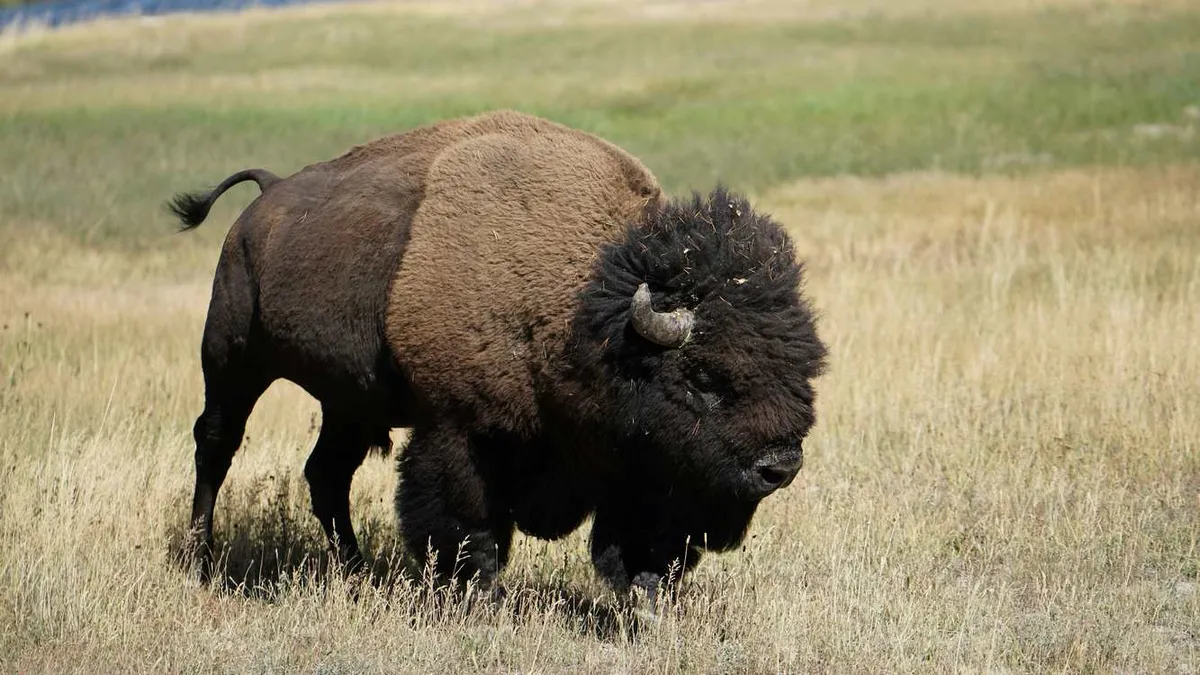
On a frozen morning 60 miles northwest of Chicago, a trailer door opened and six bison stepped onto native prairie for the first time in 200 years. The Santee Sioux had arrived at sunrise to welcome them home—literally. Drummers played. Songs filled the cold air. Tribal elder Robert Wapahi watched and said simply: "It's different when you're welcoming them back home. That's their home, not mine."
Three males and three females now graze on Burlington Prairie Forest Preserve in Kane County, Illinois. For now they're contained in a cattle enclosure while they readjust to ground their ancestors knew. Come spring, they'll move to a larger fenced area where they'll begin the work their species has always done: reshaping the landscape itself.
Why this matters to the land
When European settlers arrived in North America, roughly 35 million bison roamed the plains. Today, several thousand remain—a collapse so complete it rewired entire ecosystems. Bison aren't just grazers. They're engineers. Their hooves compact and aerate soil. Their massive bodies knock down dead vegetation and disperse seeds through their coats. Their dung fertilizes grasslands. The wallows they create—shallow depressions where they roll in dust—become refuges during droughts, collecting water and supporting insects and plants that depend on those pockets of moisture.
We're a new kind of news feed.
Regular news is designed to drain you. We're a non-profit built to restore you. Every story we publish is scored for impact, progress, and hope.
Start Your News DetoxWithout bison, prairie becomes something else. Woody plants encroach. Fire patterns shift. Soil composition changes. The whole system loses its rhythm.
The American Indian Center, the oldest urban Native American cultural establishment in the US, will partner with Kane County Forest Preserve staff to manage this herd. It's a model that's quietly gaining traction. Bit by bit, tribes and conservation groups across the Great Plains are reintroducing bison to native grasslands—not as a romantic gesture, but as ecological restoration. Six animals won't restore 35 million, but they're the beginning of a pattern that's accelerating.
The cheers that echoed across Burlington Prairie that morning weren't just celebration. They were recognition. These bison are home.