Dementia affects 50 million people worldwide, and the number keeps climbing. Most research has chased proteins and inflammation, but a team at the University of Vermont just found something simpler: a missing ingredient in brain cell membranes that, when restored, could help repair the blood flow problems underlying the disease.
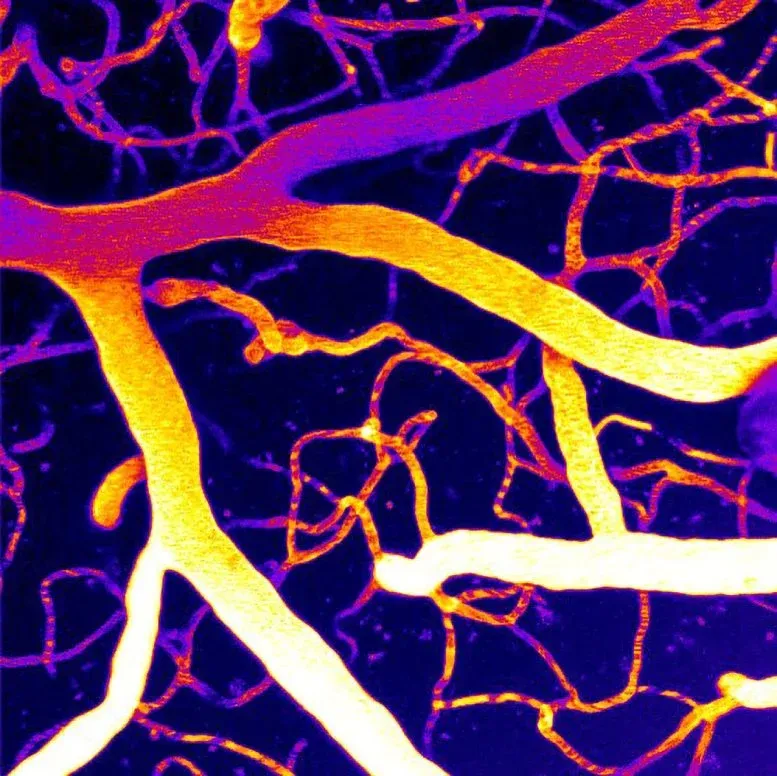
The discovery centers on a pressure-sensing protein called Piezo1, which sits in the walls of blood vessels in your brain and responds to the mechanical force of blood flowing past. In people with Alzheimer's and related dementias, this protein becomes overactive—like a valve stuck half-open—disrupting the delicate balance of blood circulation. The question was: what normally keeps it in check?
Osama Harraz's lab at Larner College of Medicine found the answer in a phospholipid called PIP2. Think of it as a natural brake on Piezo1. When PIP2 levels drop—which happens in dementia—Piezo1 runs wild, and blood flow deteriorates. In preclinical experiments published in Proceedings of the National Academy of Sciences, the researchers showed that adding PIP2 back into the system suppressed Piezo1 and restored normal blood flow.
We're a new kind of news feed.
Regular news is designed to drain you. We're a non-profit built to restore you. Every story we publish is scored for impact, progress, and hope.
Start Your News Detox
"This discovery is a huge step forward in our efforts to prevent dementia and neurovascular diseases," Harraz said. "We are uncovering the complex mechanisms of these devastating conditions, and now we can begin to think about how to translate this biology into therapies."
What makes this finding compelling is its specificity. Rather than trying to fix everything at once, the researchers identified a single missing piece—a phospholipid that's naturally present in healthy brains but depleted in disease. That makes it a clearer target for treatment. The next phase involves understanding exactly how PIP2 and Piezo1 interact: whether PIP2 directly binds to the protein or works by altering the membrane environment around it. Those details matter for designing a therapy that actually works in patients.
The work also hints at why some people carry genetic variations in Piezo1 that make them more vulnerable to blood flow problems. If PIP2 is the brake, and Piezo1 is the accelerator, then genetic differences that weaken the brake—or strengthen the accelerator—could help explain individual risk for dementia.
This is still preclinical work, which means it's been tested in cells and tissue samples, not yet in people. But the pathway from discovery to therapy is becoming clearer: restore PIP2 levels, suppress overactive Piezo1, normalize blood flow, and potentially slow or prevent cognitive decline. The researchers are now mapping out the next experiments to refine how a PIP2-based treatment might work in the brain.