Imagine turning planet-warming carbon pollution straight into fuel. Scientists just found a seriously clever way to do it, making the process three times more efficient than before.
Here’s the deal: making methanol fuel from CO2 works best at lower temperatures. But CO2 is super stubborn and hard to break down when it's not super hot. Crank up the heat, and you get a different problem: the CO2 turns into a different kind of gas instead of the fuel you want.
For ages, scientists have had to choose: either make the reaction fast but messy, or slow but clean. It was a classic trade-off, limiting how much good stuff they could actually produce.
We're a new kind of news feed.
Regular news is designed to drain you. We're a non-profit built to restore you. Every story we publish is scored for impact, progress, and hope.
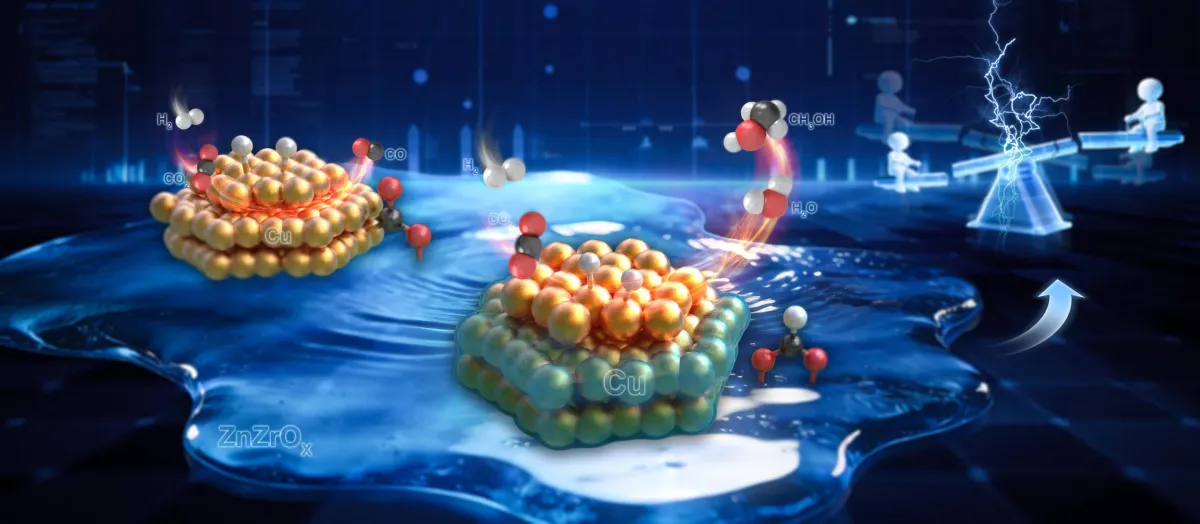
Start Your News DetoxBut a team at China's Dalian Institute of Chemical Physics (DICP) just flipped the script. They designed a new catalyst that basically separates the important steps of the reaction. Think of it like a specialized assembly line, where each part of the CO2 molecule goes to the right station at the right time.
They tweaked the catalyst's surface, changing how the CO2 latches on and breaks apart. The result? At about 572 °F, their system pumped out 1.2 grams of methanol for every gram of catalyst per hour. That's pretty nuts — about three times better than what standard catalysts can do.
How They Pulled It Off
The secret sauce is in how the catalyst handles the CO2. Instead of breaking a bond in the CO2 right away (which usually happens on copper parts of the catalyst), this new design sends the CO2 to a different spot first, called zirconia. There, it gets prepped for making methanol.
This small change means less unwanted carbon monoxide gets made, and the parts of the catalyst that split hydrogen stay strong. It's like guiding the molecule down the perfect path to become fuel.
This isn't just a lab trick. It’s a smart way to get around a huge roadblock in turning CO2 into something useful. It means we could potentially clean up emissions and create valuable fuel at the same time. Talk about a win-win.